What Should You Check Before Buying a Temperature Cycling Chamber?
Buying a temperature cycling chamber is a long-term investment, so the right model should be selected according to the actual test profile rather than price or chamber size alone. Temperature range, ramp rate, specimen capacity, control accuracy, safety, and after-sales support all affect whether a chamber can deliver reliable results over repeated cycles. This guide explains the key factors to consider when buying a temperature cycling chamber, compares typical requirements across applications, and shows what to look for in a reliable temperature cycling chamber manufacturer.
What Should You Check Before Buying a Temperature Cycling Chamber?
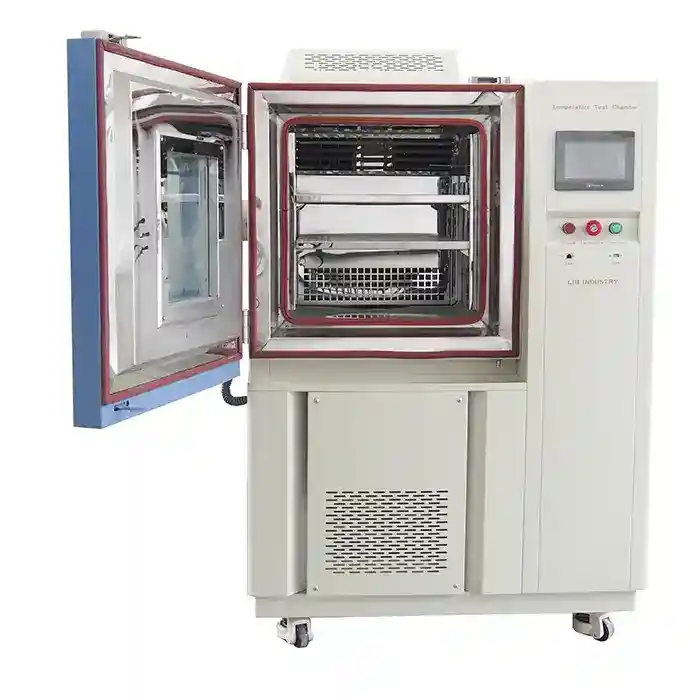 Before requesting quotations, define the test requirements that the chamber must meet. A clear specification helps suppliers recommend the right configuration and prevents paying for unnecessary performance.
1. Testing Standards and Temperature Profile
Start with the standard or test method that will be used. IEC 60068-2-14 covers temperature change testing, while JESD22-A104 is widely used for semiconductor temperature cycling. MIL-STD-883 applies to certain military and microelectronic applications.
These standards may specify temperature extremes, ramp rates, dwell times, transition methods, and cycle numbers. The chamber should therefore be selected according to the actual test profile rather than a general requirement such as "high temperature and low temperature testing."
2. Temperature Range and Ramp Rate
The required temperature range determines the refrigeration and heating configuration. For example, testing at -20°C does not require the same cooling capacity as a test that reaches -70°C.
Ramp rate is equally important. A chamber designed for gradual thermal cycling may not be suitable for rapid temperature transitions. LIB Industry's TR5 series offers selectable ramp rates of 5°C/min, 10°C/min, and 15°C/min, with low-temperature options of -20°C, -40°C, -60°C, and -70°C and high temperatures up to +150°C.
Choose the performance based on the test method. A higher ramp rate generally requires a more powerful refrigeration and heating system and can increase equipment cost.
3. Chamber Volume and Specimen Capacity
The internal volume should provide enough space for the specimens, fixtures, cables, and airflow. An oversized chamber can increase the purchase and operating cost, while an undersized chamber may restrict airflow and affect temperature uniformity.
Typical choices include:
| Model | Internal Size (mm) | Volume | Typical Application |
|---|---|---|---|
| TR5-100 | 400 × 500 × 500 | 100L | Component-level testing |
| TR5-225 | 500 × 600 × 750 | 225L | PCB assemblies and small modules |
| TR5-500 | 700 × 800 × 900 | 500L | Multi-specimen testing |
| TR5-800 | 800 × 1000 × 1000 | 800L | Automotive sub-assemblies |
| TR5-1000 | 1000 × 1000 × 1000 | 1000L | Battery modules and large assemblies |
For larger specimens or multiple test articles, LIB Industry can provide chambers from 100L to 3,000L.
4. Control, Safety, and Connectivity
For long-duration cycling, temperature control and equipment protection are just as important as the nominal temperature range. Industrial chambers can use PT100 Class A sensors, multi-level over-temperature and over-current protection, and anti-condensation control.
Data connectivity should also match the laboratory workflow. The TR5 series supports Ethernet, PC connection, and USB data download, while its controller can store up to 120 programs with 100 segments per program.
Which Temperature Cycling Chamber Fits Your Application?
The best chamber depends on what is being tested and how severe the thermal profile is.
| Application | Typical Requirement | Recommended Capacity |
|---|---|---|
| Electronics & Semiconductors | Controlled cycling, moderate specimen size | 100–500L |
| Automotive Electronics | Wider temperature range and faster transitions | 500–1,000L |
| Battery & EV Components | Larger specimens and demanding thermal cycles | 800–3,000L |
| Aerospace & Defense | Precise control, traceability, strict test procedures | Customized |
For electronics and semiconductor components, compact chambers are often sufficient for component-level testing. Automotive applications may require larger working spaces for ECUs, sensors, modules, or multiple fixtures. Battery and EV component testing can require substantially more internal space, particularly when complete modules or assemblies are tested.
The important point is to match the chamber to the specimen and test profile, rather than selecting the largest available model.
What Makes a Good Temperature Cycling Chamber Manufacturer?
Choosing the equipment manufacturer is part of the technical evaluation. A supplier should be able to support not only chamber production but also configuration, commissioning, troubleshooting, and long-term maintenance.
Buying directly from a manufacturer can also simplify customized requirements. Examples include non-standard chamber dimensions, additional cable ports, external instrument connections, customized fixtures, or special specimen arrangements.
For buyers comparing suppliers, useful factors include:
- Manufacturing and engineering capability
- Quality management and safety certifications
- Customization experience
- Installation and commissioning
- Spare parts availability
- Technical response time
- Warranty and long-term service
A direct manufacturer can also provide a single point of responsibility from design and production through installation and after-sales support.
What Affects the Cost of a Temperature Cycling Chamber?
The price of a temperature cycling chamber is mainly affected by its performance and configuration rather than volume alone.
The major cost factors include:
- Temperature range
- Ramp rate
- Chamber volume
- Refrigeration system
- Control and data functions
- Safety configuration
- Custom fixtures or chamber modifications
For example, a chamber reaching -70°C requires a more demanding refrigeration system than one designed for -20°C. Similarly, rapid ramp rates require greater heating and cooling capacity.
When comparing quotations, consider total cost of ownership as well as the initial purchase price. Energy consumption, maintenance, spare parts, installation, training, and warranty coverage can all affect the long-term value of the equipment.
Why Choose LIB Industry Temperature Cycling Chambers?
LIB Industry's TR5 temperature cycling chambers are designed for reliability testing across electronics, automotive, battery, aerospace, materials, and laboratory applications. Instead of offering a single fixed configuration, LIB Industry provides different chamber sizes and performance options to match specific test profiles.
TR5 Series at a Glance
| Parameter | Available Options |
|---|---|
| Chamber Volume | 100L–3,000L |
| Temperature Range | -20°C to +150°C / -40°C to +150°C / -60°C to +150°C / -70°C to +150°C |
| Ramp Rate | 5°C/min, 10°C/min, 15°C/min |
| Interior | SUS304 stainless steel |
| Control | Programmable multi-step testing |
| Communication | Ethernet, PC connection, USB data export |
|
|

This range allows users to select the performance they actually need without automatically paying for an oversized or over-specified chamber.
Built for Different Testing Requirements
For non-standard applications, LIB Industry can customize the chamber according to the specimen and test setup, including:
- Chamber dimensions and internal capacity
- Cable ports and external electrical connections
- Specimen fixtures and mounting arrangements
- Control and monitoring functions
- Other application-specific configurations
This is particularly useful for battery modules, large assemblies, specialized components, and specimens requiring external instrumentation.
From Manufacturing to Long-Term Support
LIB Industry provides more than chamber production. The service covers the complete project process:
Design → Manufacturing → Commissioning → Delivery → Installation → Training
Each chamber is backed by a 3-year warranty and lifetime technical support, with ongoing assistance for maintenance, troubleshooting, and spare parts after installation.
With this combination of standard models, custom engineering, and long-term service, LIB Industry can provide a complete solution when a standard temperature cycling chamber does not fully match the customer's testing requirements.
Related Environmental Test Chambers
Temperature cycling is often only one part of a product reliability program. Depending on the material or product being evaluated, additional environmental tests may be required.
|
|
|
|
|
Temperature & Humidity Chamber Temperature and humidity aging Electronics, batteries, materials |
Thermal Shock Chamber Rapid transfer between temperature extremes Automotive, electronics, components |
Xenon Arc Weathering Chamber Accelerated light, heat, and moisture aging Plastics, coatings, automotive materials |


LIB Industry provides these complementary environmental testing systems alongside temperature cycling chambers, allowing customers to source multiple reliability-testing solutions from one manufacturer.
Request a Temperature Cycling Chamber Quote
When requesting a quotation, provide the supplier with the required temperature range, ramp rate, chamber volume, specimen dimensions and weight, cable-port requirements, power supply, test standard, and any special fixtures or interfaces.
The more specific the RFQ, the easier it is for the manufacturer to recommend the correct configuration and provide a comparable quotation.
Looking for a temperature cycling chamber for your testing application? Contact LIB Industry to discuss your requirements, customized configuration, and quotation.
FAQ
What is the difference between a temperature cycling chamber and a thermal shock chamber?
A temperature cycling chamber changes temperature according to a programmed profile, while a thermal shock chamber is designed for rapid transfer between hot and cold zones. The appropriate equipment depends on the required transition speed and test method.
Can a temperature cycling chamber be customized?
Yes. Depending on the application, customization can include chamber dimensions, cable ports, specimen fixtures, external connections, control functions, and other non-standard configurations.
What chamber size is suitable for battery module testing?
The required volume depends on the dimensions and quantity of the battery modules and the required airflow clearance. LIB Industry offers chambers from 100L to 3,000L, allowing the configuration to be matched to different specimen sizes.
Does LIB Industry provide after-sales support?
Yes. LIB Industry provides a 3-year warranty and lifetime technical support, together with installation, commissioning, training, spare parts support, and technical assistance.