How Much Does a Dust Test Chamber Cost? A Complete Buying Guide
The cost of a dust test chamber depends on much more than its chamber volume or exterior design. The circulation system, vacuum capability, powder management, control system, sealing structure, and required IP protection level can all have a significant impact on the final price.
For buyers comparing different suppliers, two chambers with similar dimensions can have very different prices because their internal systems and testing capabilities are not necessarily the same. A lower-cost unit may be suitable for basic dust exposure, while a professional system designed for repeatable IP5X and IP6X testing requires more precise dust circulation, sealing, vacuum control, and safety features.
Understanding these cost factors before requesting quotations makes it easier to compare suppliers fairly, avoid unnecessary specifications, and choose equipment that provides reliable performance over many years of testing.
What Really Determines the Price of a Dust Test Chamber?
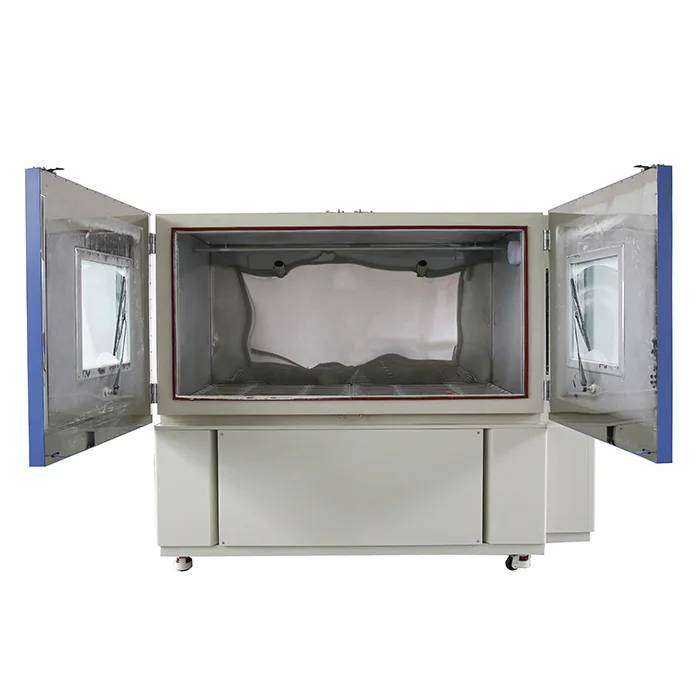
Does chamber size have a big impact on the final price?
Yes. Chamber volume is one of the most visible factors affecting equipment cost, but it is not the only one.
A larger chamber requires more structural material, a higher-capacity circulation system, and a greater quantity of test dust. The airflow also has to be properly controlled across the larger internal space to maintain consistent test conditions.
For example, an 800 L chamber and a 2,000 L chamber may use the same basic testing principle, but the larger system requires more powerful circulation components and a larger internal structure.
Buyers should select chamber volume based on actual specimen dimensions and quantity (see "Start with the specimens" below) rather than simply choosing the largest available model.
Why can two chambers with the same volume have different prices?
The difference is often found inside the chamber.
A basic system may use a relatively simple airflow arrangement, while a professional test chamber needs to distribute dust consistently throughout the working space and maintain stable test conditions during long test cycles.
Important design factors include:
- Air circulation and blower capacity
- Dust distribution and agitation
- Powder recovery and collection
- Heating or drying functions
- Mesh screening
- Vacuum generation and regulation
- Door sealing
- Control and monitoring systems
These components directly affect manufacturing cost, but more importantly, they influence test repeatability.
Is an IP6X test chamber more expensive than an IP5X system?
Generally, yes, because IP6X testing introduces more demanding requirements for dust-tight verification.
IP5X testing evaluates protection against dust ingress under the applicable test conditions, while IP6X requires the enclosure to be dust-tight. For IP6X applications, the test equipment therefore needs suitable vacuum and pressure-control capabilities as well as reliable sealing and monitoring.
If your testing program only requires IP5X evaluation, purchasing a system with advanced IP6X capabilities may increase the initial investment without providing additional value. Before requesting quotations, determine which protection levels your products actually need to demonstrate — manufacturers of sealed electrical enclosures, automotive components, and outdoor equipment often benefit from having both capabilities available.
How much does the manufacturer affect the quoted price?
The same basic specification can produce different quotations depending on where and how the equipment is manufactured.
Manufacturing capability, component sourcing, control-system selection, quality inspection, testing procedures, installation support, and after-sales service can all influence the final price.
A manufacturer that designs and integrates the circulation, heating, vacuum, and control systems in-house may have a different cost structure from a supplier that primarily assembles third-party components. Price should therefore be compared together with technical configuration and service scope rather than evaluated as a standalone number.
Where Does Your Dust Chamber Budget Actually Go?
Understanding the major cost components makes supplier quotations much easier to evaluate.
| Cost Component | What It Covers | Typical Impact |
|---|---|---|
| Circulation system | Blower, airflow control, dust distribution | Major |
| Vacuum system | Vacuum generation, pressure control, filtration | Major for IP6X |
| Powder management | Funnel bottom, heating, screening and recovery | Moderate to major |
| Chamber structure | Internal volume, sealing and structural materials | Moderate to major |
| Controller | Programmable testing, monitoring and data functions | Moderate |
| Safety features | Emergency stop, door protection, alarms | Moderate |
| Documentation | Calibration, inspection and compliance records | Depends on requirements |
The exact cost contribution varies according to chamber size, configuration, customization, and testing requirements.
Why does powder management matter after you buy the equipment?
Dust testing is not only about introducing powder into the chamber. The powder needs to remain suitable for circulation and testing throughout repeated test cycles.
Moisture can cause powder to clump, affecting circulation and potentially changing the test conditions. A funnel-shaped chamber bottom, heating system, and appropriate screening mechanism can help improve powder handling and reduce operator intervention — one example of why a slightly higher initial investment can provide better long-term value.
Are safety and observation features worth paying for?
They are often overlooked during the purchasing stage.
Observation windows allow operators to monitor the test without opening the chamber, while emergency-stop systems, door protection, alarms, and other safety functions help reduce operational risks. These features may represent a relatively small proportion of the overall equipment cost, but they can make daily operation considerably easier and safer.
Does documentation add significant cost?
Documentation requirements vary from project to project.
Some buyers only require standard factory documentation, while regulated industries or customer qualification programs may require calibration records, inspection reports, quality certificates, or third-party verification. If the chamber will be used as part of a formal quality system, it is worth confirming the documentation package before comparing quotations — a low initial price can become less attractive if important records or testing services have to be purchased separately later.
How Can You Avoid Paying for Features You Don't Need?
A higher specification does not automatically mean better value. The best equipment is the one that matches your actual testing program.
Start with the specimens, not the chamber size
Determine the size, quantity, and loading arrangement of the specimens first. This identifies the working volume you actually need and prevents unnecessary spending on a chamber that is significantly larger than your application requires — while still leaving enough space for proper dust circulation around the specimens, since a chamber that is too small can be just as problematic as one that is unnecessarily large.
Decide whether you really need IP5X, IP6X, or both
Your required IP rating should be established before requesting a quotation. If your products only require IP5X testing, there may be no reason to purchase additional equipment designed specifically for IP6X dust-tight verification.
Consider future testing requirements
Avoiding over-specification is important, but so is avoiding a chamber that becomes unsuitable after a short period.
If your product range is expanding or additional IP testing is likely to be introduced, it may be more economical to choose a configurable system rather than replace the entire chamber later. The right balance is to consider realistic future requirements rather than paying for every possible option today.
Can bundled equipment reduce the overall investment?
If your laboratory needs several types of environmental test equipment, purchasing them from the same manufacturer can simplify installation, training, documentation, and after-sales support, and may also reduce certain logistics and commissioning costs.
For example, a laboratory performing enclosure reliability testing may need dust, rain, temperature/humidity, and corrosion testing equipment as part of the same overall program.
What Does LIB Industry Offer for Dust Testing?
LIB Industry provides dust test chambers designed for IEC 60529 and ISO 20653-related IP5X/IP6X testing applications, with chamber configurations available for different specimen sizes and testing requirements.
The standard configuration can include:
- 800 L to 2,000 L working volumes
- Controlled dust circulation
- Funnel-shaped chamber bottom
- Heating system for powder conditioning
- Mesh screening system
- Vacuum system for dust-tight testing
- Pressure gauge, filter, and regulator
- Programmable colour touchscreen controller
- Ethernet connectivity
- Observation window
- Safety protection and alarms
The equipment can be configured according to the required test level, specimen dimensions, chamber volume, and laboratory requirements, so the chamber can be specified around the actual test program instead of forcing every customer into the same configuration.
Why choose LIB Industry for your dust testing equipment?
LIB Industry has more than 16 years of experience in environmental simulation testing equipment, providing customized test solutions for automotive, electronics, new energy, materials, and other industrial applications.
The company manages the process from design and manufacturing through commissioning and delivery, helping customers coordinate equipment configuration, installation, and training through a single supplier.
LIB Industry also provides:
- Three-Year Warranty
- Lifetime Service
- 24/7 English after-sales support
- Spare-parts support
- Remote technical assistance
Customized chamber configurations (dimensions, specimen fixtures, control functions, vacuum configuration, and other application-specific requirements)
Which Other Environmental Test Chambers May You Need?
Dust ingress testing is often only one part of an environmental reliability program. If your products also need to be evaluated against water, temperature, humidity, or corrosion, the following equipment can complement a dust testing system.
| Recommended Equipment | Main Testing Application | Why Consider It |
|---|---|---|
|
Rain Test Chamber |
IPX1–IPX9K water ingress testing | Complements IP5X/IP6X dust testing for enclosure protection |
|
Temperature & Humidity Chamber |
Temperature and humidity reliability testing | Evaluates environmental aging and durability |
|
Salt Spray Chamber |
Corrosion resistance testing | Useful for automotive, metal and coated components |


Using complementary environmental test equipment allows laboratories to build a more complete reliability testing program rather than evaluating only one environmental stress factor.
What Should You Check Before Ordering a Dust Test Chamber?
Before comparing quotations, prepare a specification sheet covering the following points:
1. Required IP ratings Confirm whether your products require IP5X, IP6X, or both.
2. Specimen dimensions and quantity Use the actual specimen loading requirements to determine chamber volume.
3. Test dust and test method Confirm the applicable standard and the required test conditions before selecting the circulation and powder-management system.
4. Vacuum requirements For IP6X applications, confirm how vacuum generation, pressure monitoring, filtration, and regulation are configured.
5. Documentation Clarify whether you need calibration records, inspection reports, certificates, or third-party verification.
6. After-sales service Check warranty duration, spare-parts availability, technical support, and expected response time before placing the order.
These details make supplier quotations much easier to compare because you are evaluating equivalent technical configurations rather than simply comparing equipment prices.
Is the Cheapest Dust Test Chamber Really the Best Value?
Not necessarily.
A lower purchase price can be attractive when the equipment is used occasionally for basic testing. However, laboratories performing frequent qualification or production testing need to consider reliability, repeatability, maintenance, operator workload, and service support. The real cost of a test chamber extends beyond the purchase invoice.
A useful comparison should include:
Initial price + installation + consumables + maintenance + downtime + service + expected operating life
This total-cost-of-ownership approach can reveal why a professionally configured system may provide better value even when its initial quotation is higher.
Get the Right Dust Test Chamber for Your Testing Requirements
If you are comparing IP5X/IP6X test chambers or need a customized configuration, LIB Industry can recommend a suitable chamber volume and system configuration based on your specimens, applicable standards, and testing frequency.
Contact LIB Industry for a customized quotation and testing solution.
Email: ellen@lib-industry.com
FAQ
How much does a dust test chamber cost?
The price varies significantly depending on chamber volume, circulation system, vacuum capability, control system, and customization. Professional IP5X/IP6X systems generally cost more than basic dust exposure equipment because they require more sophisticated testing and control functions.
What should I compare when getting quotations?
Compare the complete technical configuration — circulation, powder management, vacuum system, sealing, controller, safety features, documentation, warranty, and after-sales support — not just chamber volume and price (see the checklist above).
Can LIB Industry customize a dust test chamber?
Yes. LIB Industry can customize chamber dimensions, specimen fixtures, vacuum configuration, control functions, and other technical details according to the customer's testing requirements.