Material manufacturers pursuing global market access navigate complex certification requirements mandating rigorous weathering performance validation. ASTM International standards establish scientifically defensible methodologies ensuring products withstand real-world environmental exposure - solar radiation, temperature fluctuations, and moisture cycles. An accelerated weathering tester delivering ASTM G155 and ISO 4892 compliance enables manufacturers to demonstrate standardized durability claims through controlled laboratory simulation of outdoor degradation. These specialized systems employ 4500W water-cooled xenon arc lamps generating 280-800nm spectral radiation matching natural sunlight, precise black panel temperature control (35-85°C ±2°C accuracy), and humidity regulation (30-98% RH ±2.5% precision) replicating authentic weathering stressors. Rotating specimen holders accommodating 42 samples simultaneously ensure uniform exposure consistency. This guide explores how ASTM-compliant accelerated weathering testing transforms subjective durability claims into scientifically validated product performance data, enabling confident market positioning and regulatory certification.
The Role of ASTM Standards in Weathering Evaluation
Establishing Standardized Testing Methodologies
ASTM International develops consensus-based standards defining precise weathering test procedures, equipment specifications, and performance evaluation criteria recognized globally by regulatory bodies and certification authorities. ASTM G155 specifically addresses xenon arc exposure testing, establishing precise irradiance specifications (0.35-1.5 W/m²/nm at 340nm wavelength) and temperature control parameters. This standardization eliminates subjective interpretation - manufacturers conducting ASTM G155-compliant testing produce comparable results across facilities and timelines. Certification bodies (UL, CSA, SGS, TUV) reference ASTM methodologies when evaluating product durability, effectively mandating ASTM compliance for third-party certification. An accelerated weathering tester meeting ASTM specifications provides direct pathway toward regulatory approval.
Connecting Accelerated Testing to Field Performance
ASTM standards incorporate decades of accumulated field-failure data establishing correlation factors between accelerated laboratory exposure and actual outdoor degradation. ASTM G155 xenon testing at standardized conditions produces predictable aging equivalency - 1000 hours accelerated exposure typically correlates to 1-3 years natural weathering depending on geographic location. This empirical correlation enables manufacturers to project field service life from laboratory data, supporting durability claims with quantifiable confidence. Conversely, non-standardized testing produces unpredictable acceleration factors compromising field-life prediction reliability. ASTM compliance establishes scientifically defensible performance projections.
Enabling Comparative Material Qualification
ASTM G155-compliant testing provides neutral evaluation framework comparing competing formulations under identical environmental conditions. Material scientists develop paint systems, coating compositions, and plastic stabilizer packages requiring objective performance comparison guiding product development. Standardized testing eliminates equipment-variance confounding variables, enabling engineers to direct innovation efforts toward formulations demonstrating superior ASTM G155 performance. This accelerates development cycles while avoiding investment in marginal improvements validated only through non-standardized methodologies.
Common ASTM Methods Used in Accelerated Aging Tests
ASTM G155: Xenon Arc Lamp Exposure Protocol
ASTM G155 establishes comprehensive xenon arc exposure methodology addressing light source specifications and environmental control parameters. The standard designates four xenon lamp exposure cycles - Cycle 1 (consistent daylight simulation), Cycle 2 (with periodic water spray), Cycle 3 (elevated humidity), and Cycle 4 (window-glass-filtered daylight) - accommodating diverse material degradation mechanisms. Accelerated weathering testers meeting ASTM G155 employ 4500W xenon lamps operating at standardized irradiance levels, with closed-loop monitoring systems maintaining spectral consistency throughout extended test campaigns. The rotating specimen holder ensures uniform light exposure across all 42 test specimens, eliminating positional exposure variance.
ASTM G154: UV Fluorescent Lamp Testing
ASTM G154 addresses narrow-spectrum UV fluorescent lamp testing, emphasizing short-wavelength ultraviolet radiation (280-320nm or 320-400nm) that accelerates surface degradation in UV-sensitive polymers and coatings. Four standardized test cycles enable manufacturers to select testing protocols matching product application environments. While UV fluorescent testing accelerates degradation more rapidly than xenon exposure, ASTM G154 standards ensure repeatable results across facilities. Manufacturers frequently employ both ASTM G155 (xenon) and ASTM G154 (UV) testing, capturing comprehensive photodegradation assessment across spectral ranges.
ASTM D4587: Salt-Fog Combined with Weathering
ASTM D4587 integrates cyclic salt-fog exposure with accelerated xenon weathering, simulating corrosive coastal environment conditions affecting coatings and composite materials. The combined testing protocol subjects specimens to alternating salt-fog spray and xenon exposure cycles, replicating realistic marine stressors. This methodology proves essential for maritime equipment and salt-spray-vulnerable applications where corrosion represents primary failure mechanism. Accelerated weathering testers with integrated salt-fog capability satisfy ASTM D4587 requirements.
|
ASTM Standard |
Light Source |
Temperature |
Humidity |
Applications |
|
ASTM G155 |
Xenon arc lamp |
38-70°C (BPT) |
30-98% RH with spray |
Coatings, paints, plastics |
|
ASTM G154 |
UV fluorescent lamps |
40-60°C |
Low humidity |
UV-sensitive polymers |
|
ASTM D4587 |
Xenon arc + salt-fog |
50-60°C |
Salt-fog cycles |
Marine coatings |
|
ASTM D4329 |
UV fluorescent |
50°C |
Low humidity |
Interior plastics |
Controlling UV, Temperature, and Moisture Test Parameters
Spectral Distribution Control and Filter Configuration
ASTM-compliant accelerated weathering testers maintain precise spectral distribution through specialized filter systems controlling radiation reaching test specimens. Daylight filters simulate D65 standard daylight spectrum, window-glass filters replicate indoor window-transmitted radiation, and UV-extended filters emphasize short-wavelength radiation. The 4500W water-cooled xenon arc lamp generates continuous spectral output across 280-800nm, with filter optical properties determining which wavelength bands reach specimens. Engineers select filter configurations matching product application environments - building materials employ daylight filters, automotive interiors utilize window-filter configurations. This spectral flexibility enables application-specific weathering simulation.
Black Panel Temperature Precision
ASTM G155 specifies black panel temperature (BPT) control - surface temperature measurement on a standardized black reference panel positioned within the test chamber. BPT serves as proxy for material surface temperature during exposure, with ASTM standards requiring stability within ±2°C of setpoint (typically 63°C or 38°C). Accelerated weathering testers employ sophisticated refrigeration systems and PID control algorithms maintaining thermal precision. Water spray cycles temporarily reduce BPT, simulating rainfall-induced cooling. Engineers program thermal profiles replicating specific geographic climate patterns - tropical constant-heat exposure, temperate seasonal cycling, or desert temperature extremes.
Humidity Cycling and Moisture Simulation
ASTM G155 Cycle 2 and Cycle 3 incorporate water spray and humidity control, simulating rainfall and atmospheric moisture absorption. Humidity control ranges (30-98% RH with ±2.5% precision) enable programmable cycling between dry and saturated conditions. Water spray cycles simulate rainfall impacts on coatings and surface water absorption. This moisture-inclusive testing reveals degradation mechanisms invisible under purely thermal or UV exposure - hydrolysis-driven coating failure, moisture-induced dimensional changes in composites, and water absorption-driven modulus reduction in polymers.
Ensuring Repeatable and Reliable Weathering Results
Standardized Specimen Preparation and Positioning
ASTM standards specify precise specimen dimensions (typically 76mm × 150mm), surface finish requirements, and preparation protocols eliminating variables affecting degradation kinetics. The rotating specimen holder accommodates specimens at consistent radial distances from the xenon lamp, ensuring uniform light flux across all test materials. Standardized positioning eliminates positional degradation variance - specimens closer to the lamp experience higher irradiance, producing artificially accelerated degradation. ASTM-compliant equipment ensures identical geometric positioning throughout test duration, guaranteeing repeatable exposure conditions.
Irradiance Monitoring and Closed-Loop Control
ASTM G155 mandates irradiance measurement throughout test duration, accounting for xenon lamp aging progressively reducing light output across service lifespans. Accelerated weathering testers employ radiometric sensors continuously measuring irradiance at specimen surfaces, with closed-loop control systems adjusting lamp electrical power compensating for aging-induced light reduction. This feedback control maintains constant irradiance - essential for repeatable results since identical materials exposed to degrading light intensity would show different weathering progression patterns.
Environmental Condition Stability and Documentation
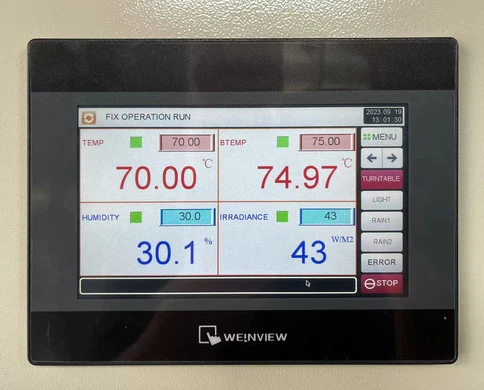
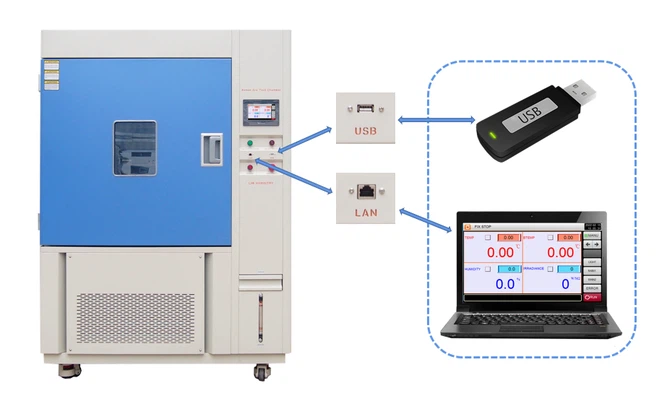
ASTM compliance requires continuous environmental condition documentation - temperature, humidity, and irradiance values recorded throughout test cycles. Accelerated weathering testers with integrated data acquisition systems automatically log environmental parameters, generating comprehensive test reports supporting standardization claims. Ethernet connectivity enables remote monitoring and centralized laboratory management. Complete environmental documentation enables regulatory audits and third-party certification authority review.
Related Products for Weathering & Durability Testing
|
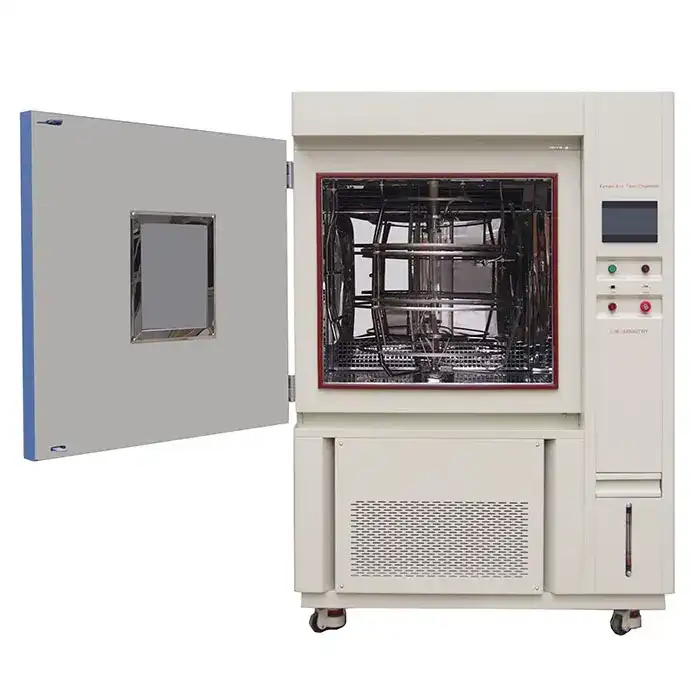
Xenon Test Chamber (ASTM G155) LIB Xenon Test Chamber simulates full-spectrum sunlight, temperature, humidity, and rain for accelerated weathering testing of coatings, plastics, and composites. 4500W water-cooled xenon lamp ASTM G155 / ISO 4892-2 compliant 35–98% RH humidity control Rotating specimen rack for 42 samples 👉 Ideal for long-term outdoor durability simulatio |
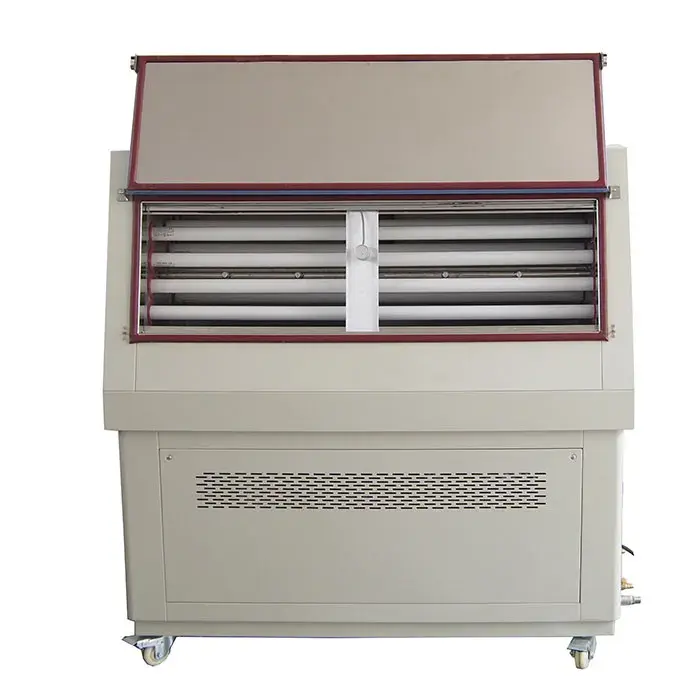
UV Weathering Test Chamber (ASTM G154)Designed for rapid UV aging of materials using fluorescent UV lamps to simulate sunlight degradation. UVA-340 / UVB-313 lamps ASTM G154 / ISO 4892-3 compliant Fast material screening 👉 Best for quick UV resistance evaluation |
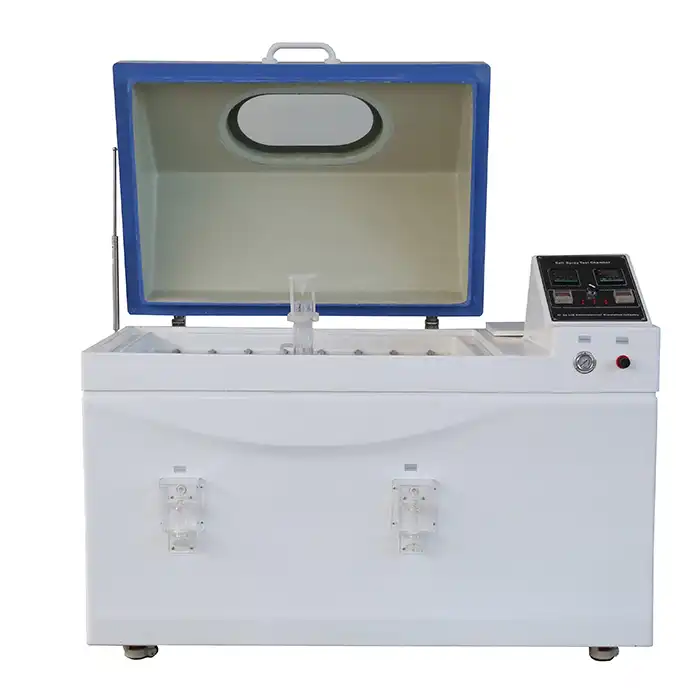
Salt Spray Test Chamber (ASTM B117)Used for corrosion resistance testing under simulated marine and industrial salt fog environments. ASTM B117 / ISO 9227 compliant Continuous or cyclic spray modes Corrosion resistance evaluation 👉 Suitable for metal and coating protection testing |
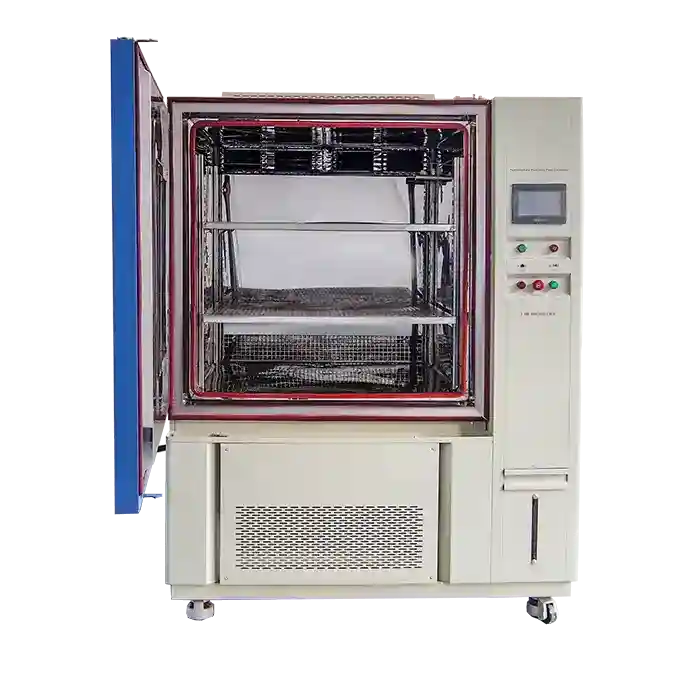
Temperature & Humidity ChamberProvides stable thermal and humidity cycling for environmental aging and reliability testing. -70°C to +150°C temperature range 20%–98% RH control IEC 60068 compliant testing 👉 Ideal for general environmental durability studies |
Industry Applications of ASTM-Compliant Weathering Testing
Automotive Coatings and Material Qualification
Automotive manufacturers mandate ASTM G155 weathering testing for paint systems, plastic components, and protective coatings ensuring field durability across 10-15 year service lifespans. Clearcoat formulations protecting metallic paint systems undergo accelerated weathering evaluation quantifying gloss retention and color stability. Polymer exterior components demonstrate resistance to UV degradation and environmental stress cracking. Manufacturers conduct testing on new formulations before production ramp-up, identifying deficiencies during development rather than after market introduction, preventing costly recalls.
Building Materials and Long-Duration Assessment
Roofing membranes, exterior sealants, and architectural composites require decades-long weathering resistance - ASTM G155 testing compresses 20-40 year service lives into manageable laboratory timescales. Sealant manufacturers validate adhesion retention and flexibility preservation. Building product certification standards explicitly reference ASTM G155 xenon exposure requirements, mandating such testing for market access. Architects and engineers specify ASTM G155-validated products, recognizing superior long-term durability evidence.
Textile and Dye Colorfastness Evaluation
Textile manufacturers assess fabric and dye colorfastness through standardized accelerated weathering testing preventing color fading and discoloration. ASTM G155 exposure of dyed textiles followed by color measurement quantifies color shift magnitude under controlled conditions. This standardized assessment enables manufacturers to compare dye formulations and identify superior dyes meeting customer expectations.
LIB Industry Provides ASTM-Compliant Weathering Testing Solutions
|
|
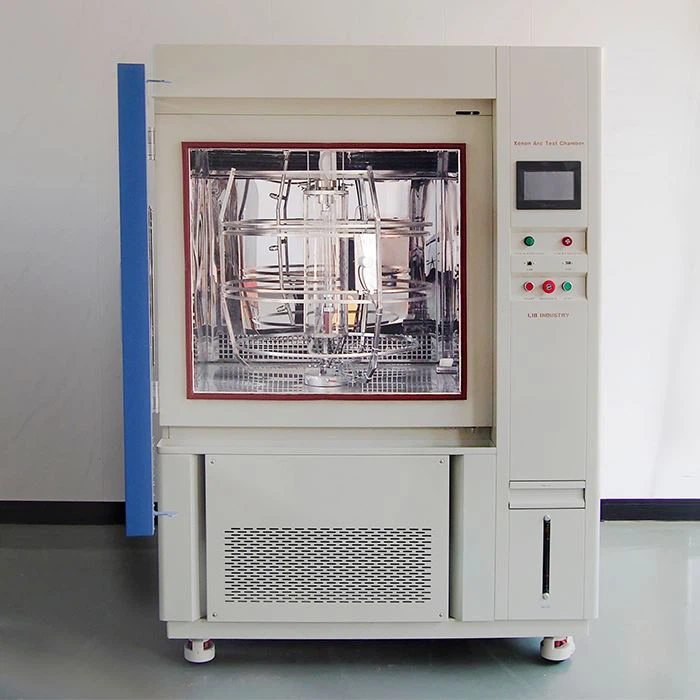 |
|
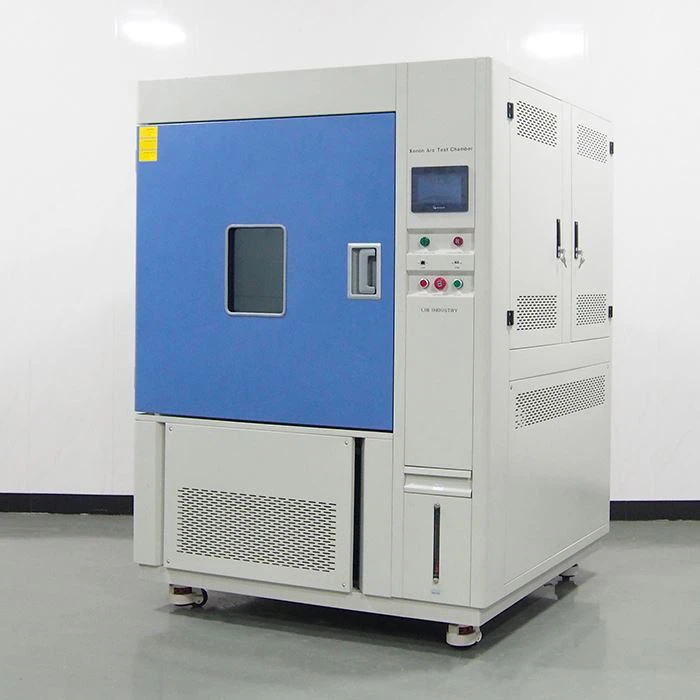
Internal Dimension (mm) |
950*950*850 mm |
|
Overall Dimension (mm) |
1300*1420*1800 mm |
|
Sample holder |
Adjustable speed, 1r /min |
|
Chamber Type |
Rotating Holder |
|
Irradiation Source |
1 piece of 4500w water-cooled xenon arc lamp with inner quartz and outer borosilicate filter |
|
Irradiance Range |
150 W/㎡ |
|
Bandwidth Measurement |
300~400 nm |
|
Chamber Temperature Range |
-40~ 100 ℃ ±2 ℃ |
|
Black Panel Temperature |
BPT 35 ~ 85 ℃ ±2 ℃ |
|
Humidity Range |
30 % ~ 98 % RH |
|
Water Spray Cycle |
1~9999 H 59 M (Adjustable) |
|
Controller |
Programmable color LCD touch screen controller |
|
Radiometer |
UV Radiometer, Tolerance: ±5 % |
|
|
|


xenon lamp and filters
 |
 |
LIB industry designs xenon light fastness test chambers specifically for demanding weathering applications
Professional-Grade Equipment Meeting ASTM Specifications
LIB Industry's accelerated weathering tester delivers 4500W water-cooled xenon arc lamp technology with 1600-hour operational lifespan, maintaining standardized spectral output across ASTM G155 and ISO 4892 requirements. Multiple filter configurations accommodate diverse material testing requirements. Closed-loop irradiance control systems maintain constant light flux throughout extended test campaigns. Black panel temperature precision (35-85°C ±2°C) and humidity control (30-98% RH ±2.5%) satisfy stringent ASTM specifications. Built-in PID control, comprehensive data logging, and Ethernet/Wi-Fi connectivity enable remote monitoring and centralized facility management.
Specimen Management and Uniform Exposure
The rotating specimen holder accommodates 42 samples simultaneously, with continuous rotation ensuring uniform light exposure and water spray distribution. Standardized specimen positioning at consistent radial distances eliminates positional exposure variance. This design ensures ASTM repeatability requirements - identical materials tested across different chambers produce comparable results, facilitating inter-laboratory validation. Large specimen capacity enables efficient material portfolio assessment.
Comprehensive Documentation and Support
Automatic data logging systems record environmental conditions throughout test cycles, generating comprehensive documentation supporting ASTM compliance certification. LIB Industry provides technical consultation supporting ASTM methodology interpretation, test protocol development, and result analysis. This partnership approach transforms equipment acquisition into strategic quality assurance enhancement, positioning customers for successful third-party certification and market access expansion.
Conclusion
ASTM-compliant accelerated weathering testing transforms subjective durability claims into scientifically validated performance data, enabling manufacturers to confidently position products across global markets. Standardized methodologies eliminate equipment variance and support repeatable results across facilities. Regulatory bodies recognize ASTM compliance, effectively mandating such testing for products pursuing premium market positioning. LIB Industry's professional-grade accelerated weathering tester delivers the precision engineering, spectral control sophistication, and comprehensive documentation enabling organizations to achieve ASTM G155 and ISO 4892 compliance. Investment in ASTM-compliant testing infrastructure establishes competitive advantage through superior product validation and accelerated market access.
FAQ
What distinguishes ASTM G155 xenon testing from ASTM G154 UV fluorescent testing?
ASTM G155 employs full-spectrum xenon simulation (280-800nm) matching natural sunlight, suitable for comprehensive material weathering assessment. ASTM G154 concentrates on short-wavelength UV (280-400nm), accelerating degradation in UV-sensitive polymers. Manufacturers select based on application environment - outdoor solar-exposed products employ xenon (G155), while UV-sensitive applications may utilize UV fluorescent (G154). Many conduct both for comprehensive durability understanding.
How do manufacturers ensure ASTM G155 test results translate reliably to field performance across different geographic climates?
ASTM G155 establishes standardized acceleration factors derived from decades of field-failure correlation data. However, geographic climate variations (tropical constant-heat, temperate seasonal cycling) produce different degradation rates. Manufacturers match test protocols to target markets - tropical applications employ higher black panel temperatures, while temperate climates utilize cycling temperature protocols. LIB's engineering team assists designing climate-specific test protocols maximizing field-correlation accuracy.
What documentation requirements support ASTM G155 compliance claims for third-party certification?
Documentation includes specimen preparation records, ASTM standard revision compliance, equipment calibration certificates, environmental condition logs throughout testing, and specimen measurement results. LIB weathering testers' automatic data logging systems generate standardized documentation packages supporting certification submissions.
Transform your product durability validation with LIB Industry's professional-grade accelerated weathering tester meeting ASTM G155 and ISO 4892 standards. As a global manufacturer and supplier of environmental testing chambers, we provide comprehensive turn-key solutions including design, production, commissioning, and technical training. Our weathering testers deliver xenon arc technology, precise environmental control, and automated documentation supporting third-party certification. With 3-year comprehensive warranty and 24/7 global support, LIB Industry partners with your quality assurance program to accelerate certification timelines. Contact our specialists at ellen@lib-industry.com to discuss your ASTM weathering testing requirements.