Optimizing Semiconductor Reliability via Temp Cycles
Semiconductor reliability hinges on rigorous thermal cycling validation that exposes latent defects before deployment. Temperature cycling tests subject integrated circuits, power modules, and microelectronics to accelerated thermal stress, revealing coefficient of thermal expansion (CTE) mismatches, solder joint failures, and interconnect vulnerabilities. Through precisely controlled heating and cooling rates in specialized thermal cycling test chambers, manufacturers identify failure mechanisms that compromise field performance. This proactive approach reduces warranty claims, extends product lifecycles, and ensures compliance with automotive, aerospace, and industrial qualification standards where thermal endurance determines mission-critical system integrity.
What Is Thermal Cycling in Semiconductor Reliability Testing?
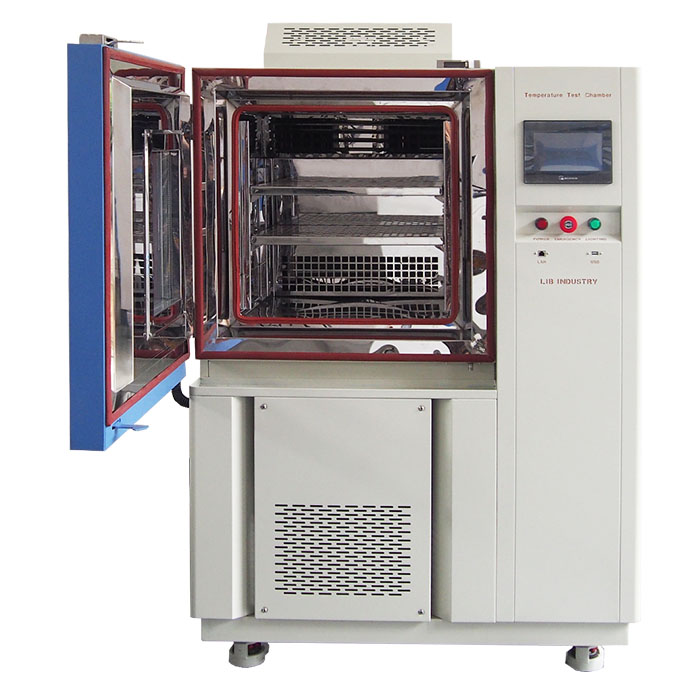
Defining Thermal Cycling Methodology
Thermal cycling represents a controlled environmental stress screening technique where semiconductor devices undergo repetitive exposure to temperature extremes. The process alternates between hot and cold zones at predetermined rates, typically ranging from 5°C to 15°C per minute. This methodology accelerates aging mechanisms that would naturally occur over years of field operation, compressing decades of thermal stress into weeks of laboratory testing.
Distinguishing Thermal Cycling from Thermal Shock
While both methods employ temperature variations, thermal cycling implements gradual transitions that simulate real operational environments. Thermal shock testing utilizes instantaneous transfers between temperature zones, exposing devices to more aggressive stress profiles. Semiconductor qualification protocols often require both approaches, with cycling tests revealing gradual degradation patterns while shock tests identify catastrophic failure thresholds under extreme transition conditions.
Physical Mechanisms Under Investigation
Temperature variations induce mechanical stress through differential thermal expansion between materials with dissimilar CTE values. Silicon chips, copper interconnects, molding compounds, and substrate materials expand and contract at different rates, generating interfacial shear stresses. Repeated cycling causes cumulative damage through micro-crack propagation, delamination, wire bond fatigue, and solder joint creep - failure modes that remain dormant until sufficient thermal cycles accumulate during actual device operation.
|
Test Parameter |
Thermal Cycling |
Thermal Shock |
|
Temperature Transition Rate |
5-15°C/min |
Instantaneous transfer |
|
Stress Type |
Gradual, cumulative |
Sudden, catastrophic |
|
Primary Application |
Long-term reliability prediction |
Extreme condition verification |
|
Typical Cycle Duration |
30-120 minutes |
5-15 minutes |
How Temperature Extremes Cause Semiconductor Material Stress?
CTE Mismatch Between Packaging Materials
Modern semiconductor packages integrate materials with vastly different thermal expansion coefficients. Silicon exhibits approximately 2.6 ppm/°C expansion, while copper traces expand at 17 ppm/°C and polymeric molding compounds at 15-25 ppm/°C. During temperature excursions from -40°C to +150°C, these materials expand and contract at incompatible rates, creating interfacial shear stresses exceeding 50 MPa at critical junctions.
Thermomechanical Fatigue Accumulation
Each temperature cycle in a thermal cycling test chamber contributes incremental plastic deformation to solder joints and interconnects. The Coffin-Manson relationship quantifies this damage accumulation, predicting cycles to failure based on temperature range and material properties. Gold and aluminum wire bonds experience progressive heel cracking as thermal expansion pulls bond interfaces apart. Solder balls beneath ball grid array (BGA) packages endure cyclic creep, gradually developing micro-voids that coalesce into electrical open circuits.
Temperature-Dependent Material Property Changes
Material characteristics vary significantly across temperature ranges encountered during cycling. Polymeric adhesives transition through glass transition temperatures where mechanical properties shift dramatically. Intermetallic compound formation accelerates at elevated temperatures, creating brittle phases within solder joints. Semiconductor junction characteristics drift as dopant profiles redistribute under thermal gradients, affecting electrical performance parameters beyond acceptable tolerances.
Moisture-Enhanced Degradation Pathways
Absorbed moisture within packaging materials expands during heating, generating internal vapor pressure that propagates delamination. The "popcorn effect" occurs when rapid heating vaporizes trapped water, causing explosive package cracking. Electrochemical migration accelerates when moisture provides ionic pathways between conductors under electrical bias, forming dendrites that eventually create short circuits during subsequent thermal excursions.
Key Failure Modes Identified in Thermal Cycling Tests
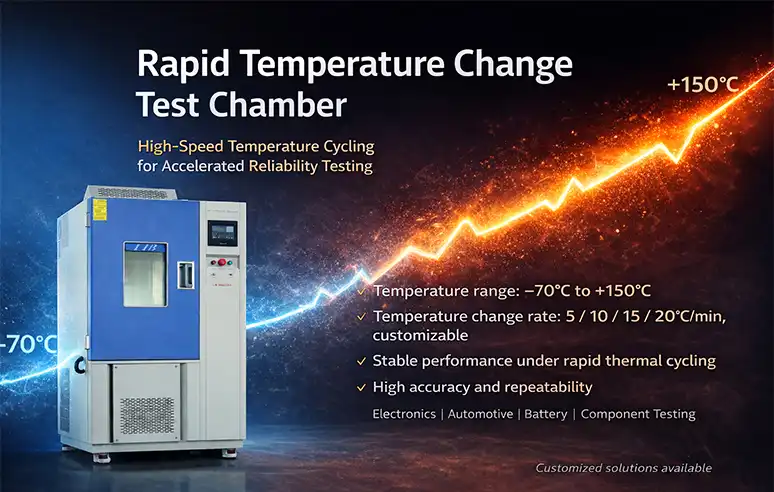
Solder Joint Fatigue and Cracking
Eutectic and lead-free solder alloys exhibit limited ductility under cyclic loading conditions. Thermal cycling induces alternating compressive and tensile stresses that nucleate cracks at solder-pad interfaces. These fissures propagate along grain boundaries, eventually severing electrical connections. Surface mount components with large body sizes experience greater CTE-induced stress, making them particularly susceptible to solder fatigue after 500-2000 temperature cycles.
Die Attach Delamination
The interface between semiconductor die and substrate constitutes a critical reliability vulnerability. Adhesive materials maintaining this bond endure severe shear stress during thermal excursions due to silicon-substrate CTE mismatch. Progressive delamination reduces thermal conductivity, elevating junction temperatures during operation. Complete separation causes immediate device failure, while partial delamination creates intermittent faults that challenge diagnostic procedures.
Wire Bond Degradation
Ultrasonic and thermosonic wire bonding create metallurgical connections between die pads and package leads. Thermal cycling stresses these bonds through differential expansion between aluminum or gold wires and underlying metallization. Heel cracks initiate at the wire-pad interface where geometric stress concentration combines with work-hardening effects. Bond lift-off represents catastrophic failure, while increased contact resistance precedes complete electrical discontinuity.
|
Failure Mode |
Typical Onset Cycles |
Detection Method |
Primary Root Cause |
|
Solder Joint Cracking |
500-2000 cycles |
X-ray imaging, electrical continuity |
CTE mismatch stress |
|
Die Attach Delamination |
800-1500 cycles |
Acoustic microscopy, thermal imaging |
Adhesive fatigue, interfacial stress |
|
Wire Bond Failure |
1000-3000 cycles |
Pull testing, electrical resistance |
Thermomechanical fatigue, intermetallic growth |
|
Package Cracking |
200-800 cycles |
Visual inspection, dye penetration |
Moisture expansion, material embrittlement |
Role of Thermal Cycling in Wafer and Chip Qualification
Early-Stage Reliability Screening
Wafer-level thermal cycling in a thermal cycling test chamber occurs before device singulation, identifying process-induced vulnerabilities across entire production lots. Through-silicon vias (TSVs), copper pillars, and redistribution layers undergo stress testing while still accessible for detailed failure analysis. This early detection prevents defective material from advancing through expensive backend assembly processes, reducing overall qualification costs.
Package-Level Qualification Requirements
After assembly, complete semiconductor packages endure extended thermal cycling per qualification standards. Automotive-grade components typically require 1000 cycles from -40°C to +150°C without parametric degradation. Industrial and military applications demand even more stringent protocols, extending to 2000+ cycles with intermediate electrical characterization. These tests validate manufacturing process maturity and design robustness before production release authorization.
Accelerated Life Testing Predictions
Thermal cycling data enables statistical reliability modeling through Weibull analysis and failure rate projections. By testing at elevated stress conditions - wider temperature ranges or faster ramp rates - engineers extrapolate field performance over anticipated product lifespans. Acceleration factors derived from Arrhenius relationships convert laboratory test hours into equivalent field years, supporting warranty predictions and lifecycle cost calculations.
Industry Standards for Semiconductor Thermal Reliability Testing
JEDEC Qualification Protocols
Joint Electron Device Engineering Council (JEDEC) standards define comprehensive thermal cycling specifications for semiconductor products. JESD22-A104 establishes temperature cycling test conditions, specifying temperature extremes, dwell times, transition rates, and required cycle counts. Condition B (-55°C to +125°C) serves as baseline automotive qualification, while Condition G extends to -65°C to +150°C for extreme environment applications.
AEC-Q Automotive Requirements
Automotive Electronics Council (AEC-Q100, Q101, Q200) standards mandate rigorous thermal cycling for components destined for vehicular deployment. These specifications require minimum 1000 cycles with zero failures for qualification approval. Extended temperature ranges address underhood environments where components experience -40°C cold-start conditions and +150°C operational extremes. Stress test driving profiles incorporate real-world thermal profiles from accelerated vehicle testing data.
Military and Aerospace Standards
MIL-STD-883 and ESCC specifications impose the most demanding thermal cycling requirements, addressing mission-critical aerospace and defense applications. These standards mandate detailed failure analysis, statistical sampling plans, and lot acceptance criteria. Extended cycle counts reaching 10,000+ cycles validate hermetic package integrity and radiation-hardened component durability for satellite deployment where replacement remains impossible.
ISO and IEC Environmental Testing
International Electrotechnical Commission (IEC) 60068-2-14 provides globally recognized thermal cycling test methods applicable across industries. ISO 16750 specifically addresses automotive components, harmonizing thermal stress testing between regional markets. These standards facilitate international commerce by establishing equivalent test conditions recognized by manufacturers, suppliers, and regulatory bodies worldwide.
Optimizing Thermal Cycling Parameters for Maximum Accuracy
Temperature Range Selection Criteria
Effective thermal cycling testing requires temperature extremes exceeding anticipated field conditions by appropriate margins. Accelerated testing typically adds 10-20°C to operational limits, balancing stress acceleration against introducing unrealistic failure mechanisms. Semiconductor devices rated for -40°C to +125°C operation undergo qualification cycling from -55°C to +150°C, ensuring adequate margin for process variations and worst-case environmental conditions.
Ramp Rate Impact on Failure Detection
Temperature transition speed significantly influences which failure mechanisms manifest during testing. Slower ramp rates (5°C/min) better simulate gradual environmental changes, revealing fatigue-dominated degradation. Faster transitions (15°C/min) increase thermal shock components, accelerating crack propagation and interface delamination. A thermal cycling test chamber with programmable ramp control enables customized profiles matching specific application thermal signatures.
Dwell Time Optimization
Temperature plateau duration at hot and cold extremes affects failure mode activation. Extended dwell periods allow temperature stabilization throughout device volumes, ensuring uniform stress distribution. Minimum 10-minute dwells suit most semiconductor packages, while larger power modules require 30+ minutes for complete thermal equilibration. Insufficient dwell times create temperature gradients that mask critical failure mechanisms or generate false failure signatures.
|
Chamber Volume |
Recommended Applications |
Cooling/Heating Rate |
Temperature Range Options |
|
100L-225L |
Small component testing, R&D validation |
5-10°C/min |
-40°C to +150°C standard |
|
500L-800L |
Production qualification, mid-volume testing |
10-15°C/min |
-70°C to +150°C extended |
|
1000L-3000L |
Large assembly testing, automotive modules |
Programmable 5-15°C/min |
Custom profiles with precise control |
Chamber Uniformity and Control Precision
Spatial temperature uniformity within test chambers directly impacts result reliability. Specifications requiring ±2.0°C deviation across the workspace ensure consistent stress application to multiple test samples simultaneously. Advanced chambers incorporate centrifugal air circulation systems maintaining ±0.5°C temperature fluctuation control. This precision prevents sample position from introducing statistical variation that obscures genuine reliability differences between design iterations.
Thermal Cycling Solutions by LIB Industry for Precision Reliability Testing
 |
 |
 |
 |
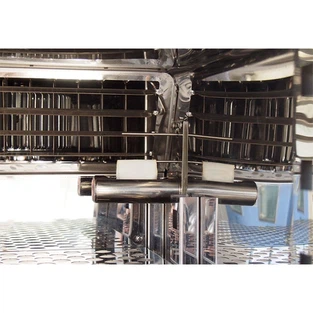 |
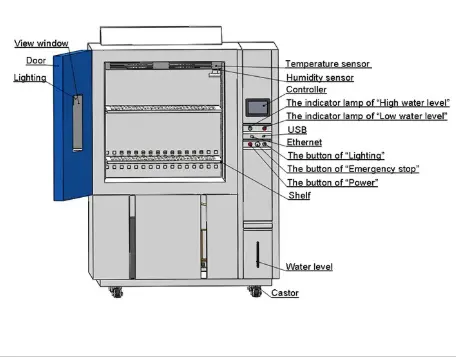
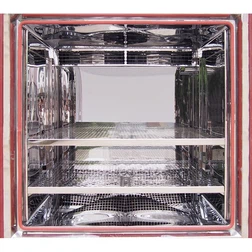
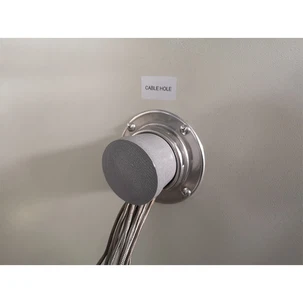
| Robust Workroom | Cable Hole | Temperature and Humidity Sensor |
Advanced Temperature Control Architecture
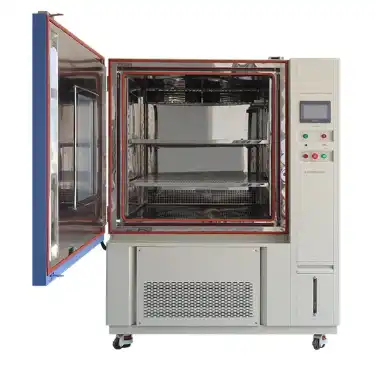
LIB Industry thermal cycling test chambers integrate ceramic-core nichrome heating elements with cascade refrigeration systems for rapid, precise temperature transitions. The TR5 series delivers programmable ramp rates from 5°C to 15°C per minute across chamber volumes spanning 100L to 3000L. Platinum resistance PT100Ω sensors with A-class accuracy provide real-time thermal monitoring, feeding closed-loop control algorithms that maintain temperature stability within ±0.5°C throughout cycling sequences.
Anti-Condensation Protection Systems
Rapid temperature transitions between cold and ambient conditions generate condensation risks that compromise semiconductor testing integrity. Integrated anti-condensation control systems in LIB thermal cycling test chambers protect sample surfaces from moisture formation during temperature ramps. This capability proves essential when testing powered devices under electrical bias, preventing electrochemical migration and short-circuit failures that would otherwise invalidate test results or damage expensive prototype components.
Customization Capabilities for Semiconductor Applications
Beyond standard configurations, LIB engineering teams develop application-specific chamber solutions addressing unique semiconductor testing requirements. Custom chamber dimensions accommodate oversized wafer handling equipment or automotive electronic control units. Specialized cable port configurations with multi-diameter silicone seals (50mm, 100mm, 200mm) enable simultaneous electrical characterization during thermal cycling. Ethernet connectivity facilitates integration with laboratory information management systems, automating data collection and analysis workflows.
Global Support Infrastructure
With service centers strategically positioned across Malaysia, Canada, the United Kingdom, and the United States, LIB Industry provides localized technical support for semiconductor manufacturers worldwide. The 3-year warranty coverage includes emergency replacement commitments and 24/7 multilingual technical assistance. This global footprint ensures rapid spare parts availability and on-site calibration services that minimize equipment downtime - critical for production qualification schedules where thermal cycling chambers operate continuously throughout multi-month validation programs.
Recommended Test Equipment for Semiconductor Reliability
| Equipment Type | Core Performance | Key Parameters | Typical Applications |
|---|---|---|---|
|
|
Rapid temperature transition between hot and cold zones for extreme stress simulation | Temperature range: -65°C to +150°C Transfer time: ≤10 sec Temperature recovery: fast stabilization |
Semiconductor package reliability, solder joint fatigue, CTE mismatch failure analysis |
|
|
Stable long-term temperature and humidity control for aging and drift evaluation | Temperature range: -70°C to +150°C Humidity range: 20%–98% RH Stability: ±0.5°C / ±2.5% RH |
Material aging, semiconductor parameter drift, baseline reliability testing |
|
|
Compact rapid thermal cycling for R&D and small component screening | Ramp rate: up to 15°C/min Compact chamber design Fast thermal response |
IC screening, PCB validation, early-stage failure detection, lab testing |


Conclusion
Thermal cycling testing remains indispensable for semiconductor reliability validation, revealing latent defects through controlled thermal stress before field deployment. Proper test protocol optimization - balancing temperature ranges, ramp rates, and cycle counts - enables accurate lifetime predictions while maintaining cost-effective qualification schedules. Advanced thermal cycling test chambers equipped with precise temperature control, anti-condensation protection, and comprehensive monitoring capabilities provide the foundation for robust semiconductor reliability programs across automotive, aerospace, and industrial applications.
FAQ
What temperature range should I select for automotive semiconductor qualification?
Automotive qualification typically requires -40°C to +150°C cycling per AEC-Q standards, simulating underhood extremes. Extended ranges to -55°C provide safety margins addressing regional climate variations and worst-case thermal stacking scenarios during cold-start conditions.
How many thermal cycles adequately predict 15-year field reliability?
Acceleration factors depend on temperature range and ramp rates, but 1000-2000 cycles at -40°C to +150°C generally correlate with 15+ years automotive field operation. Statistical modeling using Coffin-Manson relationships refines predictions based on specific failure mechanisms observed.
Can thermal cycling chambers accommodate simultaneous electrical testing?
Advanced chambers feature multiple cable ports with environmental seals enabling real-time electrical characterization during temperature cycling. This capability reveals parametric drift and intermittent failures that occur only under thermal stress conditions, providing comprehensive reliability assessment beyond simple pass-fail criteria.
Partner with LIB Industry, a leading thermal cycling test chamber manufacturer and supplier, to enhance your semiconductor qualification processes. Our engineering team delivers turnkey environmental testing solutions tailored to your specific reliability requirements. Contact us at ellen@lib-industry.com to discuss custom chamber configurations and global support options for your facility.