Best Practices for Thermal Cycling Test Profiles
Thermal cycling test profiles determine whether your products survive years of temperature fluctuations compressed into days of accelerated testing. A poorly designed profile wastes time and resources while missing critical failure modes, whereas optimized profiles reveal latent defects caused by thermal expansion mismatches before products reach customers. The difference between effective and ineffective testing lies in understanding how ramp rates, dwell times, temperature extremes, and cycle counts interact to stress materials realistically. Mastering thermal cycling test chamber programming transforms reliability validation from guesswork into a predictable engineering discipline that identifies solder joint failures, delamination, and CTE-induced cracking with precision.
Understanding the Structure of a Thermal Cycling Test Profile
Essential Components of Thermal Cycling Profiles
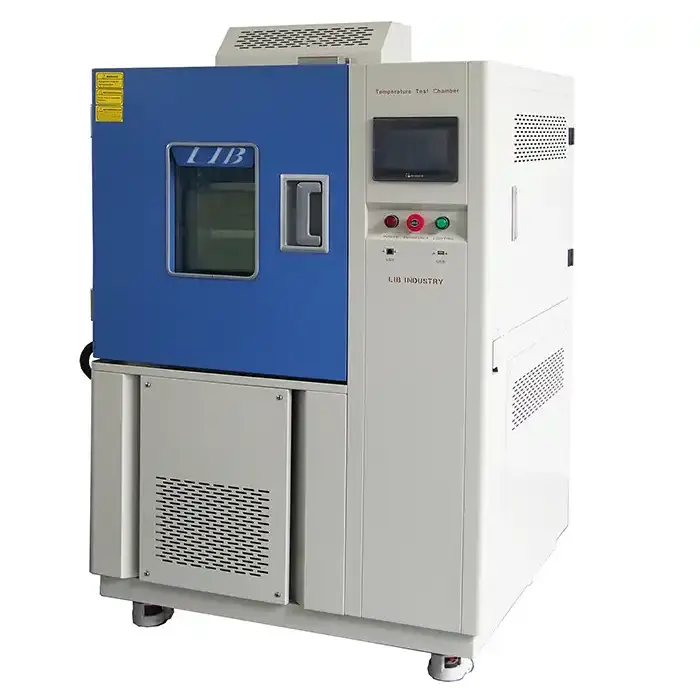
Every thermal cycling test profile comprises four fundamental elements working in sequence: the temperature ramp from ambient to hot extreme, the hot dwell period maintaining peak temperature, the temperature ramp to cold extreme, and the cold dwell period at minimum temperature. These components repeat cyclically, subjecting specimens to alternating thermal stress. Profile effectiveness depends on balancing these elements to replicate field conditions while accelerating failure manifestation.
Temperature Transition Phases and Their Purpose
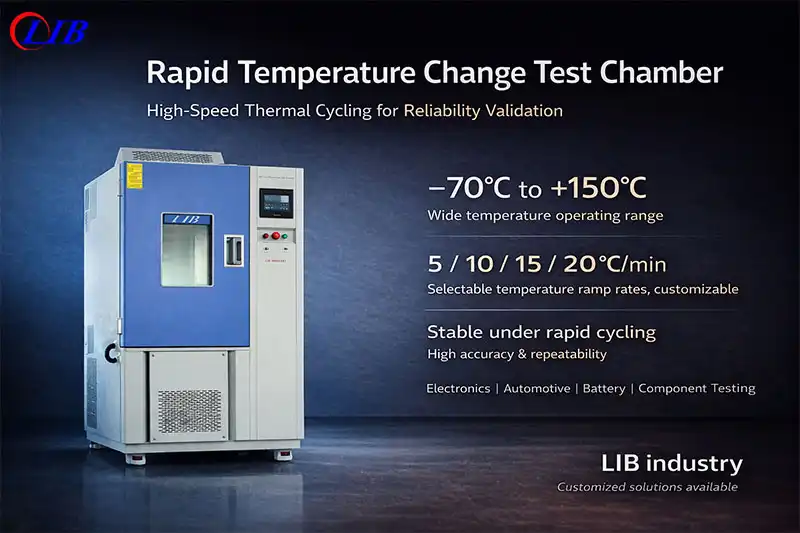
Transition phases between temperature extremes generate thermal stress through differential expansion rates of dissimilar materials. Rapid transitions maximize stress intensity, revealing weaknesses in solder joints, adhesive bonds, and composite interfaces. The transition rate - measured in degrees Celsius per minute - controls stress accumulation speed. LIB Industry thermal cycling test chambers achieve controllable ramp rates of 5°C/min, 10°C/min, or 15°C/min, enabling precise stress level manipulation.
Dwell Period Functions in Stress Generation
Dwell periods serve dual purposes: allowing complete thermal stabilization throughout specimen mass and enabling time-dependent degradation mechanisms. Short dwells primarily stress mechanical interfaces through expansion/contraction cycles. Extended dwells add thermally activated chemical processes - polymer degradation, intermetallic compound growth, and diffusion-driven failures. Dwell duration selection depends on dominant failure mechanisms anticipated in specific applications.
How Temperature Ramp Rates Affect Test Accuracy and Results?
Thermal Gradient Formation Within Specimens
Rapid temperature transitions create thermal gradients between specimen surfaces and cores. External surfaces respond immediately to chamber air temperature while internal masses lag, creating temporary temperature differentials. These gradients generate internal stresses beyond simple CTE mismatch - larger components experience greater gradients under identical ramp rates. Understanding this phenomenon guides appropriate ramp rate selection preventing unrealistic stress conditions.
Material Response Time Considerations
Different materials exhibit vastly different thermal response characteristics. Metals conduct heat rapidly achieving thermal equilibrium quickly, while polymers and ceramics respond slowly. Assemblies combining materials with disparate thermal diffusivities require slower ramp rates ensuring synchronized temperature distribution. Testing circuit boards with dense copper planes demands different profiles than testing plastic housings despite identical temperature extremes.
Balancing Acceleration Factors and Realism
Aggressive ramp rates accelerate testing by reducing cycle duration, enabling more cycles within fixed timeframes. However, excessively rapid transitions may introduce failure modes absent from actual service conditions. A circuit board experiencing 5°C/min transitions in a thermal cycling test chamber might never encounter such rapid changes during field deployment. Optimal profiles balance acceleration against realistic stress representation.
|
Ramp Rate |
Typical Application |
Advantages |
Considerations |
|
5°C/min |
Large assemblies, thick materials |
Minimizes thermal gradients |
Longer cycle times |
|
10°C/min |
Standard electronics, moderate masses |
Balanced acceleration/realism |
Most common selection |
|
15°C/min |
Small components, aggressive screening |
Maximum acceleration |
May create unrealistic stresses |
LIB Chamber Ramp Rate Control Capabilities
LIB Industry thermal cycling test chambers provide precise ramp rate programming enabling customized profiles. The cascade refrigeration system utilizing Bitzer and Tecumseh compressors delivers consistent cooling performance across temperature ranges. Electronic expansion valve (EEV) technology provides precise refrigerant flow control, maintaining programmed ramp rates with exceptional accuracy. This precision ensures repeatable test conditions across multiple specimens and testing campaigns.
Selecting Appropriate Temperature Ranges for Different Materials
Understanding Coefficient of Thermal Expansion Mismatches
Material CTE quantifies dimensional change per degree temperature variation. When materials with different CTEs bond together, temperature changes generate interfacial stresses. Solder joints connecting silicon dies (CTE 2.6 ppm/°C) to FR-4 boards (CTE 17 ppm/°C) experience significant stress. Temperature range selection should encompass the full operational envelope plus safety margins, typically extending 20-30°C beyond specified operating limits.
Glass Transition and Phase Change Temperatures
Polymers exhibit dramatic property changes at glass transition temperatures (Tg) - below Tg they become brittle while above they soften. Testing ranges should deliberately cross Tg boundaries to evaluate performance in both glassy and rubbery states. Solder alloys possess melting points requiring temperature limits well below these thresholds. SAC305 solder melts at 217°C, necessitating test maximum temperatures below 150°C preventing reflow during testing.
Industry-Specific Temperature Range Standards
Different industries establish standard temperature ranges based on typical operating environments. Automotive electronics commonly undergo -40°C to +125°C cycling per AEC-Q100 qualification requirements. Aerospace applications may extend to -55°C to +125°C reflecting high-altitude cold and equipment compartment heat. Consumer electronics typically test within narrower ranges: -20°C to +85°C. LIB chambers accommodate temperature ranges from -70°C to +150°C, covering all industry standard requirements.
Extreme Temperature Capability Requirements
Specialized applications demand extreme temperature testing beyond standard ranges. Arctic scientific equipment requires validation to -70°C, while industrial furnace controls must survive +150°C continuous exposure. LIB's TR5 series thermal cycling test chambers provide optional configurations achieving -70°C minimum temperatures through advanced cascade refrigeration technology. The open ceramic-core nichrome heaters maintain temperature uniformity at elevated extremes within ±0.5°C.
|
Industry |
Typical Low Extreme |
Typical High Extreme |
Driving Application |
|
Automotive |
-40°C |
+125°C |
Under-hood electronics |
|
Aerospace |
-55°C |
+125°C |
High-altitude flight conditions |
|
Consumer Electronics |
-20°C |
+85°C |
Storage/transportation exposure |
|
Military |
-55°C |
+125°C |
Global deployment environments |
|
Industrial |
-40°C |
+150°C |
Process control equipment |
Dwell Time Optimization in Thermal Cycling Testing
Thermal Stabilization Requirements
Dwell periods must provide sufficient time for specimen temperatures to stabilize uniformly. Small components with low thermal mass stabilize within minutes while large assemblies require extended periods. Thermocouples attached to specimen thermal centers verify stabilization - temperature readings should plateau before transitioning to the next cycle phase. Insufficient dwell times create temperature distribution variations between cycles, compromising test repeatability.
Time-Dependent Failure Mechanism Activation
Certain degradation mechanisms require time at temperature extremes beyond simple stabilization. Intermetallic compound formation at solder interfaces accelerates at elevated temperatures following time-dependent kinetics. Polymer stress relaxation redistributes mechanical loads over hours. Electrochemical corrosion processes require moisture presence and time. Extended dwells activate these mechanisms, revealing vulnerabilities that brief exposures miss.
Cycle Count Versus Dwell Duration Trade-offs
Test programs face time constraints requiring strategic balancing between cycle quantity and individual cycle duration. Achieving 1000 cycles with 30-minute dwells demands significantly less time than equivalent cycles with 2-hour dwells. Shorter dwells enable more cycles within fixed schedules but may miss time-dependent failures. Understanding dominant failure mechanisms guides appropriate compromises - solder fatigue benefits from cycle count while polymer degradation requires extended exposure.
Anti-Condensation Dwell Considerations
Rapid temperature transitions from cold to hot extremes create condensation risks as specimen surfaces warm through dew point temperatures. Moisture accumulation promotes electrochemical corrosion and electrical shorting. LIB Industry chambers incorporate integrated anti-condensation control systems protecting specimens during transitions. Extended cold dwells before warming transitions allow specimens to dry completely, while controlled transition rates minimize condensation duration.
Common Mistakes in Designing Thermal Cycling Test Profiles
Excessive Ramp Rate Selection Creating Unrealistic Stress
Engineers often maximize ramp rates seeking accelerated testing without considering whether resulting stress states reflect actual service conditions. A 15°C/min transition might generate thermal gradients and stress intensities never encountered during product life. This approach produces failures unrelated to field reliability, wasting resources investigating irrelevant failure modes. Matching ramp rates to realistic thermal shock scenarios ensures test relevance.
Inadequate Dwell Times Preventing Thermal Equilibrium
Conversely, overly aggressive dwell time minimization in a thermal cycling test chamber prevents complete specimen thermal stabilization. Testing large assemblies with insufficient dwells creates temperature distributions varying significantly between cycles. Early cycles stress cool internal regions while later cycles after heat accumulation stress warmer internals. This inconsistency produces misleading results and poor reproducibility across repeated test campaigns.
Temperature Range Misalignment with Operational Requirements
Selecting temperature extremes without referencing actual operational specifications generates either insufficient stress missing latent defects or excessive stress creating irrelevant failures. Testing consumer products to military temperature ranges wastes chamber capacity and testing time. Conversely, testing military equipment to commercial ranges fails to reveal field vulnerabilities. Proper range selection demands thorough operational environment analysis.
Ignoring Specimen Thermal Mass in Profile Design
Thermal cycling test profiles designed for small components often fail when applied to large assemblies without adjustment. A profile optimized for PCB assemblies may inadequately stress complete electronic enclosures with significantly greater thermal mass. Large specimens require longer dwells achieving thermal stabilization and potentially modified ramp rates preventing excessive surface-to-core gradients.
|
Common Mistake |
Consequence |
Correction Strategy |
|
Excessive ramp rates |
Unrealistic failure modes |
Match rates to field thermal shock |
|
Insufficient dwell times |
Poor cycle repeatability |
Verify thermal stabilization with thermocouples |
|
Misaligned temperature ranges |
Irrelevant test results |
Reference operational specifications |
|
Ignoring thermal mass |
Inconsistent stress application |
Scale dwell times to specimen mass |
Improving Repeatability and Reproducibility in Test Cycles
Temperature Sensor Calibration and Verification
Thermal cycling test chamber accuracy depends fundamentally on temperature sensor calibration. LIB chambers employ PTR Platinum Resistance PT100Ω Class A sensors delivering superior accuracy across temperature ranges. These sensors require periodic calibration verification against NIST-traceable standards ensuring measurement reliability. Sensor drift over time compromises profile accuracy - annual calibration maintains measurement integrity.
Specimen Placement and Airflow Uniformity
Chamber internal airflow patterns create temperature variations across the working volume. Specimens positioned near air circulation inlets experience different thermal environments than those in stagnant zones. LIB chambers utilize centrifugal wind fans generating uniform airflow distribution minimizing spatial temperature variations. Temperature uniformity specifications quantify this performance - LIB maintains ±2.0°C temperature deviation ensuring consistent exposure regardless of specimen position.
Load Configuration Impact on Thermal Performance
Chamber thermal performance varies with specimen load quantity and thermal mass. Testing single small components allows rapid chamber response to programmed transitions. Loading chambers to capacity with massive specimens slows thermal response, potentially compromising programmed ramp rates. Understanding load effects guides realistic profile programming accounting for specimen thermal inertia impacts on chamber performance.
Programmable Controller Precision and Data Logging
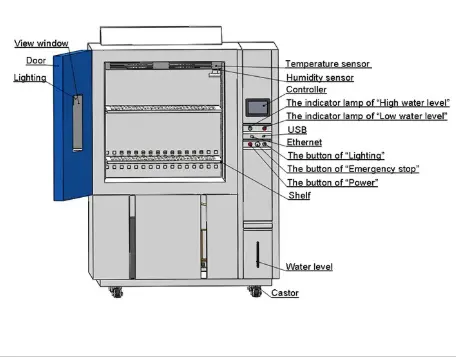
Modern thermal cycling demands precise profile execution and comprehensive documentation. LIB Industry thermal cycling test chambers feature programmable color LCD touchscreen controllers enabling complex multi-step profile creation. Ethernet connectivity supports PC Link remote monitoring and USB data download capabilities. Automated data logging records chamber temperature throughout testing providing certification documentation and enabling post-test analysis verifying profile adherence.
LIB Industry Thermal Cycling Chambers Enable Accurate Test Profile Control
 |
 |
 |
 |
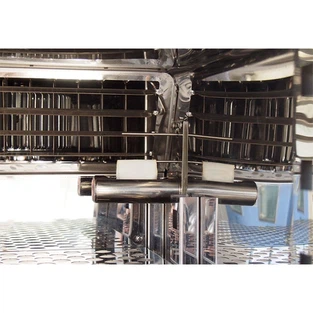 |
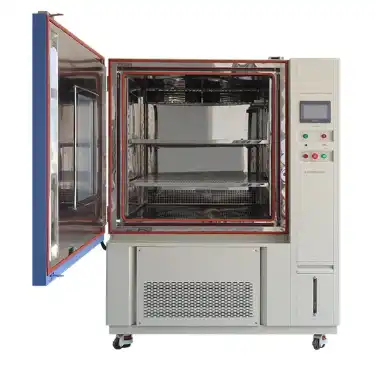
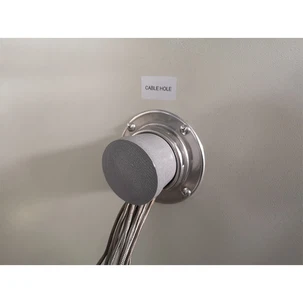
| Robust Workroom | Cable Hole | Temperature and Humidity Sensor |
Advanced Cascade Refrigeration Technology
Achieving low-temperature extremes while maintaining rapid transition capability demands sophisticated refrigeration engineering. LIB chambers employ cascade refrigeration systems using premium components from Bitzer and Tecumseh - industry-recognized leaders in compression technology. This dual-stage approach efficiently reaches -70°C minimum temperatures while supporting controllable heating/cooling rates. The system reduces compressor mechanical fatigue during frequent temperature changes, extending operational life.
Electronic Expansion Valve Precision Flow Control
Traditional thermostatic expansion valves provide limited refrigerant flow regulation, compromising ramp rate consistency. LIB's electronic expansion valve (EEV) technology delivers precise flow control responding dynamically to temperature program demands. This innovation reduces energy consumption by over 20% compared to conventional valves while improving temperature transition accuracy. The EEV adjusts refrigerant flow instantaneously maintaining programmed ramp rates regardless of ambient conditions.
SUS304 Stainless Steel Chamber Construction
Interior chamber materials must withstand thousands of temperature cycles without degradation affecting thermal uniformity. LIB chambers feature SUS304 stainless steel interiors providing exceptional corrosion resistance and dimensional stability. The material's thermal conductivity promotes uniform temperature distribution while the mirror-finish surface facilitates cleaning and prevents contamination. This robust construction ensures consistent performance throughout chamber operational life.
Comprehensive Model Range for Diverse Testing Needs
Different testing applications require varying chamber volumes accommodating specimens from individual components to complete assemblies. LIB manufactures five standard thermal cycling chamber models spanning 100L to 1000L internal volumes. The TR5-500 model (700mm × 800mm × 900mm internal dimensions) serves mid-range applications, while the TR5-1000 (1000mm × 1000mm × 1000mm) accommodates large automotive and aerospace assemblies.
|
LIB Model |
Internal Dimensions (mm) |
Volume (L) |
Temperature Range Options |
Typical Applications |
|
TR5-100 |
400 × 500 × 500 |
100 |
-20°C to +150°C / -40°C to +150°C / -70°C to +150°C |
Small electronics, sensors |
|
TR5-225 |
500 × 600 × 750 |
225 |
-20°C to +150°C / -40°C to +150°C / -70°C to +150°C |
PCB assemblies, modules |
|
TR5-500 |
700 × 800 × 900 |
500 |
-20°C to +150°C / -40°C to +150°C / -70°C to +150°C |
Automotive components |
|
TR5-800 |
800 × 1000 × 1000 |
800 |
-20°C to +150°C / -40°C to +150°C / -70°C to +150°C |
Large assemblies, multiple specimens |
|
TR5-1000 |
1000 × 1000 × 1000 |
1000 |
-20°C to +150°C / -40°C to +150°C / -70°C to +150°C |
Complete systems, aerospace equipment |
Safety and Protection Systems
Thermal cycling testing involves extreme temperatures and electrical systems demanding comprehensive safety measures. LIB thermal cycling test chambers incorporate multiple protection layers: over-temperature protection preventing runaway heating, over-current protection safeguarding electrical systems, refrigerant high-pressure protection preventing compressor damage, and earth leakage protection ensuring operator safety. These redundant systems prevent equipment damage and operator hazards during unattended operation.
ISO 9001 Quality Assurance and Global Support
LIB Industry operates under ISO 9001 Quality Management certification ensuring manufacturing consistency. All chambers receive CE certification demonstrating European safety directive compliance. Third-party validation from SGS and TUV authorities provides independent performance verification. The company maintains service centers in Malaysia, Canada, the United Kingdom, and the United States, supported by 29 global distributors ensuring prompt technical assistance and spare parts availability.
Turn-Key Implementation and Custom Engineering
LIB provides comprehensive turn-key solutions encompassing specification consultation, custom configuration design, manufacturing, installation commissioning, and operator training. The engineering team excels in non-standard design addressing unique testing requirements - modified chamber dimensions, integrated humidity systems, or specialized control features. This flexibility serves industries with proprietary testing protocols beyond standard chamber capabilities.
Environmental Reliability Testing Equipment for Thermal Cycling, Thermal Shock and Climate Simulation Applications
TH Series Temperature & Humidity Chamber
|
2TS Thermal Shock Chamber (Dual-Zone)
|
3TS Thermal Shock Chamber (Triple-Zone)
 |
Walk-in Environmental Test Chamber
 |


Conclusion
Optimizing thermal cycling test profiles transforms reliability validation from a time-consuming trial-and-error process into a predictable engineering discipline. Understanding how temperature ranges, ramp rates, dwell times, and cycle counts interact enables creation of profiles that efficiently reveal latent defects while avoiding unrealistic failure modes. Investment in quality thermal cycling test chamber equipment with precise control capabilities and comprehensive support infrastructure ensures consistent, reproducible testing results supporting confident product release decisions.
FAQ
How do I determine the optimal number of thermal cycles for my product testing?
Cycle count depends on expected product lifetime and operational thermal cycling frequency. Automotive electronics typically undergo 1000-3000 cycles representing 15-year lifespans with daily temperature variations. Accelerated testing principles suggest cycle counts should exceed expected field exposure by 2-3× margins. Industry standards like AEC-Q100 specify minimum cycle requirements - reference applicable standards while considering specific application severity.
Can thermal cycling profiles include humidity control alongside temperature cycling?
Advanced thermal cycling incorporates humidity as an optional parameter creating combined temperature-humidity stress profiles. LIB chambers accommodate humidity system integration enabling damp-heat thermal cycling testing. This approach reveals failures resulting from moisture ingress combined with thermal stress - particularly relevant for sealed electronics experiencing condensation during temperature transitions. Humidity control adds profile complexity requiring careful programming.
What's the difference between thermal cycling and thermal shock testing profiles?
A: Thermal cycling employs controlled temperature transitions (typically 5-15°C/min) with defined dwell periods at extremes, replicating gradual environmental changes. Thermal shock uses extremely rapid transitions (often specimen transfer between hot/cold chambers within seconds) creating maximum thermal gradient stress. Shock testing reveals brittleness and acute thermal mismatch failures while cycling identifies cumulative fatigue degradation. Application determines appropriate methodology selection.
Transform your thermal cycling testing efficiency with precision-engineered chamber technology. LIB Industry, a leading manufacturer and supplier of thermal cycling test chambers, delivers advanced solutions meeting rigorous reliability validation requirements. Contact our thermal testing specialists at ellen@lib-industry.com to discuss optimizing your test profiles.