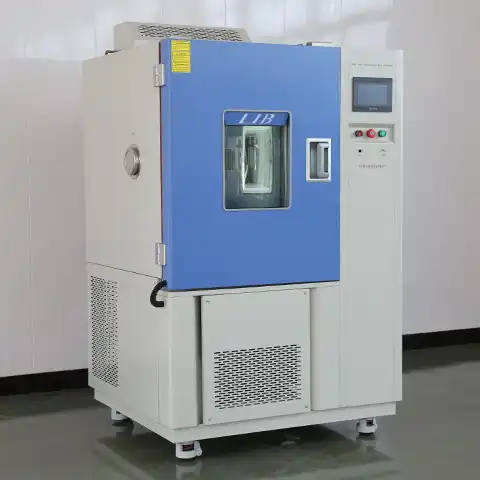
Temperature Chamber
Lowest Temperature: -20℃/-40℃/-60℃/-80℃;
Temperature Range:-20℃~+150 ℃;
Humidity Range:20% ~ 98% RH;
Refrigerant: Environmental refrigerant;
Temperature and Humidity condition
Touch-screen programmble controller,Ethernet access
Temperature Chamber - Professional Temperature Testing Solutions
Repeatability, accuracy and dependability are needed for industrial temperature testing. A Temperature Chamber is used to simulate extreme thermal conditions from extreme cold to high-heat environments so manufacturers can test product performance before it reaches the market. Unlike temperature humidity chambers which manage both temperature and moisture, a pure temperature test chamber is designed for thermal stress testing only – perfect for high temperature ageing, low temperature startup verification and temperature cycle applications. Getting this right means avoiding expensive buying errors and ensures your testing plan matches the actual need.
Pure Temperature vs. Climatic Chamber: Choose the Right Solution
Select the product (this page) if you need:
· High-temperature aging tests (electronics burn-in, thermal stress screening)
· Low-temperature startup validation (automotive cold cranking, battery performance)
· Temperature cycling without humidity (thermal shock, solder joint reliability)
Choose a Temperature Humidity Chamber if you need:
· Humid heat aging (85°C/85%RH tests for photovoltaic modules)
· Moisture Sensitivity Level (MSL) classification testing
· Condensation and moisture ingress evaluation
Select a standalone Humidity Chamber if you need:
· Pure moisture absorption testing (packaging materials, textiles)
Desiccant performance validatio
Product Parameter
Parameter | Specification |
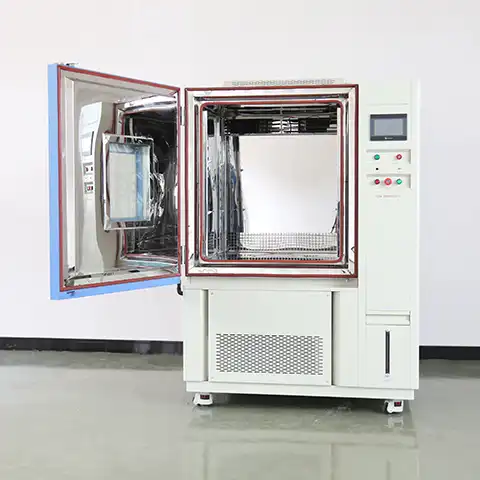
Models | T-100 / T-225 / T-500 / T-800 / T-1000 |
Internal Dimensions (mm) | 400×500×500 / 500×600×750 / 700×800×900 / 800×1000×1000 / 1000×1000×1000 |
Volume | 100L / 225L / 500L / 800L / 1000L |
Temperature Range | -20℃~+150℃ / -40℃~+150℃ / -70℃~+150℃ |
Temperature Accuracy | Fluctuation ±0.5℃ / Deviation ±2.0℃ |
Heating Rate | 3℃/min |
Cooling Rate | 1℃/min |
Refrigeration System | Mechanical Compression Refrigeration |
Controller | Programmable LCD Touch Screen Controller, Ethernet & PC Link |
Air Circulation | Centrifugal Fan System |
Safety Protection | Over-temperature, Over-current, High-pressure & Leakage Protection |
Interior Material | SUS304 Stainless Steel |
Exterior Material | Coated Steel Plate |
Product Details
|
|
|
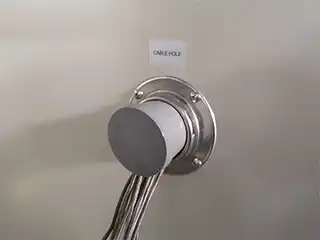
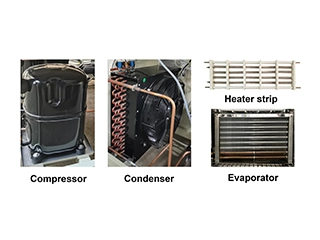
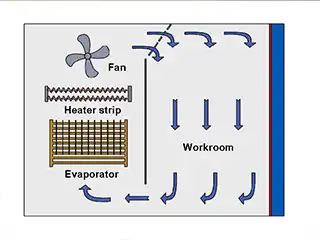
Cable hole The standard inner hole diameter is 50mm/100mm/200mm Soft silicone plug seal; Metal enclosure closed | Cooling system Mechanical compression refrigeration system French TECUMSEH compressor Environmentally friendly refrigerant | Air circulation The air is uniformly distributed through the air outlet Air circulates evenly throughout the workroom |
|
|
Why Choose LIB Industry
Accurate Temperature Control
LIB temperature chambers use optimized airflow circulation and precise control systems to maintain stable testing conditions with ±0.5℃ temperature fluctuation and excellent temperature uniformity.
Reliable Heating & Safety Design
Solid-state heating control provides stable, quiet operation with reduced maintenance needs. Multiple safety protections, including over-temperature, over-current, leakage, and compressor protection, ensure safe operation.
International Standards Compliance
Our temperature test chambers support major standards, including:
IEC 60068-2-1 – Cold Test
IEC 60068-2-2 – Dry Heat Test
GB/T 2423.1 – Low Temperature Test
GB/T 2423.2 – High Temperature Test
CE & UL 61010-1 – Safety Requirements
Global Service & Warranty
Since 2009, LIB Industry has supplied environmental test chambers to customers in 60+ countries. With global service support and ISO 9001-certified production, we provide:
3-year warranty & lifetime technical support
24/7 after-sales service
Replacement guarantee during warranty period if repair is impossible
Custom Testing Solutions
LIB Industry provides customized solutions including:
Walk-in temperature chambers
Multi-zone temperature systems
Combined vibration and environmental testing
Customized test programs
FAQ
Q: What's the difference between temperature-only and temperature-humidity chambers?
A: The products control thermal conditions only. If your test requires moisture control, specify a temperature-humidity model.
Q: Are your specifications based on empty or loaded chambers?
A: All published specs reflect full-load, 9-point measurement—not empty-chamber extremes.
Q: How often does maintenance occur?
A: Clean air-cooled condenser fins quarterly. Refrigeration systems require annual professional service checks.
Q: Can I test powered electronics inside?
A: Yes, but account for heat dissipation in your load calculations and use insulated cable ports.
Q: What power supply is required?
A: Standard models use single-phase 220V. Units below -40°C may need three-phase or dedicated circuits—confirm before purchase.


