How Is Weathering Test Equipment Used for Solar Panel Durability Evaluation?
Solar panel makers can use weathering test equipment to expose backsheets, encapsulants, coatings, and junction box plastics to controlled UV, heat, and moisture before a module reaches the roof. Xenon arc chambers configured for ASTM G155 and ISO 4892 can reproduce a broad solar spectrum, making them useful for polymer material testing, while IEC 61215 applies to module-level qualification.
Teams looking to buy accelerated weathering testers should make sure the chamber matches their materials, test conditions, and applicable standards.
Need weathering test equipment for solar panel durability testing? Request a quote in 24 hours.
The Role of Weathering Test Equipment in Solar Panel Reliability Testing
Screening Materials Before Module Assembly
It costs more to build and test a finished module than to screen individual materials. Engineers can test backsheet, encapsulant, and coating samples before assembly, helping identify yellowing, cracking, or other degradation earlier.
Predicting Relative Durability, Not Exact Lifespan
Accelerated weathering tests allow materials to be compared under controlled conditions. ASTM G155 does not establish a direct relationship between accelerated exposure time and outdoor service years, so laboratories generally use the results to compare material performance rather than predict an exact lifespan.
Reducing Warranty Risk Early
PV products may be designed for service lives of 25 years or more. Weathering data gives quality teams useful evidence when selecting materials and evaluating long-term resistance to degradation.
Feeding Results Back Into Design Decisions
Exposure results can show which polymer formulations maintain color, gloss, and flexibility. Engineers can use this information when selecting encapsulants, backsheets, and coatings before complete module qualification.
Key Environmental Factors Tested in Solar Panel Weathering Evaluation
Solar modules face several environmental stress factors, each of which can affect different materials.
| Stress Factor | Layer Most Affected | Typical Failure Sign |
|---|---|---|
| UV radiation | Encapsulant, backsheet, junction box seals | Yellowing, embrittlement, cracking |
| Heat | Adhesives, polymer films | Softening, accelerated aging |
| Humidity and condensation | Edge seals, interconnects | Delamination, corrosion |
| Water spray cycles | Coatings, frame seals | Blistering, moisture ingress |
UV Radiation Drives Polymer Breakdown
UV exposure can degrade materials such as EVA encapsulants, backsheets, and junction box plastics. Xenon arc weathering can help evaluate these materials before module qualification.
Heat and Moisture Accelerate the Damage
High temperature and moisture can accelerate degradation in polymers, adhesives, and seals. 85°C and 85% RH damp heat testing is used at the module level to evaluate resistance to combined heat and humidity.
Cycling Reveals Fatigue That Steady Exposure Hides
Repeated changes between dry and wet or hot and cold conditions can place additional stress on material interfaces. Programmable exposure cycles are therefore important for reliability testing.
LIB Industry provides xenon arc weathering chambers for controlled UV, temperature, and moisture exposure.
Essential Features of Accelerated Weathering Testers for Solar Applications
Stable, Filterable Light Output
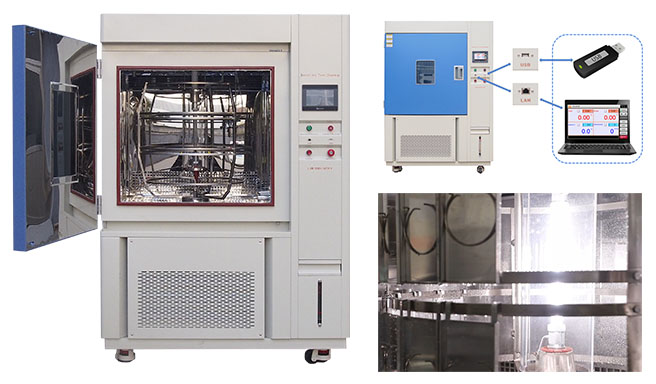
A 4500W water-cooled xenon arc lamp with sunshine, window glass, and UV-extended filters provides a stated wavelength range of 280–800 nm. Interchangeable filters allow the exposure to be configured for different applications.
Uniform Exposure Across Every Specimen
A rotating specimen holder provides consistent exposure around the lamp and can accommodate up to 42 specimens, supporting comparison of multiple backsheet, encapsulant, or coating samples.
Accurate Black Panel Control and Data Logging
The black panel temperature range is 35°C to 85°C with ±2°C accuracy. Programmable control, irradiance monitoring, and Ethernet or USB data export support long-duration testing and data records.
How Solar Manufacturers Choose the Right Weathering Test Equipment Supplier?
Confirming Standards Fluency
A supplier should understand ASTM G155, ISO 4892, and IEC 61215 and how they apply to material and module testing. Buyers should confirm that the chamber configuration supports their required irradiance, filter, temperature, and exposure conditions.
Checking Service Depth and Consumables Support
Xenon lamps typically require replacement after about 1,600 hours. Buyers should confirm lamp, filter, spare-parts, calibration, and technical support availability before purchase.
Reviewing Traceability and Documentation
Certifications such as ISO 9001 and CE, together with available third-party testing from organizations such as SGS or TÜV, can help buyers evaluate a supplier's quality system. Relevant calibration and performance records should also be requested.
Weighing Customization Against Catalog Limits
PV programs may require different specimen sizes, holders, filters, or exposure cycles. A manufacturer with engineering capabilities can adapt these elements to specific testing requirements.
Accelerated Weathering Testing Standards for Photovoltaic Materials
| Standard | Scope | Key Detail |
|---|---|---|
| ASTM G155 | Xenon arc exposure of non-metallic materials | Defined irradiance and cycle options |
| ISO 4892-2 | Xenon arc exposure of plastics | International weathering method |
| IEC 61215 | Photovoltaic module qualification | UV, thermal cycling, damp heat, and other tests |
| IEC TS 63209-1 | Extended-stress module testing | Extended thermal cycling and damp heat |
How Do Material Tests and Module Tests Fit Together?
Xenon exposure can screen plastics and other materials at the coupon level, while IEC 61215 covers a broader module-level qualification program. These tests support different stages of photovoltaic reliability evaluation and should not be treated as interchangeable.
Extended-Stress Protocols Raise the Bar
IEC TS 63209-1 provides extended-stress testing approaches for photovoltaic modules, including longer thermal cycling and damp heat sequences.
UV Preconditioning Sets the Pass Sequence
UV exposure is one part of photovoltaic module qualification. Material-level weathering can help identify vulnerable materials before complete module testing.
Reliable Solar Weathering Test Equipment by LIB Industry
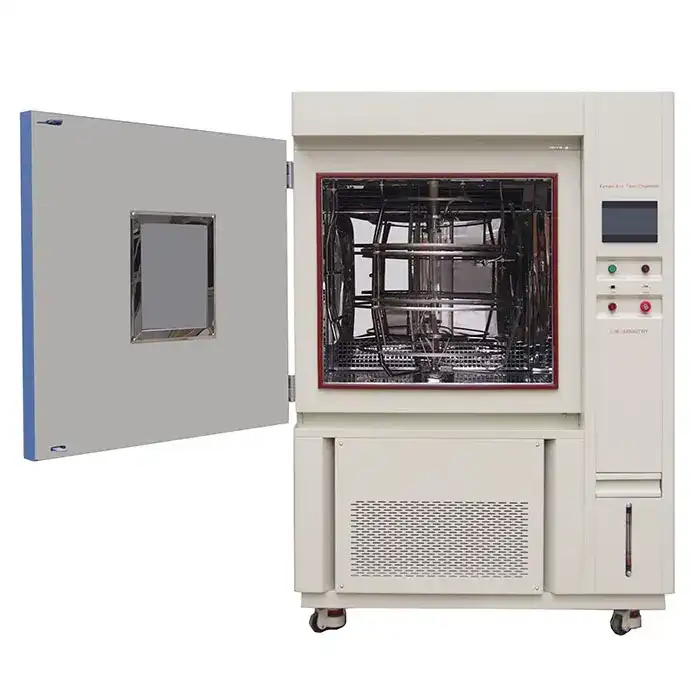
LIB Industry's accelerated weathering tester uses a 4500W water-cooled xenon arc lamp, a 42-specimen rotating holder, and black panel control from 35°C to 85°C with ±2°C accuracy. The system can be configured for ASTM G155 and ISO 4892-related weathering applications.
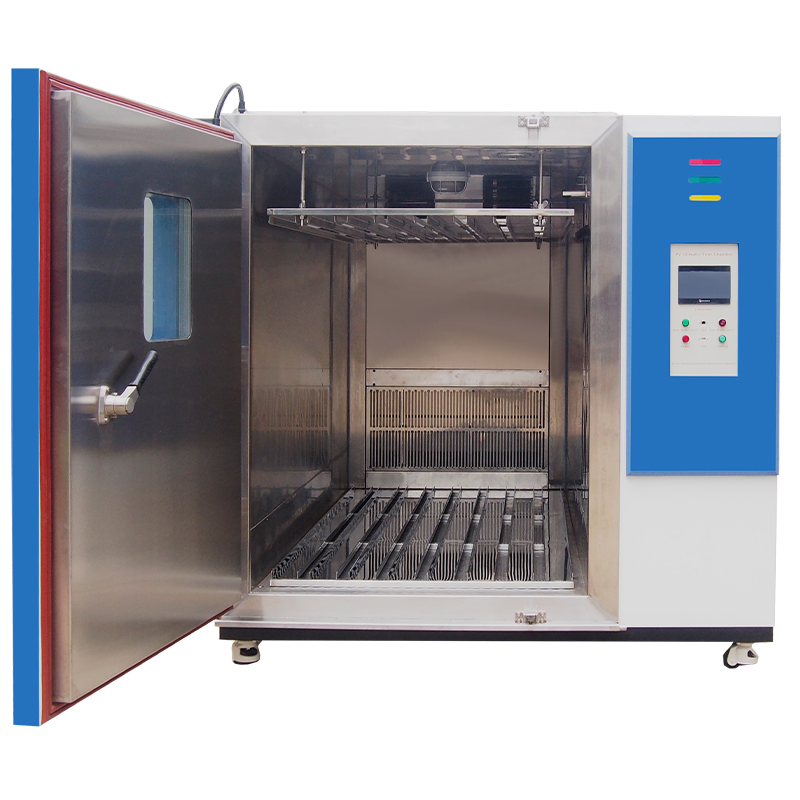
For full-module testing, LIB Industry also provides environmental chambers for panels up to 1 m × 2 m and up to 12 pieces, with configurations for thermal cycling from -40°C to +85°C and damp heat at 85°C / 85% RH.
|
|
|
LIB Industry provides 3-Year Manufacturer Warranty / 36 months, lifetime free technical support, traceable factory calibration, 24/7 remote video assistance, and 48-Hour Spare Parts Express via DHL/FedEx.
Related Solar Testing Equipment
|
|
|
|
| Xenon Arc Weathering Chamber For accelerated weathering of photovoltaic polymers, coatings, plastics, and other materials. |
Temperature & Humidity Test Chamber For controlled temperature and humidity conditioning of photovoltaic materials and components. |
Thermal Cycling Chamber For repeated high- and low-temperature cycling of photovoltaic modules and components. |


Conclusion
Weathering testing provides solar manufacturers with an effective way to compare backsheets, encapsulants, coatings, and other materials before complete module qualification. ASTM G155 and ISO 4892 support xenon arc material weathering, while IEC 61215 and IEC TS 63209-1 address module-level testing.
When choosing equipment, confirm the required standard, irradiance control, exposure uniformity, temperature range, specimen capacity, and after-sales support.
Need a weathering tester for your solar durability program? Contact LIB Industry at ellen@lib-industry.com with your test standard and requirements for a suitable configuration and quotation.
FAQ
Can a xenon weathering tester replace IEC 61215 module testing?
No. Xenon weathering testers are used for applicable material-level weathering tests such as ASTM G155 or ISO 4892, while IEC 61215 covers complete photovoltaic module qualification.
How much UV does IEC 61215 preconditioning require?
The applicable UV exposure and wavelength requirements should be confirmed against the current IEC 61215 test procedure.
How often does a xenon lamp need replacing?
LIB Industry's xenon arc system uses a lamp with an expected service life of approximately 1,600 hours. Actual replacement depends on operating conditions and required irradiance performance.