How Much Does an Accelerated Weathering Tester Cost?
When you buy an accelerated weathering tester, the price depends on much more than the lamp itself. Light source, irradiance control, temperature and humidity capability, specimen capacity, filter configuration, water spray, and after-sales service can all affect the final quotation.
For buyers, the more useful question is:
Which specifications do I actually need, and which features are worth paying for?
A basic fluorescent UV tester and a full-spectrum xenon arc weathering tester serve different testing requirements. Comparing them only by purchase price can result in either unnecessary spending or equipment that cannot reproduce the required test conditions.
Need an accelerated weathering tester for ASTM G155 or ISO 4892-2? Request a quote in 24 hours.
Request a Quote → ellen@lib-industry.com
What Determines Accelerated Weathering Tester Price?
The final price is mainly determined by five areas:
Light source and spectral performance
Environmental control
Filter configuration
Specimen capacity and water system
Control, data management, and customization
The first decision should therefore be based on your testing standard and application, rather than starting with a target price.
1. Does the Light Source Affect the Price?
Yes. The light source is one of the biggest differences between weathering tester configurations.
Fluorescent UV testers are generally simpler and are suitable for applications focused on UV-related degradation such as surface cracking or chalking.
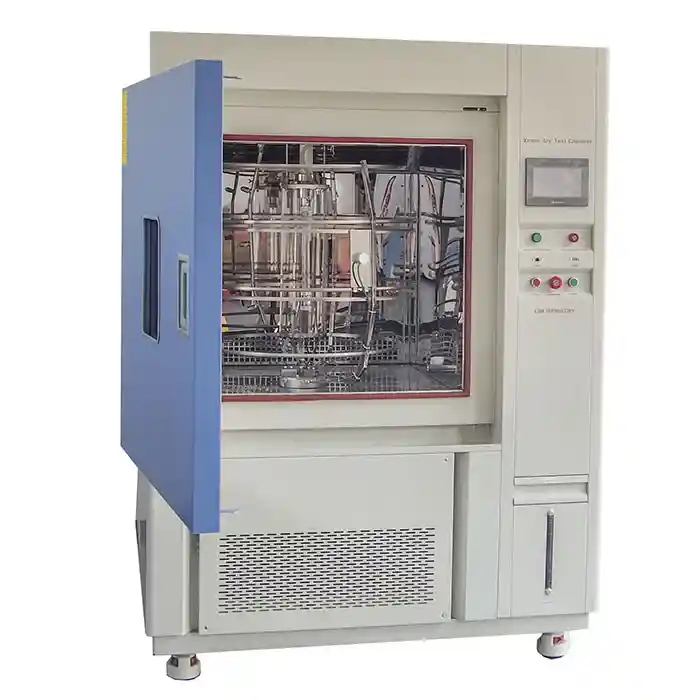
A xenon arc weathering tester provides a broader solar simulation capability. LIB Industry's system uses a 4500W water-cooled xenon arc lamp, covering approximately 280–800 nm, with a rated lamp life of up to 1,600 hours.
The water-cooled design adds system complexity, but stable lamp operation is important when the test requires controlled and repeatable irradiance.
If your test method specifically requires xenon arc exposure, choosing a lower-cost UV system simply because it is cheaper may not provide valid test conditions.
2. How Do Environmental Controls Affect Cost?
A professional weathering tester does more than generate light.
Depending on the test method, the chamber may need to control:
- Chamber temperature
- Black panel temperature
- Relative humidity
- Irradiance
- Water spray
- Light/dark cycles
For example, LIB Industry's professional configuration provides:
| Parameter | Typical LIB Configuration |
|---|---|
| Chamber temperature | Ambient to 100°C ±2°C |
| Black panel temperature | 35–85°C ±2°C |
| Humidity | 50–98% RH ±5% |
| Irradiance | 35–150 W/m² |
| Xenon lamp | 4500W water-cooled |
| Specimen holder | Up to 42 specimens |
The more precisely these parameters must be controlled, the more sophisticated the heating, humidification, cooling, sensors, and control system become.
For this reason, buyers should compare actual control ranges and tolerances, rather than comparing chamber prices alone.
3. Do Filter Options Increase the Price?
Yes, but they can also increase the flexibility of the equipment.
Xenon arc weathering testers can use different optical filters, such as:
Daylight filters
Window-glass filters
UV-extended filters
The appropriate configuration depends on the material and exposure method.
If your laboratory performs several test methods, interchangeable filters may be more economical than purchasing separate weathering testers for different applications.
Before requesting a quotation, specify the standards you need to run, such as ASTM G155 or ISO 4892-2, so the supplier can recommend the appropriate filter configuration.
4. Does Specimen Capacity Affect the Total Investment?
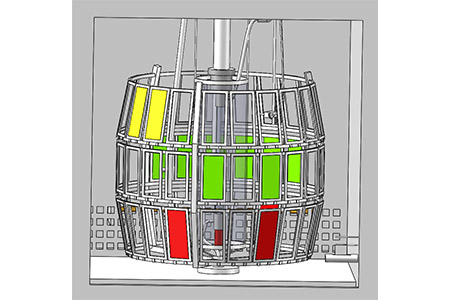 Yes, especially for laboratories performing formulation screening or comparative material testing.
A small specimen holder may reduce the initial equipment price, but testing a large number of samples will require more test cycles.
LIB Industry's rotating specimen holder can accommodate up to 42 specimens, allowing multiple materials or formulations to be evaluated within the same exposure cycle.
Continuous rotation also helps provide more consistent exposure between specimen positions.
For a laboratory running large testing programs, cost per specimen and testing throughput may be more meaningful than the initial equipment price.
5. What About the Water Management System?
Water spray is an important part of many xenon weathering test programs.
A basic system may use fresh water for each spray cycle, while a closed-loop configuration can circulate and filter water for reuse.
LIB Industry offers a water circulation and purification system designed to reduce unnecessary water consumption while maintaining suitable water quality for spraying.
The initial equipment cost may be higher with a more complete water management system, but operating costs should also be considered when the tester will run for thousands of hours.
LIB Industry provides xenon arc accelerated weathering testers with a 4500W water-cooled lamp, configurable filters, environmental control, water spray, and up to 42 specimen positions. Check specifications and pricing → Xenon Arc Chamber Weatherometer
What Other Costs Should You Consider When Buying a Weathering Tester?
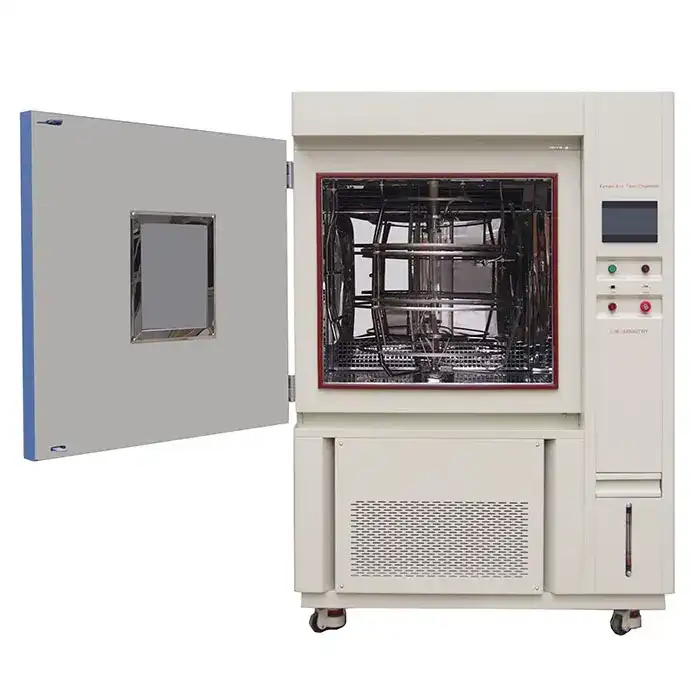 The equipment quotation is only one part of the total investment.
Lamp and Consumables
Xenon lamps, filters, water filtration components, and spray nozzles eventually require replacement or maintenance.
LIB Industry's xenon lamp has a rated service life of 1,600 hours, although actual replacement intervals depend on operating conditions.
Installation and Commissioning
International buyers should consider transportation, installation, commissioning, and operator training when comparing suppliers.
A turnkey supplier can simplify this process by handling equipment delivery and technical support as one project.
Maintenance and Service
The availability of replacement parts and technical support can have a significant impact on long-term operating costs.
A lower purchase price may not represent better value if equipment downtime or difficult access to spare parts interrupts testing.
How Can You Reduce the Cost of an Accelerated Weathering Tester?
The best way to control your budget is not to remove critical features, but to avoid specifications that your testing program does not require.
Match the Tester to Your Standard
Start with the test method. Determine the required lamp type, irradiance, filter, temperature, humidity, and spray conditions before requesting quotations.
Choose the Right Capacity
Select enough specimen positions for your normal testing workload without purchasing excessive chamber capacity.
Compare Total Cost of Ownership
Compare:
- Lamp replacement frequency
- Water consumption
- Energy consumption
- Maintenance requirements
- Spare parts
- Warranty coverage
- Expected testing throughput
This provides a more realistic comparison than purchase price alone.
Which LIB Industry Weathering Tester Should You Choose?
|
|
|
|
Xenon Arc Accelerated Weathering TesterBest for full-spectrum accelerated weathering evaluation of plastics, coatings, automotive materials, building materials, and other products. It combines xenon arc irradiation with controlled temperature, humidity, and water spray. |
UV Accelerated Weathering TesterFor applications primarily focused on UV exposure, surface degradation, cracking, and chalking, a fluorescent UV weathering system can provide a more targeted solution. |
Temperature & Humidity Test ChamberIf your primary concern is environmental aging caused by temperature and humidity rather than solar radiation, a temperature and humidity chamber may be more appropriate. It can be used for material aging, moisture resistance, and environmental reliability testing. |


Why Buy an Accelerated Weathering Tester from LIB Industry?
LIB Industry has manufactured environmental testing equipment since 2009, providing weathering and environmental simulation solutions to laboratories and manufacturers worldwide.
The xenon arc weathering system can be configured according to the required test method, including:
- 4500W water-cooled xenon arc lamp
- 280–800 nm spectral range
- 35–150 W/m² irradiance
- 35–85°C black panel temperature
- Temperature and humidity control
- Interchangeable optical filters
- Water spray and circulation
- Up to 42 specimen positions
- Programmable PID control
- Ethernet/Wi-Fi connectivity
LIB Industry also provides a 3-year warranty and lifetime service support, helping laboratories manage equipment maintenance beyond the initial purchase.
Conclusion
The price of an accelerated weathering tester depends mainly on the test method, light source, environmental control, filter configuration, specimen capacity, water system, and service requirements.
Instead of choosing the cheapest equipment, define your required standard first and then compare suppliers using the same technical specifications.
For laboratories requiring xenon arc exposure, LIB Industry provides configurable weathering testers designed around the required irradiance, temperature, humidity, filter, water spray, and specimen capacity.
FAQ
How much does an accelerated weathering tester cost?
There is no single price because configuration has a major effect on the final quotation. Lamp technology, environmental control, specimen capacity, filters, water management, and customization should all be considered when comparing prices.
Is a xenon weathering tester more expensive than a UV tester?
Generally, yes. A xenon system requires a more complex light source and environmental control system, but it provides broader spectral simulation and can support test methods that require xenon arc exposure.
How long does a xenon lamp last?
LIB Industry's 4500W water-cooled xenon lamp has a rated service life of 1,600 hours. Actual replacement timing depends on operating conditions and irradiance requirements.
What standards can a LIB xenon weathering tester support?
The system can be configured for testing based on standards including ASTM G155 and ISO 4892-2, as well as applicable automotive and OEM-specific methods. The required filter and test configuration should be confirmed before purchase.
What information should I provide when requesting a quotation?
Provide your test standard, specimen size and quantity, required lamp type, irradiance, temperature, humidity, water spray requirements, and expected testing frequency. LIB Industry can then recommend a suitable configuration and provide a quotation.