How Much Does a Thermal Cycling Test Chamber Cost? Benchtop vs. Floor Models
The thermal cycling test chamber price depends on working volume, minimum temperature, temperature ramp rate, and refrigeration system design. The choice between benchtop and floor-standing models affects all four factors.
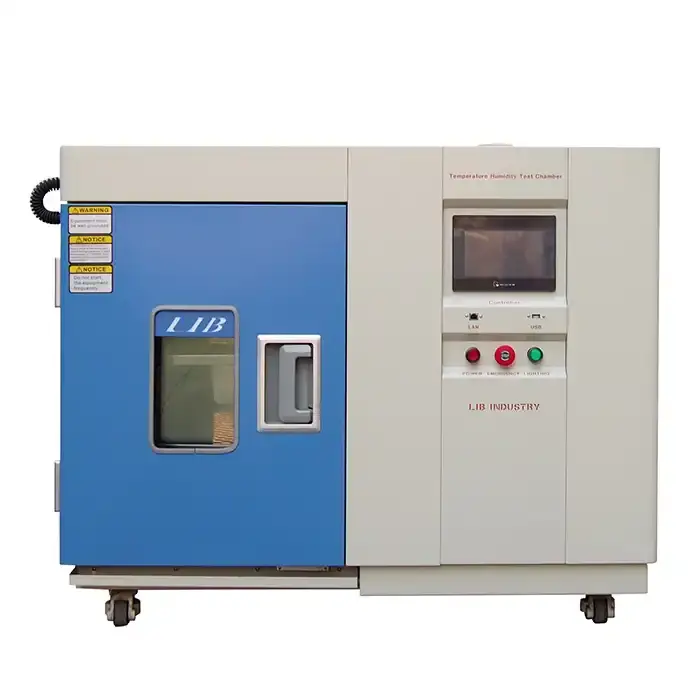
Benchtop chambers generally cost less and are easier to install, making them suitable for small components such as sensors and circuit boards. Floor-standing chambers cost more but offer greater capacity for larger specimens and higher testing throughput. A low initial purchase price may not be the most economical choice if sample quantities increase or testing requirements change.
This guide compares benchtop and floor-standing configurations to help you choose the right chamber before requesting a quotation.
Comparing thermal cycling test chamber prices? Send LIB Industry your temperature range, ramp rate, and specimen requirements to receive a configuration-based quotation within 24 hours.
What Is the Difference Between Benchtop and Floor-Standing Thermal Cycling Test Chambers?
Both chamber types expose specimens to alternating high and low temperatures. Their working volumes, installation requirements, and typical applications differ.
Purpose Shared by Both Formats
A thermal cycling test chamber controls temperature changes to evaluate materials and products under repeated heating and cooling. Different materials expand and contract at different rates, potentially causing microcracks, broken solder joints, seal failures, and other reliability issues.
Both benchtop and floor-standing chambers perform this basic function. The main difference is how many specimens can be tested at once and how much space and capacity the laboratory requires.
Typical Contrasts at a Glance
The following table shows general industry trends. Actual specifications and prices vary by manufacturer and configuration.
| Feature | Benchtop Chamber | Floor-Standing Chamber |
|---|---|---|
| Working volume | Compact, suitable for small specimens | Commonly 100 L and above |
| Placement | Stable bench or cart | Installed on the floor |
| Utilities | Often lower electrical demand | May require a dedicated power supply |
| Purchase price | Generally lower | Generally higher |
| Testing throughput | Fewer specimens per run | More specimens per run |
|
|
|
_1773978265968.jpg "blog-1-1")
Where Do LIB Thermal Cycling Test Chamber Models Fit?
LIB Industry's standard TR5 series covers volumes from 100 L to 1,000 L, with external heights ranging from 1,620 mm to 2,140 mm. These models fall within the floor-standing category.
If your application requires a benchtop configuration, contact LIB Industry to confirm availability, specifications, and pricing before making a purchasing decision.
How Does Chamber Size Affect Thermal Cycling Test Chamber Price?
_1773978265973.jpg "blog-1-1") There is no fixed price per liter for a thermal cycling test chamber. The final quotation depends on the combined cost of the chamber structure, insulation, refrigeration capacity, controls, and other configuration requirements.
There is no fixed price per liter for a thermal cycling test chamber. The final quotation depends on the combined cost of the chamber structure, insulation, refrigeration capacity, controls, and other configuration requirements.
Materials and Insulation
Larger chambers require more SUS304 stainless steel for the interior, coated steel for the exterior, and insulation materials such as polyurethane foam and insulating cotton.
As chamber volume increases, the amount of material, welding, and insulation required also increases. This contributes to the higher thermal cycling test chamber price of floor-standing models compared with compact units.
Refrigeration Capacity Scales with Chamber Volume
A larger chamber needs sufficient refrigeration capacity and airflow to control the temperature throughout its working space. Cooling a 1,000 L chamber typically requires more capacity than cooling a small benchtop unit, particularly when the test involves heavy specimens or rapid temperature transitions.
The refrigeration system, compressor configuration, fans, and associated controls can therefore have a significant impact on the final price.
LIB Floor Model Sizes and Specifications
LIB Industry's standard TR5 series includes the following configurations:
| Model | Internal Size (mm) | External Size (mm) | Volume |
|---|---|---|---|
| TR5-100 | 400 × 500 × 500 | 900 × 1050 × 1620 | 100 L |
| TR5-225 | 500 × 600 × 750 | 1000 × 1140 × 1870 | 225 L |
| TR5-500 | 700 × 800 × 900 | 1200 × 1340 × 2020 | 500 L |
| TR5-800 | 800 × 1000 × 1000 | 1300 × 1540 × 2120 | 800 L |
| TR5-1000 | 1000 × 1000 × 1000 | 1500 × 1540 × 2140 | 1000 L |
Need help comparing chamber sizes and costs? LIB Industry can recommend a suitable TR5 configuration based on specimen dimensions, batch size, and required temperature conditions.
Comparing Temperature Performance and Cycling Capabilities by Thermal Cycling Test Chamber Price
A smaller chamber is not necessarily less capable. The right choice depends on the required temperature range, ramp rate, specimen load, and test profile.
Temperature Range
LIB Industry chambers can be configured with minimum temperatures of -20°C, -40°C, or -70°C and maximum temperatures up to +150°C, depending on the model.
Reaching -70°C typically requires a cascade refrigeration system with two refrigeration circuits operating in stages. This adds system complexity and can increase the thermal cycling test chamber price. When comparing quotations, specify the actual minimum and maximum temperatures required by your test standard.
Ramp Rate and Thermal Mass
LIB Industry offers configurable temperature ramp rates of 5°C/min, 10°C/min, or 15°C/min, subject to the selected configuration and test conditions.
The chamber size matters, but the specimen load is equally important. Larger specimens and heavier loads absorb more heat and can slow temperature transitions. A lightly loaded chamber may achieve a different ramp rate from the same chamber operating with a full load.
When comparing prices, confirm whether the specified ramp rate refers to an empty chamber or a loaded chamber and how it is measured.
Stability, Sensors, and Protection
LIB Industry configurations can include PT100 Class A temperature sensors and temperature control specifications ranging from ±0.5°C to ±2.0°C, depending on the model and measurement criteria.
Other options, such as an electronic expansion valve and anti-condensation control, can influence both performance and cost. Anti-condensation features are particularly relevant when protecting sensitive specimens from unwanted moisture during testing.
Ask suppliers to specify temperature uniformity, fluctuation, deviation, and ramp-rate performance in the quotation rather than comparing the purchase price alone.
Benchtop vs. Floor-Standing Thermal Cycling Test Chambers for Different Applications
Choosing a chamber format based on the actual test workload can help avoid unnecessary equipment costs.
Small Parts and Development Work
Benchtop chambers are often suitable for research and development laboratories testing small components, sensors, connectors, and circuit boards. Their compact footprint makes them convenient where laboratory space is limited.
For small batches, a benchtop model may offer a lower initial investment. However, if sample numbers increase, its limited capacity may require more test runs and extend the overall testing time.
Production Screening and Qualification
Production teams and qualification laboratories often need to test many specimens in the same run. Floor-standing chambers provide more working space and can improve throughput when configured appropriately. LIB Industry's standard floor models include two shelves.
Although the initial purchase price is higher, a floor-standing chamber may reduce the cost per specimen when testing volumes are large enough to use its capacity efficiently.
Industry Applications and Thermal Cycling Standards
Thermal cycling is used in aerospace, automotive, electronics, and other industries to evaluate product reliability under repeated temperature changes. Standards such as IEC 60068-2-14 and JEDEC JESD22-A104 specify test procedures for relevant applications.
Review the applicable standard before selecting a chamber. Required temperature limits, ramp rates, dwell times, and cycle counts help determine the working volume and system performance needed.
How Do Installation and Operating Costs Affect Thermal Cycling Test Chamber Price?
The purchase quotation is only one part of the total equipment cost. Delivery, installation, energy consumption, maintenance, and training should also be considered.
Installation and Space Requirements
A benchtop unit needs a stable support surface, adequate ventilation, and a suitable power supply.
A floor-standing chamber requires a level installation area, sufficient service clearance, and suitable electrical connections. Check doorway widths, corridors, lifts, and the final installation route before ordering a large cabinet.
LIB Industry can provide installation guidance and commissioning support according to the agreed scope of supply.
Energy Consumption and Maintenance
A smaller chamber generally consumes less energy per operating cycle, while an oversized chamber running with a very light load may use capacity inefficiently. Actual energy consumption depends on the temperature profile, refrigeration system, ambient conditions, and specimen load.
Cascade refrigeration systems may require specialized maintenance. Ask suppliers about power requirements, recommended maintenance intervals, replacement parts, and technical support availability.
Thermal Cycling Test Chamber Price Comparison Checklist
Use the following checklist to compare quotations on a consistent basis.
| Cost Item | Question to Ask the Supplier |
|---|---|
| Electrical supply | What voltage, phase, and power capacity are required? |
| Installation | Are delivery, commissioning, and installation included? |
| Training | Is operator training provided? |
| Spare parts | Which parts require periodic replacement, and what are the delivery lead times? |
| Warranty | How long is the warranty, and what does it cover? |
| Operating costs | Can the supplier provide estimated power consumption and maintenance requirements? |
Which Thermal Cycling Test Chamber Configuration Fits Your Testing Needs?
Start with your test plan and work backward to the equipment specifications. This helps you avoid paying for capacity or performance that your application does not require.
Define the Specimen Load
Record the dimensions, weight, and number of specimens per test run. Allow sufficient space around the specimens for airflow. Even when a chamber uses a centrifugal fan, overcrowded shelves can lead to uneven airflow and inconsistent specimen temperatures.
Choosing the right chamber volume helps control both the initial thermal cycling test chamber price and the cost of conducting each test.
Match the Applicable Standard
Identify the required temperature range, ramp rate, dwell time, and number of cycles. Avoid paying for faster temperature transitions or lower temperatures than your test actually requires, but make sure the selected configuration meets the specified acceptance criteria.
Provide the exact standard and test profile when requesting a quotation so that the supplier can recommend an appropriate model.
Plan for Future Testing Requirements
Consider whether specimen quantities or product lines are likely to grow. A larger chamber may provide useful capacity for future testing, but it also increases purchase and operating costs.
Options such as humidity control, data logging, remote monitoring, and customized internal dimensions should be evaluated according to your actual needs. LIB Industry also provides customized designs when standard configurations are not suitable.
What Should You Ask a Supplier Before Requesting a Thermal Cycling Test Chamber Price?
A reliable quotation should reflect not only the chamber itself but also the testing requirements and support included with the equipment.
Information to Prepare
Provide the following details when requesting a quotation:
- Required minimum and maximum temperatures
- Temperature ramp rate and dwell time
- Specimen dimensions and weight
- Number of specimens per run
- Applicable test standard
- Required controller, data logging, or communication functions
- Installation country and site requirements
Complete information helps the supplier select a suitable configuration and reduces delays caused by repeated clarification.
Service and Warranty Terms
LIB Industry offers a 3-year / 36-month manufacturer warranty and lifetime technical support. Installation guidance, operator training, remote technical assistance, and spare-parts services can also be discussed when defining the supply scope.
Confirm the warranty coverage, response arrangements, spare-parts terms, and any replacement conditions in the written quotation and contract.
Quality and Global Support
LIB Industry states that its quality management system is ISO 9001 certified and that its products carry relevant CE and RoHS documentation, with SGS and TÜV involvement in its qualification and testing processes.
The company also offers turnkey environmental testing solutions, including equipment planning, manufacturing, testing, delivery, installation, and training. Confirm the certificates, documentation, and service arrangements applicable to your specific order.
Conclusion
Benchtop thermal cycling test chambers generally cost less and take up less space, while floor-standing models offer greater capacity and testing throughput. The thermal cycling test chamber price increases with chamber volume, lower minimum temperatures, faster ramp rates, and additional features.
The best choice depends on specimen load, test standards, performance requirements, and long-term operating costs. Compare quotations based on equivalent specifications, installation scope, maintenance requirements, and warranty coverage—not purchase price alone.
Related Temperature Testing Equipment
|
|
|
|
| High and Low Temperature Test Chamber — Suitable for testing product performance under controlled high- and low-temperature conditions. | Temperature & Humidity Test Chamber — Combines temperature and humidity control for environmental reliability testing. | Thermal Shock Test Chamber — Designed for rapid transitions between hot and cold environments when sudden thermal stress needs to be evaluated. |


Ready to compare thermal cycling test chamber prices? Contact LIB Industry at ellen@lib-industry.com with your required temperature range, ramp rate, specimen dimensions, and applicable standard. Our team can recommend a suitable configuration and prepare a quotation based on your testing needs.
FAQ
Is a benchtop thermal cycling test chamber always cheaper than a floor-standing model?
Generally, yes, because a benchtop chamber usually requires less material, insulation, and refrigeration capacity. However, the final price depends on the specifications and options selected, so compare equivalent configurations before deciding.
Can a floor-standing chamber replace a benchtop unit for small specimens?
Yes. A floor-standing chamber can test small specimens, but it occupies more space and may be less energy-efficient when used with very light loads. Consider expected sample quantities and future testing needs before selecting the chamber size.
What information helps a supplier provide a faster, more accurate quotation?
Provide the required temperature range, ramp rate, specimen size and weight, number of specimens, applicable standard, and any special control or monitoring requirements. Installation location can also help the supplier estimate delivery and commissioning needs.


