How to Choose Accelerated Weathering Testers for Coating Performance Tests?
To buy accelerated weathering testers for coating performance work, start with the coating failure you need to understand rather than the chamber catalogue. Xenon arc exposure is often suitable when daylight spectrum, colour shift, gloss loss, and combined heat-moisture stress matter. A fluorescent UV system can also be appropriate when the customer specification requires it.
The tester should match the required filter, irradiance-control band, black-panel temperature, water cycle, panel layout, and reporting method. It should also support consistent comparison between exposed panels and controls. A well-matched chamber gives R&D and QA teams useful evidence for coating durability, while an ill-matched system may produce data that cannot support product release, supplier approval, or warranty decisions.
Why Coating Manufacturers Need Accelerated Weathering Testers?
Why does weathering belong in coating development?
Sunlight, heat, moisture, and wet-dry cycling can change a coating's optical and physical condition. A controlled weathering tester allows formulators to compare resin, pigment, additive, cure, and film-build choices before field exposure is complete.
It gives development teams a consistent way to rank candidate systems, identify weak formulations, and define follow-up tests.
How does xenon arc exposure support coating decisions?
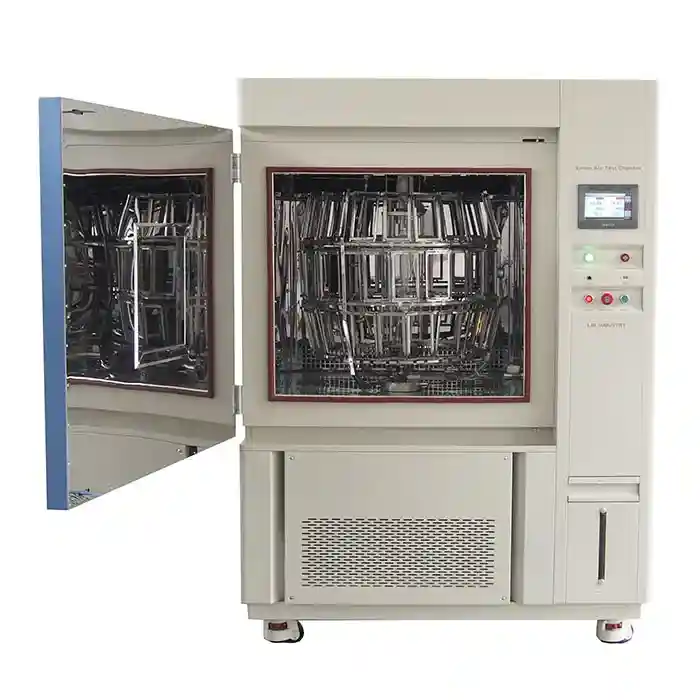
Filtered xenon arc exposure can reproduce laboratory light, heat, humidity, and wetting conditions relevant to outdoor or behind-glass applications.
ISO 16474-2 describes xenon-arc exposure of coatings under controlled conditions, with filter selection linked to the intended exposure. The test should complement, rather than replace, appropriate natural exposure when a service-life claim requires field correlation.
Why should laboratories avoid simple “hours-to-years” claims?
There is no universal conversion from chamber hours to outdoor years. Coating chemistry, pigment package, substrate, orientation, climate, and the selected cycle can all affect the result.
ASTM D6695-24 calls for a complete description of the test cycle and supports comparative evaluation with known controls. Weathering data should therefore be used to compare coating performance under a defined protocol rather than promise a fixed outdoor service life.
Key Performance Parameters Evaluated During Coating Weathering Tests
| Performance parameter | Practical measurement | Why it matters after weathering |
|---|---|---|
| Colour retention | Instrumental colour difference and visual review | Reveals fading, yellowing, or hue drift |
| Gloss retention | Gloss meter before and after exposure | Shows surface erosion, texture change, or binder breakdown |
| Surface defects | Visual rating of cracking, blistering, flaking, and chalking | Identifies film failure mechanisms |
| Adhesion and integrity | Adhesion method selected in the coating specification | Shows whether the film still protects its substrate |
How should teams assess colour and gloss retention?
Measure colour and gloss before exposure, then use the same instruments and viewing conditions after exposure when you buy accelerated weathering testers.
ASTM D2244-25 covers colour differences from instrumentally measured colour coordinates and notes that buyer and seller should agree on the tolerance procedure. Set the acceptance metric before starting the test. A vague “no obvious fade” rule can create unnecessary disagreement.
Which visible defects deserve a formal rating?
Chalking, cracking, blistering, flaking, rusting, and uniform appearance changes should be recorded with a defined rating system.
ISO 4628-1 provides a general framework for recording the quantity and size of defects and the intensity of uniform appearance changes. Photos are useful, but they should support a specified rating method rather than replace it.
Why test adhesion and film integrity after exposure?
A coating can retain its colour while losing protective function. Include adhesion, film continuity, corrosion-related assessment, or another application-specific integrity check when required by the substrate and service environment.
Panel preparation, cure schedule, dry-film thickness, edge treatment, and conditioning should remain consistent because these variables can change the apparent weathering response.
Important Specifications When Buying Weathering Test Equipment for Coatings
| Requirement | What to specify | Why it affects coating data |
|---|---|---|
| Light source and filters | Xenon lamp, daylight, window-glass, or UV-extended filter | Defines the spectral exposure your coating receives |
| Irradiance control | 340 nm, 420 nm, or 300–400 nm measurement basis | Makes the programmed exposure measurable and repeatable |
| Thermal and moisture control | Black-panel, chamber temperature, humidity, spray, and dark cycles | Controls thermal load and wetting stress |
| Specimen system | Panel size, fixture, rotation, controls, and replicates | Supports uniform, comparable exposure |
| Data system | Logging, export, alarms, and calibration record | Creates an audit trail for QA and customer review |
How should you match light source and filters to the coating?
Start with the customer standard or internal protocol when you buy accelerated weathering testers.
Daylight filters address outdoor solar exposure, while window-glass filters suit exposure behind glazing. UV-extended options can support specific screening aims but should not replace the required test method.
Ask the supplier to state the supplied filters, their intended application, and the available spectrum-control documentation.
Which irradiance and environmental controls matter most?
Specify the irradiance measurement band before comparing quotations. A broadband range in W/m² and a narrow-band set point in W/m²/nm are not interchangeable.
LIB Industry's published xenon configuration provides irradiance control at a 300–400 nm bandwidth with 340 nm or 420 nm measurement. Confirm the selected sensor and control tolerance in the final quotation.
What should the chamber hold and record?
Plan for exposed panels, retained controls, and replicates in one run. LIB Industry's published rotating specimen holder accommodates up to 42 specimens around a 4,500 W water-cooled xenon lamp.
Published specifications also include BPT control from 35–85°C and smart PID data logging. Confirm the selected model, actual panel dimensions, humidity range, water cycle, and data interfaces before ordering.
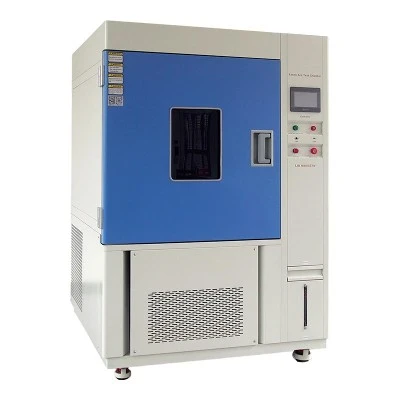
LIB Industry provides xenon arc weathering chambers for coating, paint, plastic, and polymer testing, with configurable filters, irradiance control, specimen holders, temperature, humidity, and water-spray functions.
How to Select Reliable Accelerated Weathering Tester Manufacturers
What proof should a supplier provide for coating work?
Ask for a method-to-configuration map. It should connect the requested coating standard to the lamp, filters, sensor band, temperature device, water function, panel holder, and logging package.
Broad statements such as “meets all standards” are not enough. A useful proposal should identify the exact configuration and settings that your laboratory can verify.
How do calibration and maintenance affect reliability?
Lamp aging, filter condition, water deposits, sensor calibration, and airflow can all affect repeatability.
Ask about lamp replacement, radiometer calibration, preventive maintenance, spare parts, and remote diagnostics. A 1,600-hour lamp-life figure is a planning input, not a substitute for monitoring irradiance. These operating requirements should be included in the laboratory's quality plan and annual budget.
Why should acceptance testing and training be written into the order?
Factory acceptance, shipment checks, installation, site acceptance, operator training, and service response should have clearly defined responsibilities.
This helps prevent a gap between a chamber that powers on and a chamber that produces usable coating data. A turn-key supplier should also clarify utility requirements, water quality, drainage, ventilation, and what the local team needs to prepare.
Accelerated Weathering Testing Applications Across Coating Industries
| Coating sector | Typical weathering concern | Useful protocol emphasis |
|---|---|---|
| Automotive OEM and refinish | Colour, gloss, cracking, water exposure | Xenon spectrum, controlled irradiance, spray, and panel comparison |
| Architectural and coil coatings | Fade, chalking, film integrity | Daylight exposure, wet-dry cycling, and defect rating |
| Powder and industrial coatings | Surface change, adhesion, substrate protection | Consistent panel preparation and post-exposure integrity checks |
| Aerospace and protective systems | Appearance and protective retention | Project-specific cycle, traceability, and qualified acceptance criteria |
How do automotive coating programs use weathering data?
Automotive teams often track colour, gloss, cracking, and surface changes across formulation changes or supplier lots when they buy accelerated weathering testers.
The correct light spectrum and carefully controlled water cycle are important because coating appearance can be sensitive to both. The chamber provides comparative evidence, while the automotive specification defines the actual cycle, duration, and acceptance limits.
What matters for architectural, coil, and powder coatings?
Architectural and coil coatings face long periods of sunlight, moisture, and thermal movement. Powder coatings also introduce sensitivity to cure and film build.
Use the same substrate preparation, coating thickness, cure profile, and panel orientation for every comparison. A repeatable panel workflow can be more valuable than adding a feature that the test method does not require.
When do protective and aerospace coatings need custom planning?
Protective systems may require weathering linked with corrosion, fluid resistance, or adhesion testing. Aerospace programs may also have restricted panel layouts, documentation, and approval procedures.
In these cases, share the complete test plan with the chamber supplier early. Custom fixtures, programmed cycles, and data-transfer requirements should be specified before the equipment design is finalized.
LIB Industry Accelerated Weathering Testers for Coating Reliability
What does the LIB xenon configuration offer coating laboratories?

LIB Industry lists a 4,500 W water-cooled xenon arc lamp, daylight, window-glass, and UV-extended filter options, together with a published 280–800 nm spectral range.
The chamber combines irradiance monitoring, BPT control, humidity, and water-spray programming for coating exposure applications. Actual capability depends on the selected model and option package, so confirm the required protocol before purchase.
How does LIB support a turn-key testing project?
LIB Industry provides turn-key environmental-testing support covering research, design, production, commissioning, delivery, installation, and training.
For coating laboratories, this can include reviewing panel fixtures, utility conditions, operating workflow, and data requirements. The goal is to provide a chamber that fits the test plan and laboratory rather than a generic system delivered without application context.
What should a coating laboratory confirm in a LIB proposal?
Confirm the model, lamp, filters, irradiance-control basis, BPT and humidity range, spray cycle, 42-specimen holder suitability, USB or Ethernet data export, calibration, warranty, and commissioning plan.
LIB Industry provides a 3-Year Manufacturer Warranty / 36 months, lifetime free technical support, traceable factory calibration, 24/7 remote video assistance, and 48-Hour Spare Parts Express via DHL/FedEx.
Related Coating Testing Equipment
|
|
|
|
| Xenon Arc Weathering Chamber For accelerated weathering of paints, coatings, plastics, polymers, textiles, and other materials under controlled xenon light, temperature, and moisture conditions. |
UV Accelerated Weathering Test Chamber For UV-driven aging studies where fluorescent UV exposure is appropriate for the required material or test method. |
Temperature & Humidity Test Chamber For controlled temperature and humidity conditioning before or after weathering exposure, supporting broader coating and material reliability programs. |


Conclusion
The right weathering tester for coatings creates a credible link between a defined exposure cycle and a defined property change.
Select the light source, filters, control points, panel layout, and documentation around the coating specification when you buy accelerated weathering testers. Then evaluate colour, gloss, visible defects, adhesion, and film integrity using agreed methods.
Need a coating weathering tester matched to your test standard? Send your coating standard, panel dimensions, target cycle, and site requirements to ellen@lib-industry.com for a suitable configuration and quotation.
FAQ
Should I choose xenon arc or fluorescent UV for a coating test?
Choose the method named by the customer specification or the failure mechanism under study. Xenon arc is commonly selected for broad-spectrum daylight simulation and appearance-related testing, while fluorescent UV can suit defined UV-condensation screening.
Do not substitute a light source simply because it has a lower purchase cost.
Can 1,000 weathering hours prove a coating will last a set number of years?
No. Chamber hours do not equal a universal outdoor-life number. Correlation depends on coating chemistry, film thickness, substrate, climate, orientation, exposure cycle, and the property being measured.
Use natural exposure or validated historical correlation when a service-life statement is required.
What information should I send LIB for a coating tester quotation?
Send the governing standard, panel size and number, substrate, coating type, target irradiance band, temperature and moisture cycle, evaluation methods, data-export needs, electrical supply, water conditions, site location, and delivery date.
This information allows LIB Industry to recommend a fit-for-purpose accelerated weathering tester configuration rather than guessing from a product category alone.