How to Conduct Dust Test Chamber Evaluation for Outdoor LED Lighting Durability? (IEC 60529 Standards & Guide)
When outdoor LED lighting fixtures—such as street lights, stadium floodlights, high-bay warehouse luminaires, and architectural floodlights—are installed in real-world environments, they face continuous exposure to airborne particulates. Dust, fine sand, and industrial process ash do far more than dirty the optical lens. Over time, these fine particles accumulate inside passive heat sink channels, penetrate driver compartments, and create electrical leakage paths. Consequently, unverified fixtures frequently suffer accelerated lumen depreciation or total driver failure years before their rated service life expires.
To verify ingress protection and ensure long-term thermal efficiency, lighting manufacturers utilize a Dust Test Chamber. By exposing complete luminaire assemblies to controlled, wind-blown particulate environments under negative pressure, testing engineers can evaluate gasket compression, cable entry seals, and access door closures under repeatable laboratory conditions.
This technical guide offers design engineers, quality assurance managers, and procurement specialists an in-depth breakdown of LED dust protection testing, international compliance standards, equipment selection, and turnkey solutions from LIB Industry.
Particulate Impact on LED Thermal & Electrical Performance
 Modern LED fixtures rely heavily on effective thermal dissipation to maintain light output. When fine particulate matter enters the fixture or settles on external surfaces, it directly impairs two critical subsystems: the optical/thermal assembly and the LED driver bay.
1. Heat Sink Fin Blockage & Lumen Depreciation
LED diodes produce substantial junction heat during operation. Passive heat sinks rely on open convection channels to transfer this heat into the surrounding air. When dust settles between cooling fins, it acts as an insulating blanket, severely restricting natural airflow.
As junction temperature (Tj) rises above nominal limits, the internal quantum efficiency of the LED decreases, accelerating lumen depreciation (as tracked by IES LM-80/TM-21 metrics). A dust buildup of just a few millimeters can elevate junction temperatures enough to cut a fixture's maintained light output lifecycle in half.
Key Takeaway: Thermal management and particulate resistance in outdoor LED design are inextricably linked. A fixture cannot maintain its thermal rating if its heat sink geometry traps airborne dust.
2. Passive Convection vs. Fan-Assisted Cooling Vulnerabilities
The choice of thermal management strategy directly dictates how a fixture responds to dusty environments:
| Cooling Approach | Dust Vulnerability | Primary Impact | Engineering Mitigation Strategy |
|---|---|---|---|
| Passive Convection Fins | Gradual particle accumulation inside fin channels | Reduced natural convective air velocity; slow rise in diode temperature | Wider fin pitch, vertical orientation, smooth anti-static surface coatings |
| Active Fan-Assisted Cooling | Forced intake of ambient dust directly into cooling paths | Rapid filter clogging, fan bearing abrasion, sudden thermal overload | Sealed IP-rated fan motors, washable intake filters, sealed electronics bays |
3. Driver Compartment Vulnerabilities
While lens enclosures protect the LEDs, the driver compartment houses sensitive power semiconductors, electrolytic capacitors, and control boards. Fine dust entering through micro-gaps can absorb ambient moisture, forming conductive bridges across circuit pathways. Furthermore, thermal expansion and contraction cycles over years of operation cause gasket materials to relax, making dynamic seals around cable glands and maintenance panels particularly vulnerable.
International Protection Standards & Testing Methodology
Demonstrating compliance with global standards allows lighting manufacturers to validate product quality and enter international markets with confidence.
Core LED Lighting Standards
IEC 60529 — Ingress Protection (IP Code): Defines IP5X & IP6X dust test procedures, pressure, and duration.
IEC 60598-1 — General Luminaire Construction: Mandates structural safety and environmental seal integrity.
ANSI/UL 1598 — North American Luminaire Safety Standards: Governs safety compliance for luminaires sold in the North American market.
Decoding IEC 60529: IP5X vs. IP6X Dust Protection
The primary reference for dust ingress testing is IEC 60529. The first characteristic numeral in an IP rating defines the level of protection against solid foreign objects:
| Metric / Parameter | IP5X (Dust-Protected) | IP6X (Dust-Tight) |
|---|---|---|
| Protection Level | Ingress of dust is not totally prevented, but dust must not enter in an amount that interferes with safe operation or safety. | No ingress of dust; complete exclusion of solid particles under vacuum draw. |
| Test Medium | Dry talcum powder (mesh size <75 µm) | Dry talcum powder (mesh size <75 µm) |
| Dust Concentration | 2 kg/m³ of chamber volume | 2 kg/m³ of chamber volume |
| Differential Pressure | Vacuum draw applied if enclosure volume creates thermal/pressure differential. | Vacuum draw up to 20 mbar (2 kPa) continuously applied. |
| Test Duration | 2 to 8 hours (based on air extraction rate) | 2 to 8 hours (until 80x volume extracted or maximum time reached) |
| Acceptance Criteria | Minor dust allowed inside if non-conductive and away from electrical parts. | Zero particle ingress permitted inside housing or driver bay. |
Essential Test Execution Parameters
To ensure valid, repeatable test results inside a Dust Test Chamber, three operational criteria must be controlled:
Vacuum-Assisted Airflow Simulation: Outdoor wind speeds and internal temperature drops create negative pressure inside sealed luminaire housings. Connecting the test specimen to a vacuum pump inside the chamber simulates this differential pressure, actively drawing surrounding talcum powder toward gasket joints, cable glands, and lens borders.
Strict Humidity Control (<30% RH): Talcum powder is naturally hygroscopic. If ambient humidity inside the chamber rises, powder particles cluster together, altering the effective grain size and clogging pneumatic circulation fans. Integrated chamber heaters maintain relative humidity below 30% RH throughout the exposure cycle without subjecting the test specimen to unnecessary thermal stress.
Energized / Powered Specimen Testing: Testing luminaires under active electrical load provides realistic evaluation data. Operating current generates localized heat, activating internal pressure changes while proving whether dust settlement on internal drivers induces immediate electrical faults or dielectric breakdown.
Equipment Selection Guide: Standard Chambers vs. Walk-In Rooms
Selecting the appropriate environmental testing equipment depends on product dimensions, production volume, and specific testing protocols.
Dust Chamber Configuration Guide
Standard Benchtop/Reach-In (800L to 2000L): Individual luminaire heads, driver housings & modules, rapid production line QC.
Walk-In Dust Room (Custom, >8 m³): Fully assembled street poles, high-bay modular arrays, multi-fixture batch testing.
Feature Comparison Matrix
| Equipment Parameter | Standard Box Dust Chamber | Walk-In Dust Test Room |
|---|---|---|
| Internal Volume Range | 800 Liters – 2,000 Liters | 8 m³ to 50+ m³ (Customizable) |
| Primary Test Specimens | Standard street light heads, LED drivers, wall packs, modular floodlight optics | Complete lighting poles, multi-fixture architectural frames, stadium light banks |
| Specimen Loading | Front-loading door with viewing window | Double-door or roll-in ramp access for heavy equipment |
| Dust Extraction System | Bottom hopper with pneumatic vibrators and circulation blower | Multi-point floor hoppers with heavy-duty powder recovery blowers |
| Power Feed Interface | Built-in dust-proof terminal / power outlet (16A) | High-capacity multi-channel power distribution panel |
| Floor Space Requirement | Compact footprint suitable for standard QC labs | Requires dedicated facility room with dust collection infrastructure |
|
|
|


LIB Engineering Expertise & Turnkey Dust Solutions
Selecting high-precision environmental testing equipment requires a manufacturing partner with deep industry experience and comprehensive global support.
About LIB Industry
Established in 2012, Xi'an LIB Environmental Simulation Industry is a specialized manufacturer and exporter of environmental test chambers. LIB provides complete turnkey solutions—from engineering design and custom manufacturing to installation, calibration, operator training, and ongoing maintenance.
Comprehensive Product Range: LIB designs and manufactures a complete spectrum of environmental test systems, including dust chambers (IP5X/6X), rain/water spray chambers (IPX1–IPX9K), high-low temperature humidity chambers, xenon arc/UV weathering chambers, and walk-in environmental test rooms.
Turnkey Support & Service: LIB handles every phase of equipment integration, ensuring that your lab receives a fully calibrated system ready for immediate certification testing.
Industry-Leading Warranty: All LIB equipment comes backed by a 3-Year Complete Warranty and Lifetime Technical Support & Service, minimizing operational risk and total cost of ownership.
Core Technical Features of LIB Dust Test Chambers (DI Series)
| Diameter of Turntable (mm) |
600 |
IP6X Dust Test Chamber |
|
Turntable loads |
20kgs Max |
|
|
Turntable Rotation Speed |
0~7r/min (Adjustable) |
|
|
Internal Diameter of IPX5 Nozzle |
6.3 mm |
|
|
Internal Diameter of IPX6 Nozzle |
12.5 mm |
|
|
Water Flow Rate IPX5/ IPX6 |
12.5L/min ±5% / 100L/min ±5% |
|
|
Controller |
Programmable color LCD touch screen controller |
|
|
Ethernet connection, PC Link, USB |
||
|
Build-in Water Tank(mm) |
370*375*950 |
|
|
View Window Size(mm) |
475*475 |

 |
 |
|
| Test Area | LAN and USB | Controller |

LIB DI Series Dust Test Chambers are specifically engineered to meet IEC 60529, IEC 60598-1, and ISO 20653 standards with maximum operational convenience:
Precision Powder Management: Automated hopper heating and periodic vibration units keep talcum powder completely dry and fluid, preventing clumping and ensuring consistent concentration.
Integrated Vacuum & Pressure Control: Includes built-in vacuum pumps, digital flow meters, air pressure regulators, and direct sample connection hoses for automated IP6X testing.
Safety-Rated Internal Power Supply: Equipped with an internal dust-tight electrical socket, allowing technical teams to safely power luminaires during active exposure cycles.
Programmable Touchscreen PLC: Simple interface for setting cycle times, vibration intervals, vacuum extraction rates, and dry-heating temperatures.
Real-World Customer Case Study & Field Verification
Project Background
A multinational commercial lighting manufacturer specializing in high-output stadium floodlights and highway illumination required full in-house IP6X validation. Their products were destined for high-salinity coastal areas and desert infrastructure projects across the Middle East, where extreme wind-blown dust storms frequently caused field failures in competing products.
The Solution
LIB Industry custom-engineered and delivered an expanded DI-1500 Dust Test Chamber (1,500L internal capacity) equipped with reinforced specimen racks and a multi-channel vacuum extraction manifold.
LIB Field Implementation Workflow
On-site delivery & unpacking at customer testing facility
Facility utility hookup & pneumatic calibration
Vacuum flow rate & humidity verification (<30% RH)
Hands-on operator training for QC & testing engineering team
Final acceptance sign-off & 3-year warranty activation
During commissioning, LIB field service engineers conducted comprehensive calibration and delivered hands-on training to the customer's QC team, focusing on vacuum extraction setup, powder maintenance, and post-test visual inspection protocols under IEC 60529.
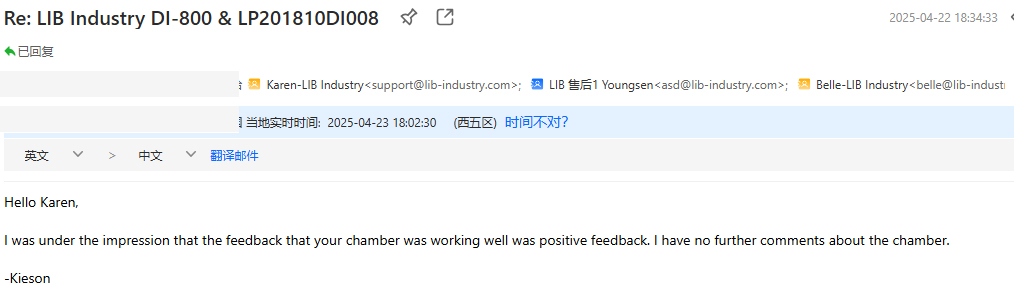
Customer Feedback: "By bringing IP6X testing in-house with LIB's chamber, our R&D cycle for new luminaire seal designs was reduced by 40%. The ability to power fixtures during vacuum draw revealed a subtle gasket compression issue at cable entry points that visual checks had never caught. LIB’s installation and training support made the compliance process seamless."
Frequently Asked Questions (FAQs)
Q1: What IP dust rating is mandatory for outdoor street and area lighting?
Outdoor LED fixtures typically require an IP65 or IP66 rating. Both ratings demand complete dust exclusion (IP6X), ensuring zero solid particle ingress under negative pressure conditions. The second digit specifies the water protection level (IPX5 for water jets, IPX6 for powerful water jets).
Q2: Why is negative pressure (vacuum draw) required during IP6X testing?
In real-world applications, when an LED fixture is turned off, its internal temperature drops rapidly. This cooling effect creates a partial vacuum inside the sealed housing, pulling ambient air—and fine dust particles—through tiny gaps in gaskets or cable glands. The chamber's vacuum system replicates this natural breathing process to identify micro-leaks.
Q3: Why must humidity inside the chamber remain below 30% RH?
Talcum powder easily absorbs moisture from the air. When damp, particles clump together, changing from a fine aerosol (<75 µm) into larger clusters that fail to penetrate micro-gaps accurately. Integrated chamber heaters keep relative humidity low, maintaining consistent particle distribution.
Q4: How long does a standard IEC 60529 dust test take?
A standard IP6X test runs until 80 times the internal volume of the luminaire housing has been drawn through the vacuum system, up to a maximum duration of 8 hours. If the extraction rate achieves 60 volume changes per hour, the test can be completed in approximately 2 hours.
Q5: Can I test fully assembled outdoor light poles inside a dust chamber?
Yes, but fully assembled light poles or multi-fixture arrays require a Walk-In Dust Test Room rather than a standard box chamber. Walk-in rooms feature floor-mounted hoppers, heavy-duty specimen ramps, and high-volume powder blowers designed specifically for large-scale structural testing.
Upgrade Your LED Ingress Protection Testing with LIB Industry
Validating dust protection is essential for delivering durable, long-lasting outdoor LED lighting systems that survive harsh dust storms, industrial environments, and daily thermal cycles. Partnering with an experienced environmental chamber manufacturer ensures your testing program delivers reliable, reproducible results backed by global service standards.
Ready to Optimize Your Testing Program?
Contact LIB Industry today to discuss your testing requirements, request a detailed equipment quotation, or receive custom chamber design specifications from our engineering team.
Email: ellen@lib-industry.com
Services Provided: Free Technical Consultation, Custom Engineering, On-Site Installation, Certified Calibration, 3-Year Warranty, Lifetime Technical Support.