Maximizing Solar Panel Lifespan through Solar Radiation Testing
To get the most out of solar panels' lifespan, they need to be tested for UV, heat, and humidity in a controlled environment inside a test chamber before they are installed. A solar radiation test chamber provides a reliable testing platform to simulate long-term solar exposure and evaluate how PV modules respond to different environmental stresses. This way, problems like encapsulant breakdown, backsheet discoloration, and lamination weakness can be found early on, when they are still cheap to fix. Outdoor solar panels are exposed to sun, heat, and water for many years. Each of these forces breaks down module materials in a unique and measured way. When the room is set up correctly, years of contact can be sped up to just a few weeks. This gives makers solid information on how long a design will actually last. This guide explains how radiation tests can be used to guess how long a PV system will last, what UV light and humidity do to module materials, and which tool specs are most important for a PV reliability lab.
How Solar Radiation Testing Predicts PV Module Service Life?
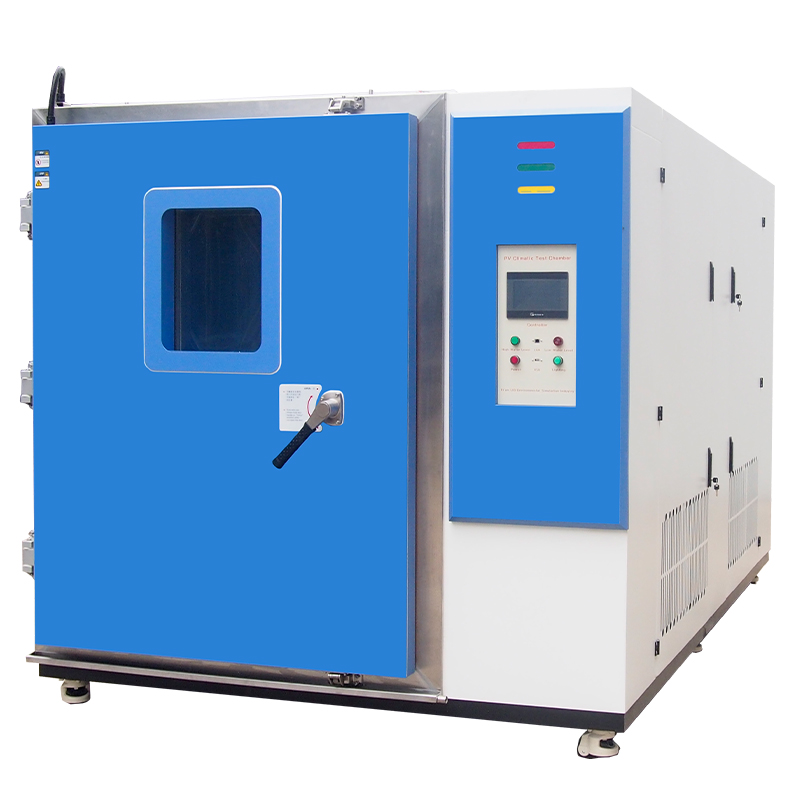
Accelerated Exposure Compresses Decades Into Weeks
Outdoor modules continuously take in heat, moisture, and UV rays for 25 years, which is the warranty period. Engineers can see how things break down without having to wait years for data from the field because laboratory chambers focus the same amount of stress into controlled cycles.
Power Output Degradation Signals Design Weakness
Correlation With Field Failure Modes
Reliability labs keep track of which flaws created in the lab are similar to failures seen in old installations in the field. They do this by improving test protocols so that accelerated results are still useful indicators of real-world performance and not just random lab artifacts.
UV Exposure Effects on Encapsulation and Backsheet Materials
| Material Component | UV/Heat Stressor | Observed Degradation |
|---|---|---|
| EVA/POE encapsulant | Prolonged UV irradiation | Yellowing, reduced light transmission |
| Polymer backsheet | Combined UV and thermal cycling | Cracking, embrittlement |
| Cell interconnects | Heat and humidity combined | Corrosion, resistance increase |
| Junction box seals | UV and moisture exposure | Adhesive breakdown, ingress risk |
Encapsulant Yellowing Reduces Light Transmission
Backsheet Embrittlement Threatens Insulation
UV and heat contact over and over again makes polymer backsheets stiff, which makes them more likely to crack. When the backsheet gets cracked, it loses a lot of its ability to keep out wetness and electricity.
Combined Heat and Humidity Accelerates Corrosion
Long-term exposure in a solar radiation test chamber to damp heat near 85°C and 85% relative humidity breaks through lamination seals, causing corrosion at cell interconnects and gradually increasing the module's internal resistance.
Detecting Microcracks and Delamination in Solar Panels
Electroluminescence Imaging After Exposure
After exposure to radiation and humidity, electroluminescence imaging shows dark spots on busbars and the ends of cells. These spots show microcracks and solder wear that can't be seen with the naked eye.
Visual Inspection for Surface Defects
Technicians check modules for bubbling, discoloration, or delamination at the backsheet and frame edges. These are visible signs that often happen when deeper lamination or encapsulant breakdown occurs.
Wet Leakage Current as a Safety Check
For a wet leakage test, modules are submerged in a conductive bath while a voltage is applied. This makes sure that humidity hasn't damaged the electrical insulation to the point where it would be dangerous.
Accelerated Lifetime Simulation in Solar Radiation Chambers
A special solar radiation test chamber simulates stress from UV light, heat, and humidity all at the same time. This gives engineers a controlled environment that is like years of being outside in a certain test window.
- Wide temperature range: It can handle temperatures from -70°C to +150°C, so it can be used for both damp heat routines and cold-extreme qualification tests on the same platform.
- Precise humidity control: the range is adjustable from about 10% to 98% RH, which lets you simulate both tropical damp heat and dry, low-humidity conditions.
- Full-size panel capacity: Interior space accommodating modules up to 1m x 2m, with multi-panel capacity for batch testing efficiency.
- Extended duration: It is possible to run continuous tests for 1,000 hours or more, which meets the standard requirements for damp heat qualification.
Panel Capacity Shapes Testing Throughput
Humidity Stability Across Long Durations
Keeping the difference in humidity within about ±2.5% RH over the course of a 1,000-hour run stops drift that could cause different decline results for similar specimens.
Benchtop, Floor Stand, and Walk-In Configurations
Labs that test small coupon samples need different tools than labs that run full-size commercial panels. There are different types of solar radiation test chambers, from small tabletop units to large walk-in rooms, so the testing scale can be adjusted to fit the subject.
Standards for Long-Term PV Reliability and Durability Testing
| Standard | Test Focus | Key Parameter |
|---|---|---|
| IEC 61215 | Damp heat qualification | 1,000 hours at 85°C / 85% RH |
| IEC 61215 UV preconditioning | Encapsulant/backsheet UV resistance | 15 kWh/m² total UV irradiation |
| IEC 61730 | Safety qualification | Complementary to reliability testing |
| IEC 61215 Humidity Freeze | Combined moisture and cold cycling | 10 cycles, 85°C/85% RH to -40°C |
Damp Heat Qualification Sets the Baseline
IEC 61215 says that modules must last for 1,000 hours at 85°C and 85% relative humidity. This is a very tough test for lamination and edge sealing, and it's one of the main reasons why crystalline silicon modules fail approval.
UV Preconditioning Targets Encapsulant Stability
Before damp heat and thermal cycling, modules are exposed to UV light for preconditioning. This checks for encapsulant materials that might yellow quickly or become weak under long-term UV load.
Extended Duration Programs Reveal Wear-Out Modes
Some makers require damp heat exposure for 2,000 hours or more, which is more than the standard 1,000 hours. This extended testing can be conducted in a solar radiation test chamber to identify slower-developing damage that baseline approval might not catch.
Design Improvements Driven by Solar Aging Test Results
Encapsulant Formulation Refinement
Radiation and damp heat test results help formulators choose encapsulant chemicals by pointing them toward polymer blends that don't turn yellow and keep their adhesion strength even after being exposed to UV light and humidity for a long time.
Backsheet Material Selection
Comparing aging data from a solar radiation test chamber between different backsheet options helps manufacturers choose laminates that won't crack and will keep the insulation's integrity, which has a direct effect on confidence in long-term warranty performance.
Lamination Process Optimization
Problems with damp heat that happen over and over at the edges of cells are often caused by the way the cells were laminated. The results of the aging test conducted in a solar radiation test chamber are fed back into the production settings, which improves the quality of the seals in later batches.
LIB Industry Chambers for Long-Term Solar Panel Reliability Assurance
 |
 |
||
|
Internal Dimension (mm) |
1300*700*1350 |
||
|
Overall Dimension (mm) |
1900*1100*1750 |
||
|
Parameter |
Temperature Range |
-60℃ ~ +100 ℃ |
|
|
Temperature Fluctuation |
± 0.5 ℃ |
||
|
Temperature Deviation |
± 2.0 ℃ |
||
|
Humidity Range |
20% ~ 98% RH |
||
|
Humidity Deviation |
± 2.5% RH |
||
|
Temperature Change Rate |
1 ~ 3.4℃ / Min |
||
|
Panel Size |
1M*2M |
||
|
Panel Capacity |
4 / 6 / 8 / 10 / 12 Pieces |
||
|
Material |
Exterior Material |
Steel Plate with protective coating |
|
|
Interior Material |
SUS304 stainless steel |
||
|
Thermal Insulation |
Polyurethane foam and insulation cotton |
||
|
Observation Window |
Interior lighting, double-layer therm stability silicone rubber sealing |
||
|
|
|
|
| High-Quality Workroom | Precise Sensors | Smart PID controller |


Purpose-Built for Full-Size Module Testing
LIB Industry's solar radiation test chambers, like the DHPV series, can hold panels up to 1m x 2m and four to twelve pieces per run. They can also maintain temperatures as low as -70°C and humidity levels as high as 98% RH for longer than 1,000-hour test periods.
Precision Control for Repeatable Results
Temperature changes are kept to within ±0.5°C and humidity changes are kept to within ±2.5% RH by advanced control systems in the solar radiation test chamber. This gives reliability laboratories the consistency they need to confidently compare changes in formulation or process between test batches.
Turnkey Solutions Across the Testing Lifecycle
LIB Industry offers a complete package that includes study, design, production, approval, shipping, installation, and training. The package comes with tabletop, floor stand, and walk-in versions that can fit any size testing lab.
Related Products for Complete Material Reliability Testing
Solar radiation testing is often combined with other environmental tests to fully evaluate material durability.
|
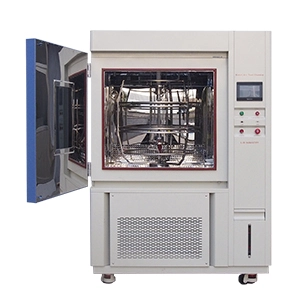
Xenon Test ChamberFor full-spectrum sunlight simulation and accelerated weathering evaluation, xenon weathering chambers are widely used in automotive, plastics, and coating industries. Related standards: ASTM G155, ISO 4892-2 |
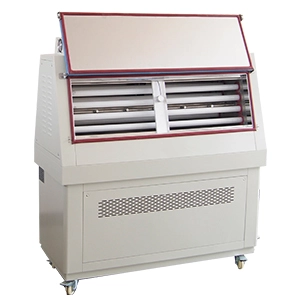
UV chambers provide accelerated ultraviolet exposure testing for evaluating polymer aging, color fading, and surface degradation. Related standards: ASTM G154, ISO 4892-3 |
Ozone test chambers are used to evaluate rubber and polymer resistance against ozone cracking and environmental aging. Common standards include ASTM D1149 and ISO 1431. |
For coated metal products, corrosion testing is an important supplement to weathering evaluation. Salt spray chambers evaluate protective coating performance under corrosive environments according to ASTM B117 and ISO 9227. |


Conclusion
Looking for a reliable company to make, supply, or build a solar radiation test box for your PV reliability lab? Email ellen@lib-industry.com to talk to LIB Industry about complete environmental testing options that are made to fit your solar module approval program.
FAQ
For how long do standard damp heat tests for solar panels last?
IEC 61215 says that it must be kept at 85°C and 85% relative humidity for 1,000 hours. Some manufacturers test for at least 2,000 hours to find degradation that happens more slowly than the baseline qualification limits.
What does UV light really hurt inside a solar panel?
Over time, UV radiation weakens polymer backsheets and turns encapsulant materials yellow. This makes it harder for light to pass through and makes the insulation less effective. This is why UV preconditioning comes before other tests of fitness.
Can a solar radiation test chamber hold commercial-sized panels that are the full size?
Yes, rooms designed to hold 1m x 2m panels and multi-piece loads can handle full-size module batches. This means that labs can test six, eight, or more panels in a single run.