Water Immersion Tanks in Marine Equipment Validation
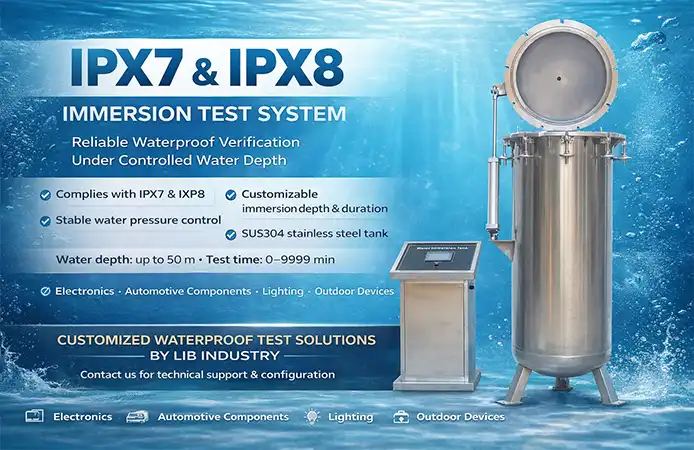
Water immersion tanks play a pivotal role in marine equipment validation by subjecting devices, enclosures, and electronic assemblies to controlled submersion pressures that simulate oceanic depths. Marine environments impose relentless hydrostatic forces, saltwater corrosion, and temperature fluctuations on every piece of hardware deployed at sea. A properly engineered water immersion tank replicates these hostile conditions inside a laboratory setting, allowing engineers to verify seal integrity, housing durability, and electrical continuity before products reach open water. This testing methodology aligns with IPX7 and IPX8 protection ratings defined by IEC 60529, ensuring that marine-grade electronics, navigation sensors, and subsea connectors can endure prolonged submersion without failure or performance degradation.
Why Marine Equipment Requires Rigorous Water Resistance Testing
Harsh Oceanic Conditions Demand Proven Protection
Marine hardware operates amid constant wave impact, spray, and full submersion events. Saltwater accelerates corrosion on metals and degrades polymer seals far more aggressively than freshwater. Without validated waterproofing, electronic enclosures can admit moisture within hours, leading to short circuits, sensor drift, or catastrophic system failure aboard vessels and offshore platforms.
Regulatory and Classification Society Mandates
Classification societies such as DNV, Lloyd's Register, and Bureau Veritas require documented proof of ingress protection for marine electronics. Equipment manufacturers must demonstrate compliance with IEC 60529 (IP Code) and relevant MIL-STD-810H procedures. A certified water immersion tank provides the controlled environment needed to generate the test reports these bodies accept.
Liability and Warranty Risk Mitigation
Deploying untested equipment at sea exposes manufacturers to substantial warranty claims and liability. A single water-ingress failure in a navigation light or communication module can endanger crew safety. Rigorous immersion testing reduces these risks by catching design weaknesses early in the development cycle, long before products leave the factory floor.
Typical Marine Components Tested in Immersion Tanks
|
Component Category |
Typical IPX Rating |
Common Test Depth |
Test Duration |
|
GPS Antennas & Radar Units |
IPX7 / IPX8 |
1 m - 10 m |
30 min - 4 hrs |
|
Subsea Connectors |
IPX8 |
10 m - 50 m |
1 hr - 24 hrs |
|
LED Navigation Lights |
IPX7 |
1 m |
30 min |
|
ROV Tether Assemblies |
IPX8 |
20 m - 50 m |
2 hrs - 8 hrs |
|
Environmental Sensor Pods |
IPX7 / IPX8 |
1 m - 30 m |
30 min - 12 hrs |
Navigation and Communication Electronics
Radar transceivers, GPS antennas, VHF radios, and AIS transponders are routinely submerged to verify housing gaskets and cable gland seals. These units often carry IPX7 or IPX8 ratings, requiring immersion at defined depths - commonly 1 meter for IPX7 and beyond 1 meter (up to 50 meters in high-pressure tanks) for IPX8 - over specified durations.
Subsea Connectors and Cable Assemblies
Underwater connectors used in ROV tethers, sonar arrays, and oceanographic instruments undergo pressure immersion testing in a water immersion tank to confirm that mating interfaces remain watertight at operational depth ratings. Test pressures can reach 50 meters of water column, stressing o-rings and potting compounds to their design limits inside a cylindrical test chamber.
Deck-Mounted Lighting and Sensor Housings
LED floodlights, running lights, and environmental sensor pods mounted on exposed decks face continuous spray and intermittent wave overwash. Immersion tank testing validates that lens seals, conduit entries, and drain features perform as intended under sustained hydrostatic pressure equivalent to temporary submersion events.
Test Conditions: Saltwater vs Freshwater Immersion
Why Most Standards Specify Freshwater?
IEC 60529 testing protocols specify freshwater for immersion evaluations because it provides a repeatable baseline free from chemical variability. Freshwater eliminates confounding factors like salinity concentration, pH shifts, and biological fouling, making test results reproducible across laboratories worldwide.
When Saltwater Testing Becomes Essential
Certain marine OEMs and naval programs require supplementary saltwater immersion cycles to evaluate corrosion resistance and galvanic compatibility. Saltwater, typically prepared at 3.5% NaCl concentration, accelerates electrochemical reactions on dissimilar metals and reveals vulnerabilities in protective coatings that freshwater alone cannot expose.
Combining Both Protocols for Comprehensive Validation
A robust marine validation program often layers freshwater IP-rated tests with subsequent saltwater exposure cycles. This dual-protocol approach satisfies classification society IP requirements while also generating corrosion performance data that procurement teams and naval architects increasingly demand during equipment qualification reviews.
|
Parameter |
Freshwater Immersion |
Saltwater Immersion |
|
Primary Standard |
IEC 60529 (IPX7/IPX8) |
Supplementary OEM / Naval Specs |
|
Salinity |
0% |
~3.5% NaCl |
|
Corrosion Assessment |
Minimal |
Galvanic & pitting evaluation |
|
Reproducibility |
High (standardized medium) |
Moderate (solution prep variability) |
|
Biological Fouling Risk |
None |
Possible in extended tests |
|
Typical Use Case |
IP certification |
Material & coating qualification |
Evaluating Material and Seal Performance Under Submersion
Gasket and O-Ring Compression Behavior
Elastomeric seals exhibit compression set over time, especially when exposed to elevated temperatures and sustained pressure. Water immersion tanks allow engineers to monitor seal performance across extended dwell periods, identifying materials that lose resilience and begin to admit water before deployment in the field.
Housing Material Compatibility
Enclosures fabricated from aluminum alloys, A3 steel plate, or engineering polymers each respond differently to prolonged submersion. Aluminum may pit in saltwater without anodizing; steel requires galvanized or epoxy coatings; polymers can absorb moisture and swell. Controlled immersion testing quantifies these behaviors under realistic pressure profiles.
Coating and Surface Treatment Verification
Electrostatic powder coatings, marine-grade paints, and zinc-nickel plating all claim submersion resistance. Immersion tank tests with programmable pressure cycling expose coating adhesion failures, blistering, and underfilm corrosion that accelerated salt spray alone may not reveal within practical test durations.
Correlating Test Results with Real-World Marine Exposure
Establishing Depth-Pressure Equivalencies
Laboratory immersion at 50 meters of water depth pressure creates approximately 5 bar of hydrostatic load on every seal interface. This controlled loading allows engineers to map laboratory performance directly to expected service depths, establishing a quantitative link between test chamber conditions and real oceanic environments.
Accounting for Dynamic Marine Loads
Open-ocean conditions involve wave-induced pressure fluctuations, tidal cycling, and vessel motion that static immersion cannot fully replicate. Advanced test programs incorporate pressure cycling routines on programmable touch screen controllers, simulating the repetitive loading that connectors and housings experience during actual deployment.
Validating Field Failure Analyses
When equipment returns from the field with water ingress damage, immersion tank retesting of identical units can pinpoint whether the failure originated from a design deficiency, a manufacturing defect, or an installation error. This forensic capability makes the immersion tank an indispensable diagnostic tool beyond its role in initial qualification.
Improving Durability and Service Life of Marine Equipment
Design Iteration Through Repeated Testing
Immersion testing provides rapid feedback loops for design engineers refining gasket grooves, fastener torque specifications, and cable gland selections. Each iteration can be validated within hours inside a cylindrical immersion tank, compressing development timelines that would otherwise require months of ocean exposure.
Predictive Maintenance Data Collection
Long-duration immersion tests - tracked via USB data downloads or LAN-connected remote monitoring - generate pressure-versus-time datasets that reliability engineers use to build predictive maintenance models. These models estimate seal replacement intervals and re-coating schedules, reducing unplanned downtime aboard operational vessels.
Extending Warranty Coverage Confidence
Manufacturers who present comprehensive immersion test reports to end customers can justify extended warranty periods on marine products. Documented compliance with IPX7 and IPX8 at rated pressures demonstrates engineering rigor that underwriters and procurement agencies recognize when approving equipment for fleet-wide adoption.
Validate Marine Durability with LIB Industry Water Immersion Tanks
 |
|
|
Specification |
R78-600 Details |
|
Model |
R78-600 |
|
Internal Dimensions |
Diameter 600 mm × Height 1500 mm |
|
Overall Dimensions |
Diameter 800 mm × Height 1800 mm |
|
Maximum Pressure |
50 m water depth pressure |
|
Lid Mechanism |
Pneumatic lid |
|
Construction Material |
A3 steel plate, 15 mm wall thickness |
|
Controller |
Programmable color LCD touch screen, Ethernet |
|
Data Ports |
USB download, LAN remote control |
|
Water Supply |
Storage tank, automatic supply system |
|
Structural Support |
Tripod-supported cylindrical chamber |
 |
 |
| Test Area | Footstand |
 |
 |
| Control Panel | Safety Lock |
Engineered for High-Pressure Marine Simulation
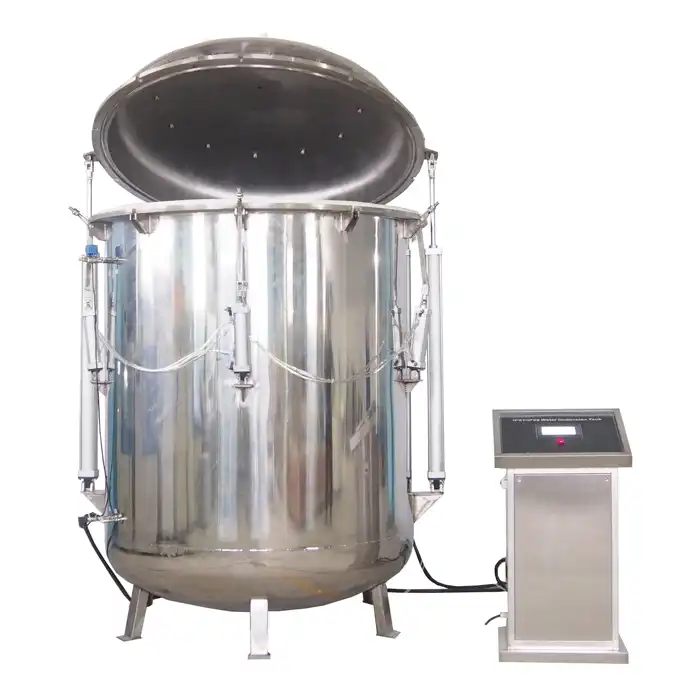
The LIB Industry R78-600 water immersion tank delivers up to 50 meters of water depth pressure inside a cylindrical chamber measuring 600 mm diameter by 1500 mm height. Its A3 steel plate construction with 15 mm wall thickness and pneumatic lid mechanism accommodates heavy or oversized marine components while maintaining a secure, pressure-tight seal throughout every test cycle.
Intelligent Control and Remote Monitoring
A programmable color LCD touch screen controller governs pressure profiles, immersion duration, and data logging. Ethernet connectivity enables remote operation and real-time monitoring, while USB ports allow engineers to export complete test records for compliance documentation and quality audits without manual transcription.
Turnkey Solutions Tailored to Your Validation Needs
LIB Industry provides a complete turnkey solution - from research and design through production, commissioning, delivery, installation, and operator training. Whether you need a standard IPX7/IPX8 test setup or a customized protocol addressing unique marine depth requirements, LIB Industry configures every system to match your specific validation objectives.
Conclusion
Water immersion tanks serve as a foundational validation instrument for any organization manufacturing, specifying, or certifying marine equipment. By replicating hydrostatic pressures up to 50 meters, these chambers expose seal weaknesses, coating failures, and housing design flaws well before hardware reaches the open ocean. Combining freshwater IP-rated testing with supplementary saltwater protocols delivers the comprehensive performance data that classification societies, naval programs, and commercial fleet operators require. Investing in reliable immersion testing infrastructure strengthens product quality, reduces warranty exposure, and safeguards the people and systems that depend on marine electronics in demanding offshore environments.
FAQ
What IPX ratings can a water immersion tank validate for marine equipment?
A properly equipped tank validates IPX7 (temporary submersion at 1 m for 30 minutes) and IPX8 (continuous submersion beyond 1 m at manufacturer-specified depth and duration), both critical for marine hardware certification.
Can immersion tanks simulate the saltwater conditions found at sea?
Many tanks operate with freshwater per IEC 60529, but test facilities can fill them with prepared saltwater solutions to evaluate corrosion resistance and galvanic effects on marine-grade materials and coatings.
How does pressure cycling in an immersion tank replicate ocean conditions?
Programmable controllers ramp pressure up and down to simulate tidal and wave-induced hydrostatic fluctuations, providing a more realistic assessment of seal and housing endurance than static submersion alone.
Need a trusted water immersion tank manufacturer and supplier? LIB Industry delivers turnkey environmental testing solutions - from design and production through installation and training - tailored to your marine validation requirements. Contact us at ellen@lib-industry.com to discuss your project.