Weatherometer UV Aging Tests for Plastics and Building Materials: A Xenon Arc Chamber Guide
A weatherometer is an accelerated weathering test chamber used to evaluate how plastics, paints, coatings, and building materials withstand sunlight, heat, humidity, and water exposure. By combining filtered xenon arc radiation with controlled environmental conditions, it helps manufacturers identify material degradation and compare product durability before outdoor use.
For laboratories testing PVC, ABS, polycarbonate, roofing membranes, and exterior coatings, xenon arc weathering provides a controlled method for evaluating material performance and supporting quality control.
What Is a Weatherometer?
 A weatherometer exposes material specimens to filtered xenon arc light under controlled temperature and moisture conditions. Xenon arc lamps reproduce a broad portion of the solar spectrum, making them suitable for studying the effects of sunlight on materials.
Depending on the test method, the chamber can also control humidity and water spray to simulate moisture exposure. A radiometer monitors irradiance, while a specimen holder positions samples around the light source.
After exposure, engineers evaluate changes in color, gloss, surface condition, and mechanical strength. These results help manufacturers compare formulations, evaluate suppliers, and identify potential durability problems.
Which Materials Need UV Aging Tests?
Materials exposed to outdoor sunlight or strong indoor light can experience discoloration, surface degradation, cracking, and changes in mechanical properties.
|
Material |
Typical Aging Problems |
What to Evaluate |
|
PVC |
Yellowing, chalking, impact strength loss |
Color, gloss, impact retention |
|
ABS |
Chalking, embrittlement |
Surface condition, impact strength |
|
Polycarbonate |
Yellowing, haze, cracking |
Color, haze, tensile or impact retention |
|
Acrylic (PMMA) |
Gloss loss, surface crazing |
Gloss, visual defects |
|
Paints and coatings |
Fading, chalking, cracking |
Color difference, gloss, adhesion |
|
Roofing membranes and sealants |
Hardening, cracking |
Flexibility, surface condition |
Aging behavior varies with material formulation. UV stabilizers, pigments, fillers, and resin types all influence weathering resistance. Testing different formulations under the same conditions helps manufacturers identify which materials maintain their appearance and performance more effectively.
Early testing can also reduce development costs. Discovering a formulation problem before production may require only an adjustment, while the same problem after installation can lead to warranty claims and replacement costs.
How Does a Xenon Arc Weatherometer Simulate Outdoor Aging?
A xenon arc weatherometer combines light, temperature, humidity, and water spray to reproduce important outdoor exposure factors.
1. Xenon Arc Light and Irradiance
A xenon arc lamp produces a broad light spectrum similar to natural sunlight. Appropriate optical filters are selected according to the material and testing method.
Irradiance determines the radiation intensity reaching the specimens. Changes in irradiance can influence degradation rates, so laboratories should maintain the conditions specified by the test method and record exposure time and cumulative radiant exposure where required.
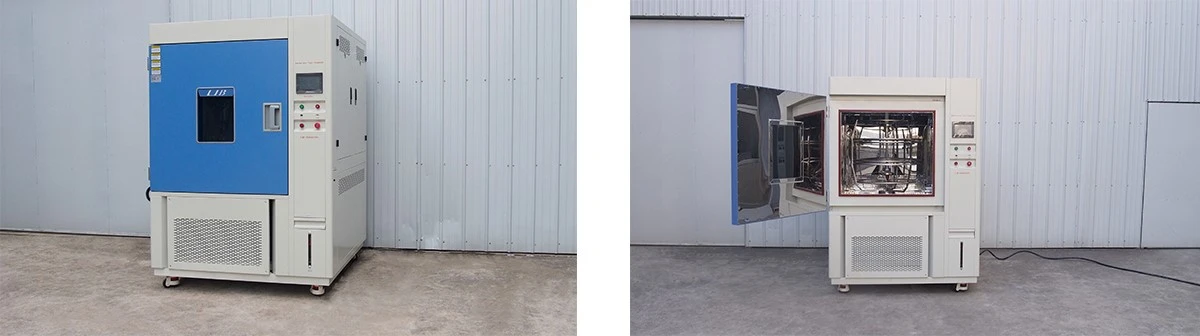
The LIB Industry XL-S-750 uses one 4500W water-cooled xenon arc lamp, with an irradiance range of 35–150 W/m². It includes a UV radiometer with a stated tolerance of ±5%.
2. Temperature Control
Chamber air temperature and black panel temperature are different measurements. Chamber temperature represents the surrounding air, while black panel temperature estimates the temperature reached by a dark reference surface under radiation.
Because a specimen surface can become hotter than the surrounding air, many xenon arc test methods specify black panel temperature as an important control parameter.
The XL-S-750 provides a chamber temperature range from ambient to 100°C ±2°C and a black panel temperature range of 35–85°C ±2°C.
3. Humidity and Water Spray
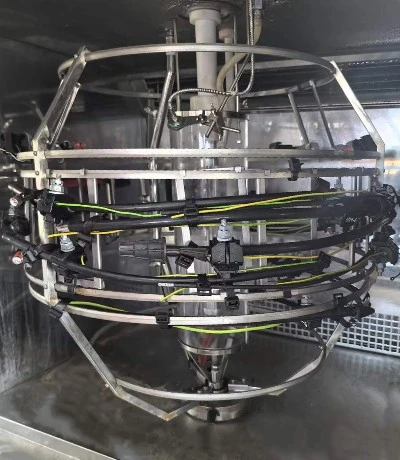
Moisture can accelerate material degradation through swelling, leaching, and hydrolysis. Water spray introduces wetting and drying conditions that are important for many outdoor applications.
Depending on the test standard, exposure cycles may combine light-only periods, light with water spray, and dark moisture stages. Exact settings should follow the applicable test method.
The XL-S-750 offers a humidity range of 50–98% RH, with a deviation of ±5% RH. Its water spray cycle is adjustable from 1 hour to 9999 hours and 59 minutes.
4. Specimen Rotation
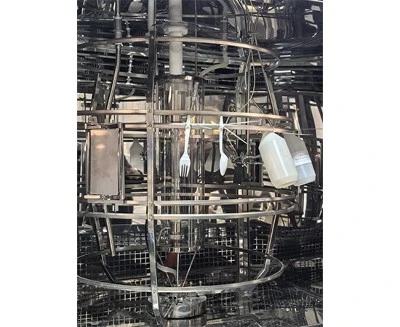
Consistent specimen positioning supports repeatable exposure. A rotating holder moves samples around the xenon lamp to help distribute radiation across specimen positions.
The XL-S-750 accommodates 42 specimens, each measuring 95 × 200 mm. Laboratories should use consistent specimen preparation and include unexposed reference samples where appropriate.
What Should You Consider When Choosing a Weatherometer?
The right weatherometer must support the conditions required by the selected test method. Important considerations include:
· Irradiance and wavelength: Confirm the required radiation intensity and monitoring wavelength.
· Temperature: Check both chamber air and black panel temperature ranges.
· Humidity and spray: Confirm the required moisture conditions and programmable spray cycles.
· Specimen capacity: Match the holder size and sample quantity to laboratory needs.
· Controller: Programmable test cycles help operators repeat exposure procedures consistently.
Very high irradiance should not be used simply to accelerate a test beyond the limits of the applicable method. Excessive radiation may produce degradation mechanisms that do not represent the intended outdoor exposure conditions.
Xenon Arc vs. UV Fluorescent Testing
Both xenon arc and fluorescent UV chambers are used for accelerated aging, but they serve different testing needs.
|
Factor |
Xenon Arc Weatherometer |
UV Fluorescent Chamber |
|
Light source |
Filtered xenon arc lamp |
Fluorescent UV lamps |
|
Spectrum |
Broad solar spectrum |
Primarily UV radiation |
|
Typical standards |
ISO 4892-2, ASTM G155 |
ISO 4892-3, ASTM G154 |
|
Moisture exposure |
Humidity and water spray options |
Condensation and spray, depending on configuration |
|
Typical applications |
Plastics, coatings, building materials |
UV screening of coatings and polymers |
|
|
|


Choose xenon arc testing when a broader simulation of sunlight and moisture exposure is required. Fluorescent UV testing is often suitable for focused UV degradation studies and comparative screening. The choice depends on the material, test objective, and applicable standard.
Which Standards Apply to Xenon Arc Weathering?
Commonly referenced standards vary by material and application.
|
Material Group |
Standard References |
|
Plastics, outdoor applications |
ISO 4892-2, ASTM D2565 |
|
Plastics, indoor applications |
ASTM D4459 |
|
Paints and coatings |
ISO 11341 |
|
General non-metallic materials |
ASTM G155 |
ISO 4892-2 describes xenon-arc exposure methods for plastics. ASTM D2565 addresses outdoor-use plastics, while ASTM D4459 covers indoor-use plastics. ISO 11341 addresses artificial weathering of paints and varnishes, and ASTM G155 covers xenon arc apparatus for non-metallic materials.
The applicable standard and current edition should be confirmed before testing. Filters, irradiance, temperature, and moisture cycles must match the selected procedure. Laboratories should also maintain appropriate calibration records for irradiance and temperature measurements.
How Do You Evaluate Weathering Test Results?
Material performance should be evaluated using consistent methods and unexposed reference specimens.
|
Property |
Method or Instrument |
Typical Changes |
|
Color |
Spectrophotometer, ASTM D2244 |
Fading, yellowing |
|
Gloss |
Gloss meter, ASTM D523 |
Gloss loss |
|
Surface |
Visual inspection or microscope |
Cracking, chalking, blisters |
|
Mechanical strength |
Tensile testing, ASTM D638, or impact testing |
Embrittlement, strength loss |
Color and gloss measurements identify visible changes. Surface inspection reveals chalking, crazing, cracks, and blisters. Mechanical testing is also important because some plastics may lose strength before obvious surface changes appear.
These results help manufacturers compare resins, pigments, and UV stabilizers under the same exposure conditions. For quality control, laboratories can establish acceptance limits and compare production batches against reference materials.
Accelerated weathering results cannot be converted directly into years of outdoor service life. Actual durability depends on test conditions, local climate, material chemistry, and product design. Critical applications should be supported by outdoor exposure testing where appropriate.
LIB Industry XL-S-750 Xenon Arc Weatherometer
The LIB Industry XL-S-750 is designed for accelerated weathering tests of plastics, paints, coatings, and building materials. It combines xenon arc radiation with controlled temperature, humidity, and programmable water spray.
Its rotating specimen holder accommodates up to 42 samples. A programmable color LCD touchscreen controller manages test conditions and exposure cycles. The automatic water supply and purification system supports spray operation, while the mechanical compression refrigeration system provides cooling.
XL-S-750 Technical Specifications
|
Parameter |
Specification |
|
Model |
XL-S-750 |
|
Internal Dimensions |
950 × 950 × 850 mm |
|
Overall Dimensions |
1400 × 1400 × 1950 mm |
|
Specimen Holder Size |
95 × 200 mm |
|
Specimen Capacity |
42 pcs |
|
Chamber Type |
Rotating holder |
|
Irradiation Source |
1 × 4500W water-cooled xenon arc lamp |
|
Irradiance Range |
35–150 W/m² |
|
Chamber Temperature |
Ambient to 100°C ±2°C |
|
Black Panel Temperature |
35–85°C ±2°C |
|
Humidity Range |
50–98% RH |
|
Humidity Deviation |
±5% RH |
|
Water Spray Cycle |
1–9999H59M, adjustable |
|
Controller |
Programmable color LCD touchscreen |
|
Water Supply |
Automatic water supply and purification system |
|
Radiometer |
UV radiometer, tolerance ±5% |
|
Cooling System |
Mechanical compression refrigeration |
The final equipment configuration should be selected according to the material, specimen dimensions, and applicable test standard.
After-Sales Service and Technical Support
Equipment performance is only one part of the purchasing decision. Installation, training, technical assistance, and spare parts support also matter for long-term laboratory operation.
LIB Industry provides:
· 3-Year Warranty: Support for equipment quality and manufacturing-related issues, subject to applicable warranty terms.
· Lifetime Technical Support: Ongoing technical assistance throughout the equipment's service life.
· Installation and Training: Guidance for installation, commissioning, and operator training.
· Remote Video Assistance: Technical support through video calls and online communication.
· Spare Parts Support: Replacement parts and technical guidance to help reduce equipment downtime.
LIB Industry also supports laboratories with equipment configuration and customized environmental testing solutions.
Frequently Asked Questions
How many hours of xenon testing equal one year outdoors?
There is no universal conversion factor. The relationship depends on irradiance, temperature, moisture cycles, material chemistry, and outdoor climate. Compare results using defined exposure conditions and outdoor data rather than a fixed hours-to-years conversion.
What is the difference between xenon arc and UV fluorescent testing?
Xenon arc lamps reproduce a broader portion of the solar spectrum, while fluorescent UV lamps focus primarily on ultraviolet radiation. Xenon arc testing is suitable for broader weathering studies; UV fluorescent testing is commonly used for focused UV screening.
How do I choose the right weatherometer?
Start with the material and applicable standard. Then confirm irradiance, temperature, humidity, water spray conditions, specimen dimensions, and sample capacity. Sharing these details with the manufacturer helps determine a suitable configuration.
Get a Weatherometer Solution from LIB Industry
Looking for a xenon arc weatherometer for plastics, paints, coatings, or building material aging tests?
LIB Industry provides environmental testing equipment and customized solutions, covering design, manufacturing, installation, and operator training.
Send your material type, test standard, specimen dimensions, and testing requirements to ellen@lib-industry.com to discuss a suitable configuration and request a quotation.