What Is Benchtop Testing and How Does It Work?
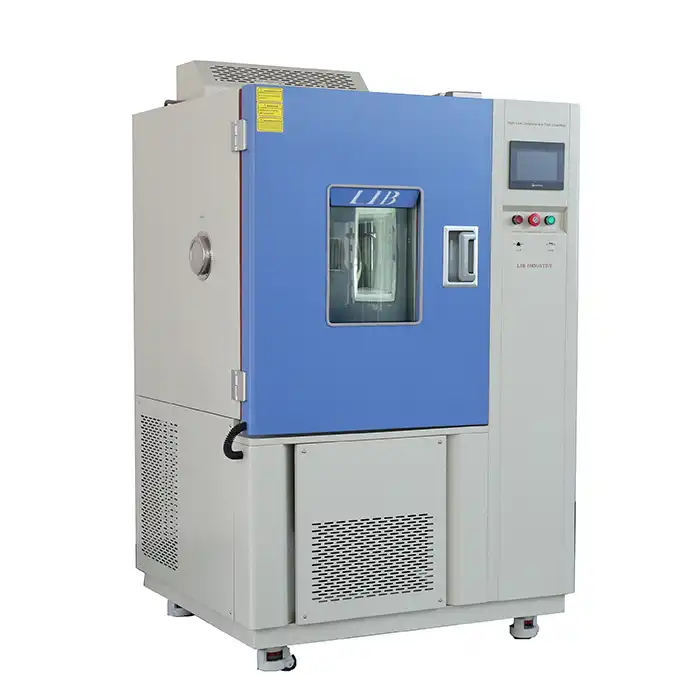
Benchtop testing is a controlled laboratory method used to evaluate the performance, durability, and reliability of products or materials under simulated environmental conditions. A benchtop test chamber provides temperature, humidity, and other environmental controls in a compact configuration suitable for laboratory workspaces, without requiring a dedicated testing room.
This approach is widely used during product development, quality verification, material research, pharmaceutical stability studies, and component qualification. By creating repeatable environmental conditions, engineers and researchers can evaluate samples under controlled stress while using relatively little laboratory space.
LIB Industry has manufactured compact environmental testing equipment since 2009, providing benchtop chambers for pharmaceutical, electronics, research, and other industrial applications.
Why Is Benchtop Testing Used in Laboratory Testing?
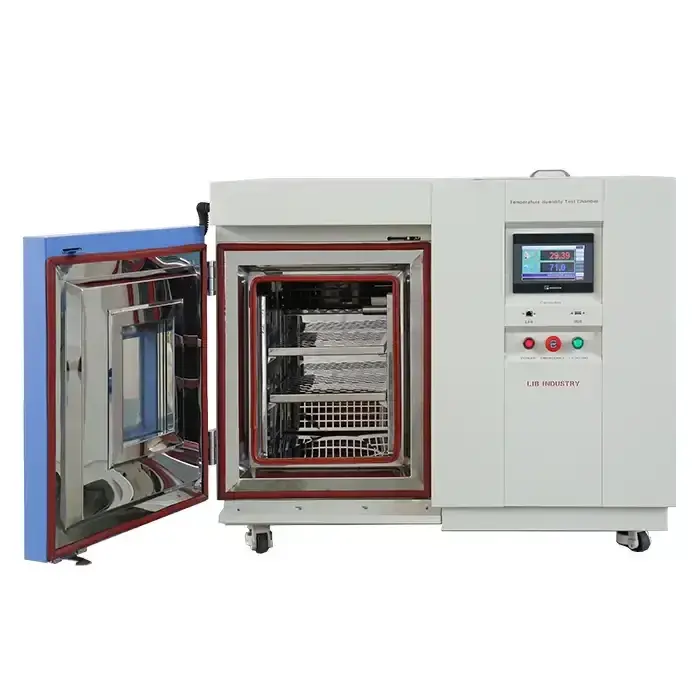
Samples can be exposed to programmed temperature and humidity profiles while operators monitor changes in performance or physical condition. This is particularly useful during product development, where several prototypes or material formulations may need to be evaluated simultaneously — a compact chamber can support accelerated aging, thermal cycling, humidity resistance, and stability studies while allowing multiple test stations to operate in the same laboratory.
Which Industries Use Benchtop Testing?
| Industry | Typical Testing Purpose |
|---|---|
| Pharmaceutical & Biotechnology | Stability studies and accelerated aging |
| Electronics & Semiconductors | Component qualification and thermal stress |
| Battery & Energy | Temperature-related performance evaluation |
| Photovoltaics | Humidity and elevated-temperature exposure |
| Consumer Products | Product and formulation stability |
| Food Science | Accelerated shelf-life evaluation |
| Materials Research | Aging and environmental resistance |
For example, pharmaceutical laboratories may use controlled conditions such as 40°C and 75% RH for accelerated stability studies, while electronics manufacturers may expose components to repeated temperature changes to investigate solder joints, capacitors, or integrated circuits.
How Does a Benchtop Chamber Compare with a Walk-In Chamber?
The choice depends on specimen dimensions, testing capacity, available laboratory space, and infrastructure requirements — not simply chamber size.
| Characteristic | Benchtop Test Chamber | Walk-In Chamber |
|---|---|---|
| Typical Volume | 50L–80L | 1,000L–30,000L |
| Installation | Bench or dedicated stand | Dedicated floor space |
| Specimens | Components and small assemblies | Large products and equipment |
| Laboratory Space | Compact | Requires substantial space |
| Installation Complexity | Relatively simple | May require facility modifications |
| Investment | Lower initial investment | Higher infrastructure investment |
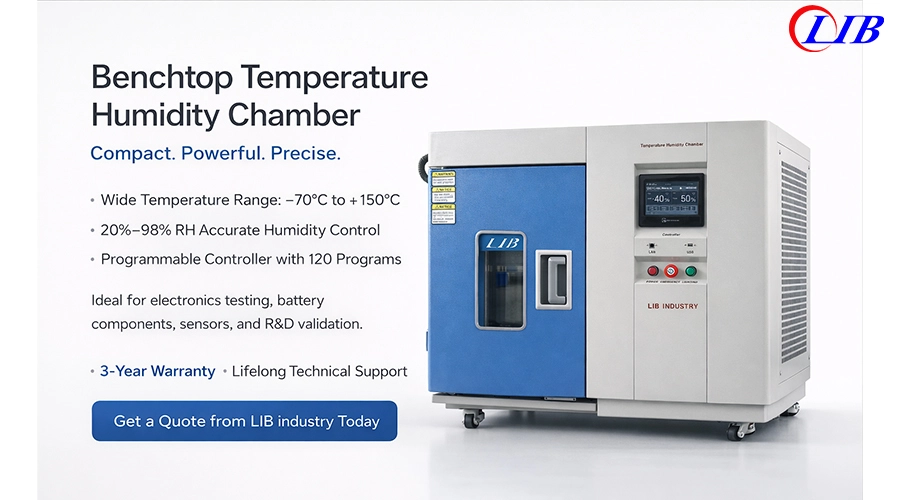
A benchtop climate chamber is generally more practical when testing small components, materials, pharmaceutical samples, or multiple small specimens. A walk-in chamber becomes more appropriate when the test article is too large for a conventional chamber or when large quantities of specimens must be tested together. The performance gap between the two configurations is not necessarily proportional to their size — properly designed benchtop systems can provide precise temperature and humidity control for laboratory-scale applications.
What Technical Features Should You Look for in a Benchtop Test Chamber?
LIB Industry's benchtop chambers are designed around several key performance features:
| Parameter | LIB Industry Benchtop Chamber |
|---|---|
| Temperature Range | -20°C to +150°C, -40°C to +150°C, or -70°C to +150°C, depending on configuration |
| Temperature Fluctuation | ±0.5°C |
| Temperature Deviation | ±2.0°C |
| Humidity Range | 20%–98% RH |
| Humidity Deviation | ±2.5% RH |
| Heating Rate | Approx. 3°C/min |
| Cooling Rate | Approx. 1°C/min |
| Heat Load Capacity | Up to 1000W |
| Cable Port | Standard Φ50mm |
The chamber uses controlled airflow to maintain temperature conditions throughout the workspace. Humidity is generated by introducing moisture into the chamber, while refrigeration-based dehumidification helps regulate moisture levels.
For applications requiring programmed environmental profiles, the controller supports multi-segment temperature and humidity settings. Ethernet, USB, and PC communication functions can also support monitoring and data management.
What Construction Features Improve Benchtop Chamber Reliability?
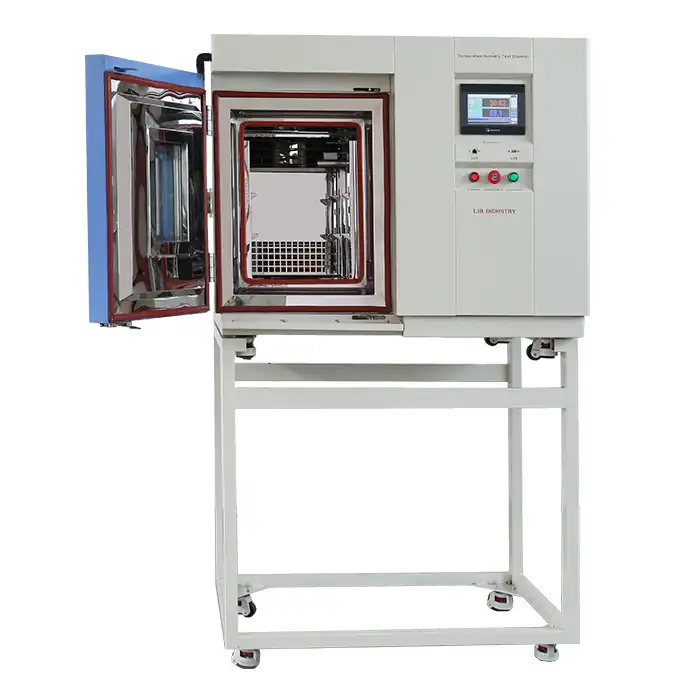 LIB Industry's chambers use SUS304 stainless steel interiors with a mirror finish, providing a corrosion-resistant and easy-to-clean working surface — particularly useful for laboratories conducting repeated humidity or environmental exposure tests.
Other construction features include:
- Steel plate exterior with protective powder coating
- Polyurethane foam and insulation cotton for thermal insulation
- Double-layer observation window
- Silicone sealing around the observation window
- Interior LED lighting
- Φ50mm cable port with sealing plug
These features allow researchers to observe specimens and connect external sensors or powered devices while maintaining controlled chamber conditions.
How Can Benchtop Testing Be Performed Effectively?
Good test results depend on more than chamber performance. Specimen preparation, loading, environmental stabilization, and data recording can all affect test consistency.
Before Testing
Define the test objective, environmental conditions, exposure duration, acceptance criteria, and applicable standard before loading specimens. Specimens should be prepared consistently and, where necessary, conditioned to reduce differences caused by previous storage conditions. Record initial measurements such as dimensions, weight, appearance, or functional performance so that changes can be evaluated after exposure.
During Testing
Allow the chamber to stabilize at the programmed conditions before loading specimens. Arrange samples with sufficient spacing so that airflow is not unnecessarily restricted. Once testing begins, monitor the chamber conditions and use alarms or data logging to identify deviations. For regulatory or quality-related testing, recorded temperature and humidity data can also provide evidence that the test remained within the required limits.
After Testing
Compare the tested specimens with their initial condition. Depending on the application, evaluation may include:
- Dimensional changes
- Weight or moisture changes
- Surface degradation
- Electrical performance
- Chemical composition
- Functional performance
The final analysis should be based on the acceptance criteria defined before testing rather than simply observing whether a specimen appears different.
Why Choose LIB Industry Benchtop Test Chambers?
Available Models
The TH series includes compact models such as:
| Model | Capacity | Typical Advantage |
|---|---|---|
| TH-50 | 50L | Compact testing and limited sample quantities |
| TH-80 | 80L | Additional workspace for larger samples or sample quantities |
The TH-50, for example, provides a 50L testing volume in an overall chamber size of approximately 820 × 1160 × 950 mm, making it suitable for laboratories where workspace is limited.
What Can LIB Industry Customize?
Standard models cover many laboratory applications, but LIB Industry can also adapt the chamber when the testing setup requires additional functions or non-standard configurations, including:
- Chamber dimensions
- Cable port configuration
- Specimen fixtures
- Data logging functions
- External equipment connections
- Specialized testing arrangements
This is useful when testing powered electronics, battery-related components, specialized materials, or specimens that require external instrumentation.
What Support Does LIB Industry Provide?
LIB Industry's service extends beyond equipment manufacturing:
Design → Manufacturing → Commissioning → Delivery → Installation → Training
Customers also receive a 3-year warranty and lifetime technical support, providing continued assistance after installation.
What Other Environmental Test Chambers Might You Need?
Benchtop temperature and humidity testing may be only one part of a broader reliability or environmental testing program. Depending on the product, additional equipment may be needed for thermal shock, weathering, or other environmental stresses.
|
|
|
|
|
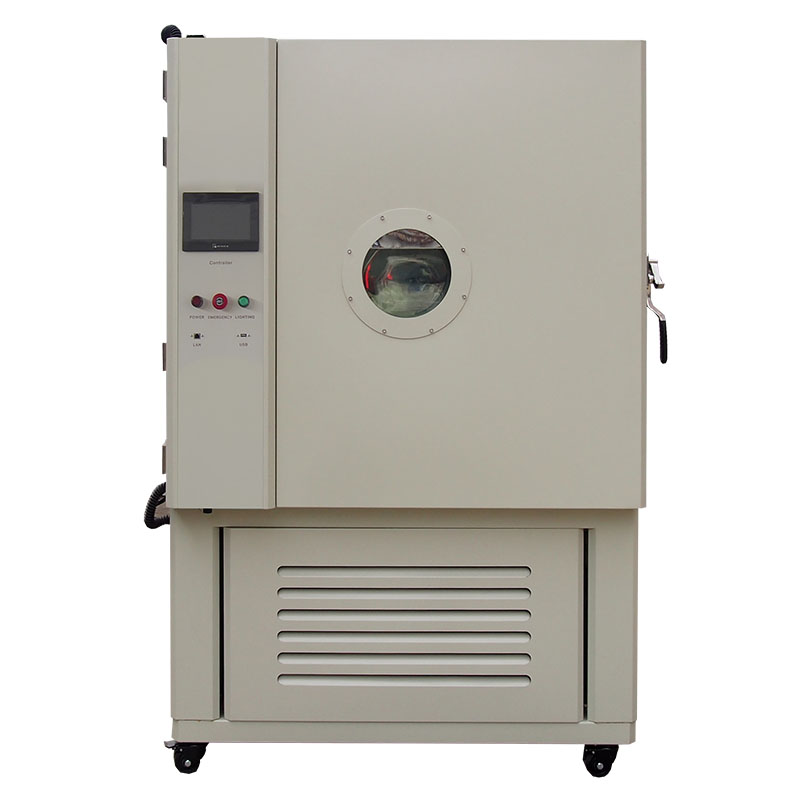
Temperature & Humidity Chamber Temperature and humidity aging Electronics, batteries, materials |
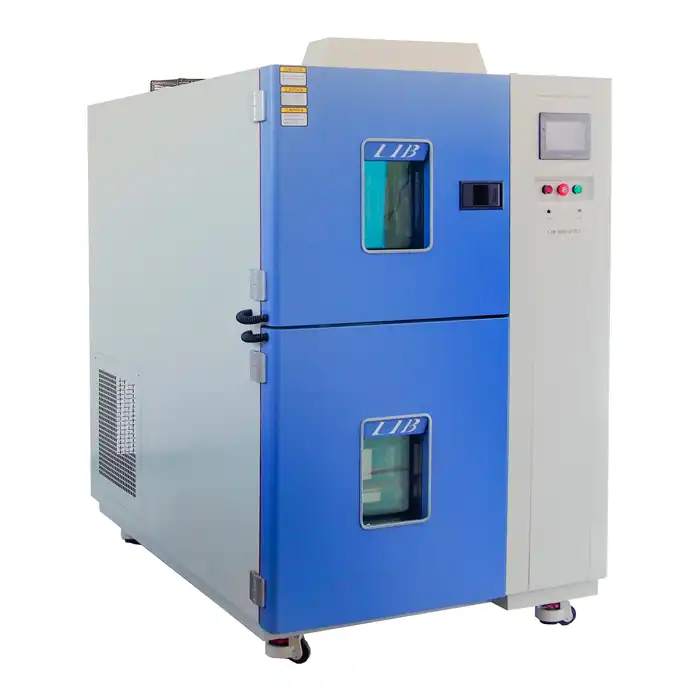
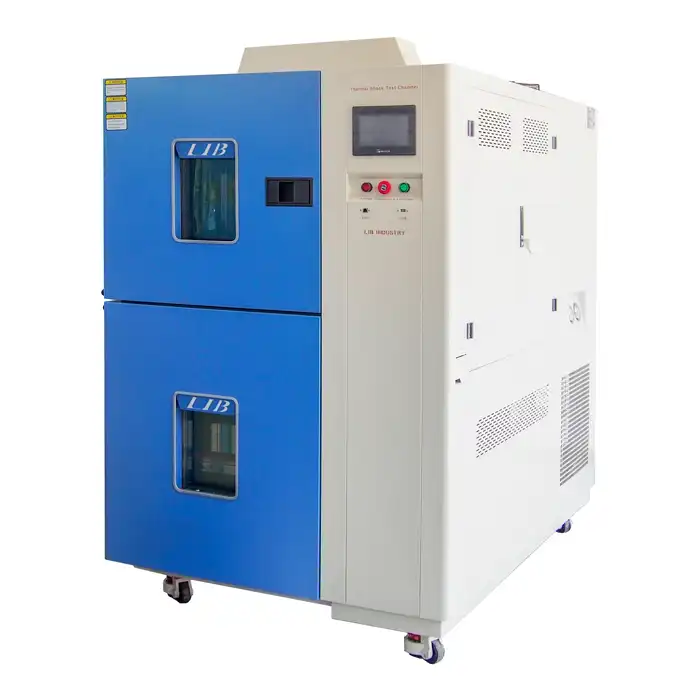
Thermal Shock Chamber Rapid transfer between temperature extremes Automotive, electronics, components |
Xenon Arc Weathering Chamber Accelerated light, heat, and moisture aging Plastics, coatings, automotive mate |


Using complementary environmental chambers allows laboratories to evaluate different failure mechanisms rather than relying on a single environmental exposure method.
How Can You Choose the Right Benchtop Test Chamber?
The selection process should begin with the test requirements rather than the chamber model. Before requesting a quotation, define:
- Required temperature range
- Required humidity range
- Specimen dimensions and quantity
- Required exposure duration
- Heating and cooling rate
- Heat load from powered specimens
- Cable and sensor connections
- Applicable testing standards
- Available laboratory space
A smaller chamber is not necessarily better simply because it costs less. The working volume should accommodate the specimens while leaving enough space for appropriate airflow and environmental exposure. If standard specifications do not match your test procedure, discuss the requirements with the manufacturer before purchasing rather than modifying the test around an unsuitable chamber.
What Do Buyers Often Ask About Benchtop Test Chambers?
Can a benchtop chamber perform thermal shock testing?
A standard benchtop environmental chamber is designed for controlled temperature changes rather than the extremely rapid transitions required for thermal shock testing. Applications requiring rapid transfer between temperature zones should use a dedicated thermal shock chamber.
Is a 50L or 80L benchtop chamber right for me?
See the model comparison above — the choice mainly comes down to specimen size, sample quantity, and available bench space.
What warranty and support come with a LIB Industry chamber?
LIB Industry provides a 3-year warranty and lifetime technical support, together with services covering commissioning, installation, training, and ongoing technical assistance.
How Can You Get a Benchtop Testing Solution from LIB Industry?
LIB Industry provides benchtop environmental chamber,compact climatic chamber, Mini Temperature Chambers and mini environmental test chamber for pharmaceutical, electronics, materials, battery, and research applications, combining compact laboratory configurations with controlled temperature and humidity performance.
Whether you need a standard 50L or 80L chamber or a customized configuration, LIB Industry can develop the equipment around your specimen, test profile, and laboratory requirements.
Contact LIB Industry to discuss your benchtop testing requirements, request a customized configuration, or get a quotation.