Where to Buy Weatherometers for Accelerated Weathering Tests?
The safest place to buy a weatherometer is from a manufacturer that designs, builds, calibrates and commissions its own xenon arc chambers. Buying direct gives you one company accountable for irradiance control, temperature and humidity performance, installation, training and after-sales service. Regional agents are still useful for import paperwork and local support, but only if the contract says who owns the warranty and who stocks spare lamps.
Whichever channel you choose, get the specification in writing, confirm the standards the chamber is built to (ASTM G155, ISO 4892-2 and others), and agree an acceptance test before you pay. A signed spec sheet tells you more than a brochure.
Which Sourcing Channel Fits Your Lab?
| Channel | What you gain | What to check |
|---|---|---|
| Manufacturer direct | Customization, single point of accountability, direct access to engineers | You need a clear technical brief |
| Regional agent or distributor | Local language, import help, nearby support | Who handles warranty claims, and whether technicians are on staff |
| Marketplace or trading company | Fast quotes, easy price comparison | The real manufacturer is often hidden, so ask for it in writing |
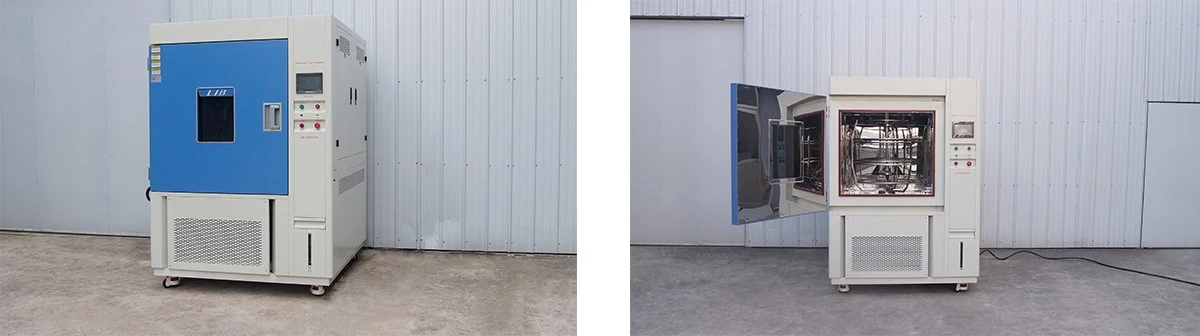
Manufacturers can answer questions about lamp selection, cooling, water supply and control logic directly, and can adapt specimen racks, radiometer positions or spray nozzle layouts to unusual samples. LIB Industry handles design, production, testing, shipping, installation and operator training, and backs its equipment with a 3-year warranty and lifetime service.
Agents simplify customs and communication, but a distributor without technical staff can slow down quotations and repairs. Ask where spare xenon lamps and filters are physically stored.
Traders and marketplaces are fine for first price checks. Before ordering, ask who built the chamber, what the lamp and filter system is, and for a performance report. A genuine manufacturer can supply these quickly.
What Should You Define Before Requesting Quotes?
 Suppliers can only quote accurately if you know what you need to prove. Settle these first:
Materials and failure modes. Fading, chalking, cracking and gloss loss in paints, coatings, plastics, rubber, textiles and building materials each call for different exposure conditions.
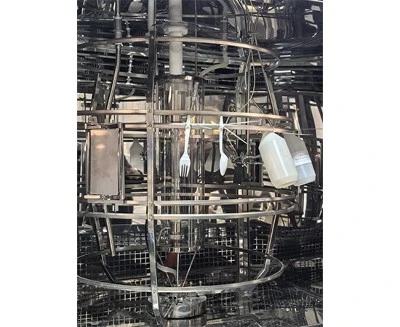
Specimen size and volume. The number of samples per run drives chamber size. The XL-S-750 holds 42 specimens on a rotating holder, with a specimen holder size of 95 × 200 mm. A lab running many batches may need a larger or second unit, while a lab testing a few small groups may be fine with one.
Facility readiness. The XL-S-750 measures 1400 × 1400 × 1950 mm overall, with a 950 × 950 × 850 mm working chamber. Check floor space, door height, power and water supply. An automatic water supply and water purification system make daily use easier, but supply lines and drains still need planning.
How Can You Tell a Qualified Manufacturer From a Reseller?
Anyone can post a certificate online. A qualified supplier can show proof, explain how the chamber is built, and accept an inspection.
Light source and construction. Ask about the lamp, filters, cooling method and specimen rack. The XL-S-750 uses a 4500 W water-cooled xenon arc lamp with a built-in quartz filter and an external borosilicate filter. The rated lamp life is up to 1,600 hours, which is worth factoring into your running costs. The interior is SUS304 stainless steel, which resists heat, moisture and corrosion.
Calibration and traceability. Ask which radiometer is used, what its tolerance is, whether calibration certificates are provided, and how often irradiance should be re-verified. The XL-S-750 uses a UV radiometer with a ±5% tolerance.
Engineering depth. Real projects rarely match the catalogue. Before agreeing to a custom build, ask the builder for drawings and examples of similar projects.
Which Specifications Matter Most When Comparing Quotes?
Compare each figure against the test conditions your standard requires, not against the headline number on a brochure.
| Parameter | XL-S-750 |
|---|---|
| Irradiance range | 35–150 W/m² |
| Irradiance measurement band | 300–400 nm (control at 340 nm or 420 nm) |
| Chamber temperature | Ambient to 100 °C, ±2 °C |
| Black panel temperature | 35–85 °C, ±2 °C |
| Humidity | 50–98% RH, ±5% RH |
| Specimen capacity | 42 pcs (holder size 95 × 200 mm) |
| Light source | 4500 W water-cooled xenon arc |
| Filters | Daylight, window glass, extended UV |
|
|
|

Irradiance. Make sure the control point on the quote (340 nm or 420 nm) matches the one your standard specifies. Confirm the radiometer's accuracy and the recalibration interval.
Temperature and humidity. Ask whether the stated tolerance applies across the whole specimen area at full lamp output, and ask for a stability report from the factory test rather than a theoretical figure. The XL-S-750 uses an externally isolated stainless-steel surface-evaporation humidifier, which helps keep humidity steady during long runs.
Spray and controller. Spray nozzles simulate rainfall, with cycles adjustable from 1 minute to 9999 h 59 min. The programmable color touchscreen controller stores up to 120 programs of 100 segments each and connects by Ethernet and USB. Safety protection covers over-temperature, over-current, water shortage, earth leakage and phase sequence.
How Do You Match a Weatherometer to Your Test Standard?
The standard you test to determines the lamp and filter combination, irradiance, temperature, humidity and spray cycle. A chamber that cannot meet all of these at once is not suitable, however good its lamp is.
ASTM G155 covers xenon arc exposure of non-metallic materials.
ISO 4892-2 covers xenon arc exposure of plastics.
ISO 105-B02 covers colour fastness of textiles to artificial light.
The XL-S-750 is also listed against other standards for coatings, rubber, adhesives, building materials and automotive applications. Send us your standard number and we will confirm it before quoting.
Start with the standard your customers or specification require, then check three things with the supplier:
Sensors. The XL-S-750 uses black panel temperature sensors. Confirm that the sensor type your standard calls for is supported.
Filters. Different filter sets give different spectral power distributions. Window glass filters, for example, simulate sunlight passing through glass, which suits interior-use products. Confirm the supplier offers the set your standard calls for.
Cycle programming. Real-world conditions alternate light, dark, spray and humidity. Check that the controller can run multi-step cycles and hold spray timing, temperature range and humidity limits together.
What Technical Support Should You Expect?
 Xenon lamps age, filters degrade and radiometers drift. Your results stay reliable only as long as these are maintained, so support quality matters as much as the chamber.
Commissioning and training. A turn-key supplier delivers the machine, connects the lamp, water and cooling systems, and trains operators. Trained staff write correct test profiles and avoid wasting specimens. Ask for the training outline before ordering.
Calibration, maintenance and spares. A sound maintenance plan covers radiometer verification, water-system cleaning, and lamp and filter replacement. Ask which spares are offered and how fast they ship. If your lab is audited, keep records of each service visit.
Warranty and response. Read what the warranty covers and excludes, and who pays for shipping. A fault during a long exposure run can cost weeks of data, so choose a supplier that commits to response times. LIB Industry provides a 3-year warranty and lifetime service.
What Should You Ask Before You Buy?
Take this table to every supplier call, and keep the written replies with your purchase order.
| Topic | Ask | Request in writing |
|---|---|---|
| Performance | Which standards and sensors are supported? How is irradiance verified? How uniform is exposure across the specimen area? | Factory acceptance report, calibration certificate |
| Scope and cost | What do the price, holders, installation, training, lamp and water purification include? What is excluded? What are lamp life, filter intervals and water use? | Itemized quotation, option list |
| Support | Who services my region? How fast do spares ship? | Warranty text, response times, spare parts list |
Compare running costs as well as the purchase price. Lamp life, filter replacement and water consumption add up over years of operation.
FAQ
Is it better to buy weatherometers directly from the manufacturer?
Usually, yes. Direct purchase gives you customization, transparent specifications and one party responsible for installation and service. Agents remain useful for local support, as long as the contract states who owns the warranty.
Which standards should a weatherometer support?
It depends on your materials. ASTM G155 covers xenon arc exposure of non-metallic materials, ISO 4892-2 covers plastics, and ISO 105-B02 covers textile colour fastness. Confirm that the supplier covers the sensors and filters your standard requires.
What should a weatherometer quotation include?
It should list the chamber specification, lamp and filter configuration, sensors, spray system, water purification, installation, training, warranty terms, spare parts and consumables. Ask for an acceptance report and calibration certificate as well.
Request a Weatherometer Quotation
Looking for a reliable weatherometer manufacturer, xenon arc test chamber supplier or accelerated weathering tester factory? LIB Industry supplies custom xenon lamp weathering chambers, UV and sunlight simulation equipment, and lightfastness and colorfastness testers, all built to ASTM G155, ISO 4892-2 and ISO 105-B02, with installation, training, a 3-year warranty and lifetime service. Email your materials, test standards and specimen details to ellen@lib-industry.com for a tailored weatherometer quotation.