Which Solar Simulation Chamber Model Is Right for Your Application?
Need a solar simulation chamber for IEC 61215 testing? Request a quote in 24 hours.
Choosing a solar simulation chamber is not simply a matter of selecting the largest or smallest model. The right configuration depends on sample size, testing volume, required solar simulator class, temperature and humidity conditions, and the applicable standard.
A laboratory testing small material coupons has very different requirements from a PV manufacturer testing multiple full-size modules. LIB Industry provides tabletop, floor-stand, and walk-in solar simulation chamber configurations to match different testing programs.
What Problem Are You Solving With Solar Simulation Testing?
 Before choosing a chamber, laboratories should first identify what they actually need to test.
For small materials, coatings, plastics, or individual components, a benchtop chamber can provide controlled solar exposure without taking up unnecessary laboratory space.
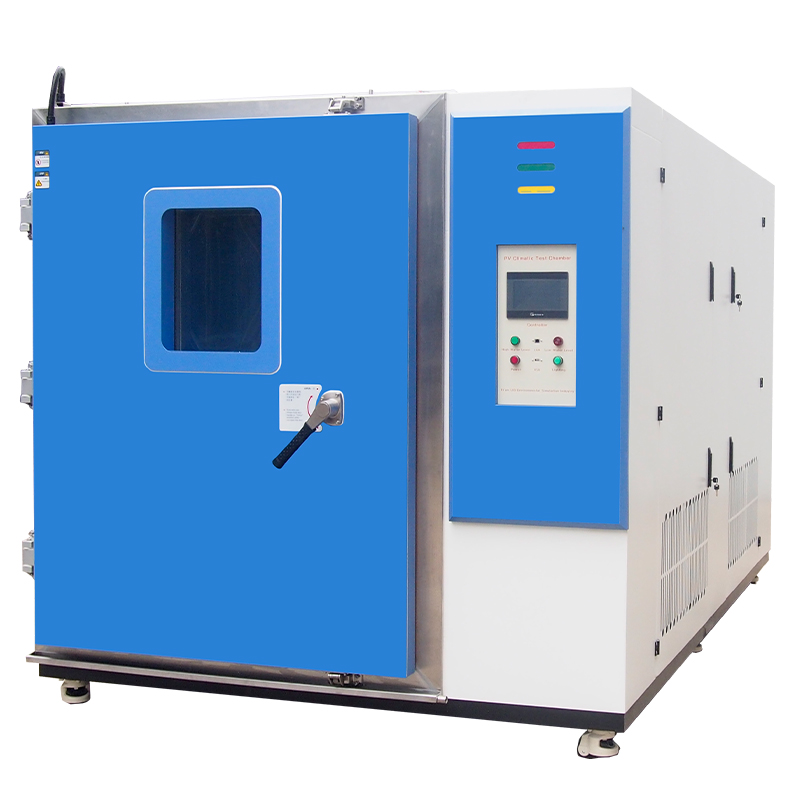
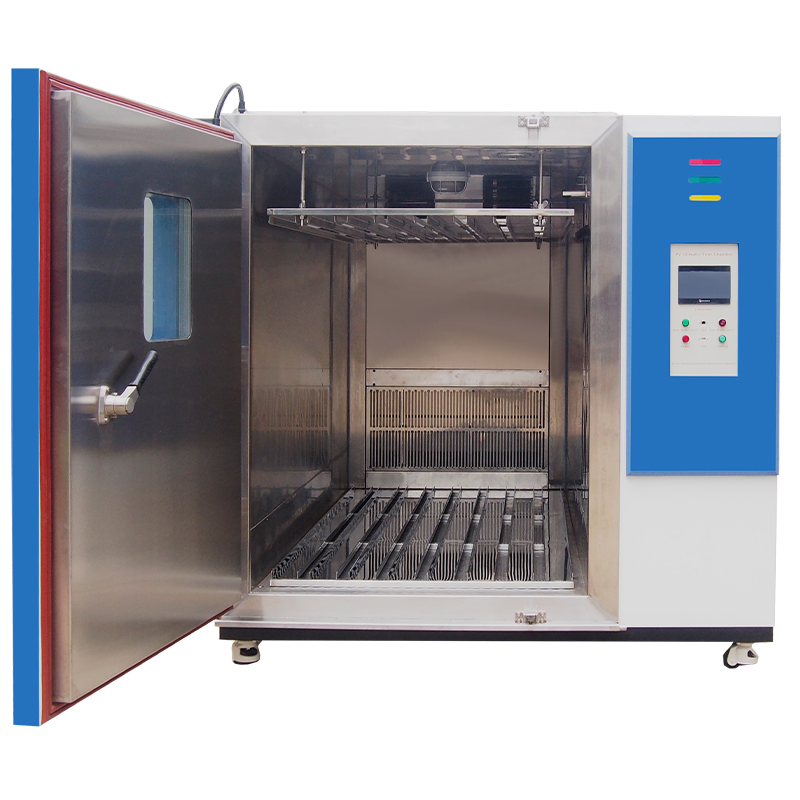
For PV modules or larger automotive components, a larger floor-stand or walk-in configuration may be required to accommodate the specimen and maintain sufficient testing capacity.
LIB Industry can configure the chamber according to the specimen dimensions, test volume, and environmental conditions rather than forcing every application into the same chamber size.
Benchtop Solar Simulation Chambers
Benchtop models are suitable for small samples, material coupons, and early-stage R&D. They require less floor space and are useful when engineers need to compare materials before moving to full-size product validation.
Floor-Stand Configurations
Floor-stand chambers provide more internal space for larger specimens or smaller panel setups while remaining more compact than a walk-in system. They are suitable for laboratories that need greater capacity for ongoing R&D and validation.
Walk-In Solar Simulation Chambers
Walk-in configurations provide the space required for multiple full-size PV panels or larger automotive components. They are suitable for certification laboratories and manufacturers with higher testing volumes.
Which Solar Simulation Chamber Should You Choose?
The following comparison provides a simple starting point:
| Specification | Benchtop | Floor Stand | Walk-In |
|---|---|---|---|
| Typical Volume | 50–225 L | 225–500 L | 500–1500 L+ |
| Typical Samples | Coupons, small components | Larger components, small panels | Full-size panels, large assemblies |
| Footprint | Compact | Moderate | Large |
| Typical Application | R&D, early validation | Mid-scale testing | Certification, batch testing |
The key is to match the chamber to the actual size and quantity of your samples. An oversized chamber increases equipment and space requirements, while an undersized chamber can restrict future testing.
Does Solar Simulator Class Matter?
 Yes. Chamber size alone does not determine solar simulation accuracy.
Depending on the application, solar simulation systems may be configured to different classification requirements, including Class A and Class AAA configurations. Certification-oriented testing may require higher spectral accuracy according to the applicable test standard.
LIB Industry can configure the solar simulator and environmental control system according to the required standard and application.
How Does the Chamber Fit Different Testing Applications?
Photovoltaic Testing
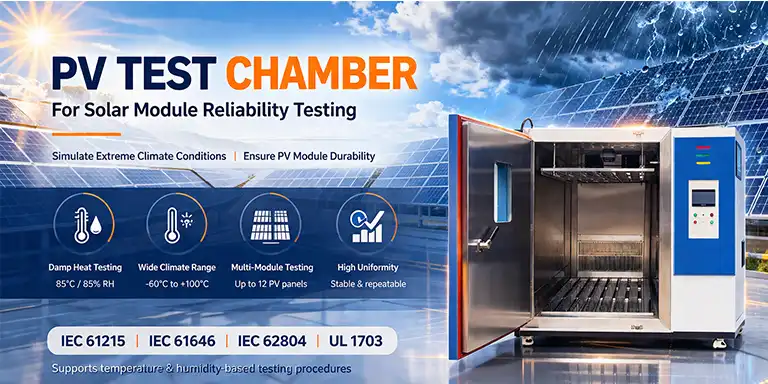
PV testing often requires larger chamber configurations because full-size modules must be accommodated during validation and certification programs.
For applications related to IEC 61215 and IEC 61730, laboratories should consider module dimensions, batch quantity, solar simulator classification, and the required environmental conditions when selecting the chamber.
Benchtop systems can still be useful for early-stage R&D, such as evaluating encapsulants, coatings, cell technologies, and other materials before full-size module production.
Automotive Material Aging
Automotive applications do not always require the same chamber size as PV testing.
Dashboard plastics, seat fabrics, coatings, interior trim, and other materials can often be tested in benchtop or floor-stand systems. The appropriate configuration depends on the size of the component and the required exposure conditions.
General Material Weathering
For plastics, polymers, coatings, textiles, and other materials, a compact solar simulation chamber can provide controlled exposure without requiring a large testing room.
For laboratories handling several types of materials, a floor-stand configuration can provide a balance between sample capacity, laboratory space, and application flexibility.
3 Related Products for Environmental Testing
|
|
|
|
|
Xenon Arc Test Chamber Suitable for accelerated light and weathering tests of plastics, coatings, automotive materials, and other products under controlled irradiance, temperature, humidity, and wetting conditions. |
UV Accelerated Weathering Test Chamber Designed for UV resistance and accelerated aging evaluation of polymers, coatings, plastics, and outdoor-use materials under controlled UV exposure. |
Constant Temperature & Humidity Test Chamber Used for temperature and humidity conditioning and environmental testing of materials and components, supporting testing programs before or after solar exposure. |


How Does LIB Industry Help With Solar Simulation Chamber Selection?
Instead of selecting a chamber based only on volume, LIB Industry considers the complete testing requirement:
Sample or panel dimensions
Number of specimens per batch
Required solar simulator classification
Temperature and humidity conditions
Applicable testing standards
Current and expected testing volume
This approach helps laboratories avoid paying for capacity they do not need while leaving sufficient room for future testing requirements.
LIB Industry can provide tabletop, floor-stand, and customized larger configurations for photovoltaic, automotive, material, and R&D applications.
Warranty and Technical Support
For laboratories making a long-term equipment investment, after-sales support is also an important part of chamber selection.
LIB Industry provides a 3-Year Manufacturer Warranty / 36 months, together with lifetime free technical support. Equipment is shipped with traceable factory calibration and an ISO 17025-related calibration report where applicable.
For maintenance and installation needs, LIB Industry also provides 24/7 remote video assistance and a 48-hour spare-parts express service through DHL/FedEx.
Need the Right Solar Simulation Chamber for Your Test?
The best chamber depends on what you are testing, how large the specimens are, how many you test at one time, and which standard you need to meet.
LIB Industry can help configure a suitable solar simulation chamber for your application, from compact R&D systems to larger solutions for PV modules and batch testing.
Need a solar simulation chamber for IEC 61215, IEC 61730, or another specific test requirement?
Send your sample dimensions, testing standard, and expected testing volume to ellen@lib-industry.com for a suitable configuration and quotation.