How Can a Temperature Cycling Chamber Manufacturer Support Automotive Testing?
Need a temperature cycling chamber for AEC-Q100 or AEC-Q200 testing? Request a quote in 24 hours.
Automotive components can experience rapid temperature changes, especially around the engine bay, battery system, and other high-heat areas. Repeated transitions between low and high temperatures can create thermal stress in solder joints, connector housings, sensors, and electronic assemblies.
A temperature cycling chamber manufacturer needs to provide more than a wide temperature range. Stable temperature control, repeatable ramp rates, reliable refrigeration, and suitable test documentation are all important when cycling chambers are used for automotive reliability testing.
LIB Industry provides temperature cycling chambers designed for automotive component testing, with configurations that can support demanding temperature cycling requirements.
What Problems Does Automotive Temperature Cycling Need to Solve?
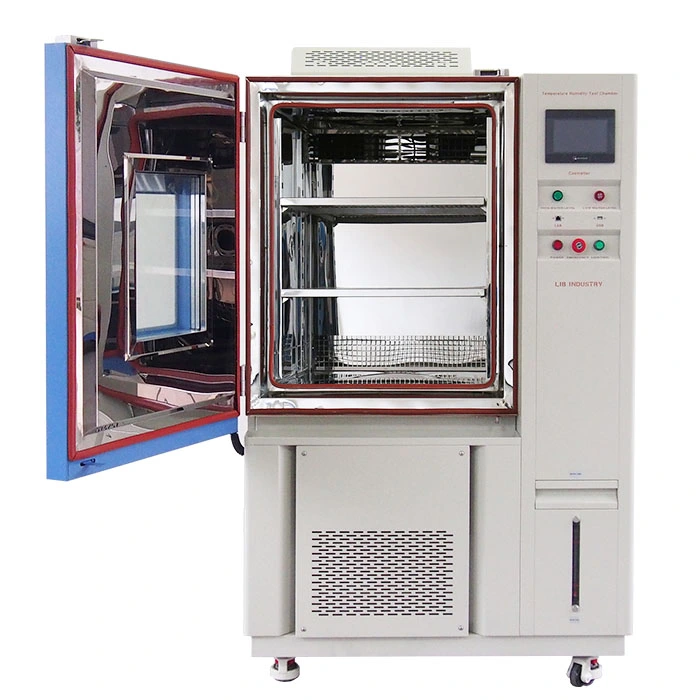 Unlike a standard environmental chamber that maintains a product at one temperature, a temperature cycling chamber repeatedly moves the specimen between programmed high and low temperatures.
This repeated expansion and contraction can reveal weaknesses that may not appear during static temperature testing. Common applications include:
- Engine control units and sensor modules
- Battery management systems and power electronics
- Automotive connectors and wiring harnesses
- Seals and enclosure components
- Electronic and electrical assemblies
For example, repeated thermal cycling can expose solder joint fatigue, connector degradation, and sealing problems before components enter vehicle production.
How Does a Temperature Cycling Chamber Support Automotive Reliability Testing?
A cycling chamber uses programmed temperature changes and controlled ramp rates to reproduce repeated thermal stress in a shorter laboratory test period.

For automotive applications, several parameters are particularly important:
| Specification | Typical LIB Configuration | Why It Matters |
|---|---|---|
| Temperature range | -70°C to +150°C | Covers demanding low- and high-temperature conditions |
| Ramp rate | 5–15°C/min | Supports rapid temperature transitions |
| Temperature fluctuation | ±0.5°C | Helps maintain repeatable test conditions |
| Sensor | PT100 Class A | Provides precise temperature measurement |
The required range and ramp rate should always be selected according to the applicable test procedure and the component being tested. Equipment with sufficient operating margin can also help maintain stable performance during repeated cycles.
LIB Industry provides temperature cycling chambers for automotive reliability testing.
Which Automotive Standards Can Temperature Cycling Chambers Support?
Automotive manufacturers and suppliers may use temperature cycling as part of qualification and reliability programs. The original article identifies AEC-Q100, AEC-Q200, and ISO 16750 as relevant standards for automotive testing.
The exact temperature limits, dwell times, ramp requirements, and cycle profiles depend on the applicable standard and component.
For this reason, engineers should confirm the required test profile before selecting equipment rather than choosing a chamber based only on its maximum temperature range.
What Should You Check When Choosing a Temperature Cycling Chamber Manufacturer?
For automotive testing, equipment selection should consider both technical performance and long-term support.
Temperature Control and Ramp Performance
The chamber should provide the required low and high temperatures while maintaining consistent control during repeated transitions. LIB Industry's TR5 series is specified for -70°C to +150°C with adjustable ramp rates of 5°C to 15°C/min.
Refrigeration and Operating Stability
Frequent temperature changes place additional demands on the refrigeration system. The original specification highlights electronic expansion valve and cascade refrigeration technology as part of the chamber configuration.
For laboratories performing high numbers of cycles, stable cooling and recovery are important for maintaining consistent test conditions.
Custom Fixtures and Chamber Configuration
Automotive components vary significantly in size and shape. Fixtures, chamber dimensions, and control configurations may therefore need to be adjusted for specific testing programs.
LIB Industry can discuss custom configurations based on the specimen, test profile, and laboratory requirements.
Related Testing Equipment
|
|
|
|
| Temperature & Humidity Test Chamber Used to evaluate automotive components under controlled temperature and humidity conditions and can complement temperature cycling programs. |
Thermal Shock Chamber Designed for rapid transfer between hot and cold zones when a test requires more abrupt temperature transitions. |
High & Low Temperature Test Chamber
|


How Does LIB Industry Support Automotive Temperature Cycling Tests?
LIB Industry's temperature cycling chambers are designed for environmental reliability testing and can be configured for automotive components and assemblies.
The TR5 series provides a -70°C to +150°C temperature range and 5–15°C/min adjustable ramp rate, giving engineers flexibility when developing temperature cycling profiles.
For long-term laboratory operation, LIB Industry provides:
3-year manufacturer warranty / 36 months
Lifetime free technical support
48-hour spare parts express via DHL/FedEx
Traceable factory calibration with CE / ISO 17025-related documentation
24/7 remote video assistance
Service support through centers in Malaysia, Canada, the UK, and the US
The chambers are managed according to ISO 9001 requirements and supplied with CE approval, according to the original product information.
Frequently Asked Questions
What temperature range should an automotive temperature cycling chamber cover?
The required range depends on the component and test procedure. The original article identifies -40°C to +125°C as common for many automotive programs, while -70°C to +150°C can support more demanding engine-bay and extreme-climate testing.
Why is ramp rate important in automotive temperature cycling?
Ramp rate determines how quickly the specimen moves between temperature conditions. Faster transitions can be required when the test procedure is intended to reproduce rapid thermal changes experienced by automotive electronics. The original article identifies 10–15°C/min as a commonly referenced range for rapid cycling applications.
Can the chamber be customized for automotive components?
Yes. Chamber dimensions, fixtures, and control configurations can be discussed according to the size of the test specimen and the required temperature cycling profile.
Need a Temperature Cycling Chamber Manufacturer?
LIB Industry provides temperature cycling chambers for automotive components, electronics, and other products requiring repeated high- and low-temperature exposure.
Send us your test standard, temperature range, ramp rate, specimen dimensions, and required cycle profile for a suitable chamber configuration.
Email: ellen@lib-industry.com