How Can a Dust Test Chamber Meet Automotive Testing Requirements?
Need a dust test chamber for IEC 60529 or ISO 20653? Request a quote in 24 hours.
When automotive components are exposed to dust, the main concern is not simply whether dust is present. Engineers need to know whether connectors, housings, sensors, lamps, and control modules can prevent dust ingress under controlled conditions.
For this reason, choosing a suitable dust test chamber requires more than checking chamber size. Dust circulation, powder management, vacuum testing, temperature control, and compatibility with automotive testing standards all need to match the application.
LIB Industry provides dust test chambers for automotive components with controlled dust circulation and configurable testing functions to support IP protection and road vehicle applications.
What Problems Do Automotive Manufacturers Need to Solve?
_1730198997291.webp "blog-1-1") Dust can enter small gaps, connectors, and enclosures during vehicle operation, particularly when pressure differences are present. For safety-critical electronics, this can affect long-term reliability and component performance.
Dust can enter small gaps, connectors, and enclosures during vehicle operation, particularly when pressure differences are present. For safety-critical electronics, this can affect long-term reliability and component performance.
Manufacturers therefore need a repeatable way to evaluate dust ingress before components move into vehicle qualification or production.
A suitable chamber can provide:
- Controlled airborne dust exposure
- Stable powder circulation and recovery
- Vacuum-assisted pressure-difference testing
- Temperature-controlled dust testing where required
- Test configurations for different specimen sizes
For automotive suppliers, this helps replace uncontrolled field exposure with a repeatable laboratory test.
How Does LIB Industry Solve Automotive Dust Testing?
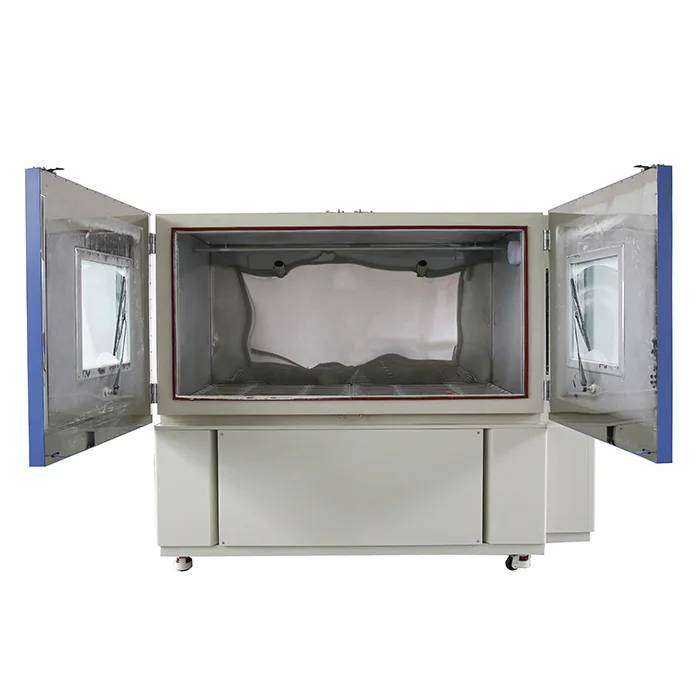
LIB Industry dust test chambers are designed to provide a controlled test environment for automotive electrical and electronic components.
Fine dust, typically talcum powder, is circulated through the sealed chamber. A vacuum system with a pressure gauge, filter, and regulator can create the pressure difference required for ingress testing.
The chamber can also include a sample shelf, observation-window dust wiper, powder supply and recovery system, and programmable temperature control.
Different chamber volumes can be selected according to the specimen. Smaller components such as connectors and electrical parts require different working spaces from lamps, control modules, or larger assemblies.
Stable Dust Distribution
Consistent dust circulation is important for repeatable results. The powder management system helps maintain the required dust exposure throughout the test rather than allowing dust to accumulate unevenly.
Vacuum-Assisted Testing
For applications where pressure differences are part of the test method, the vacuum system allows engineers to evaluate whether dust can enter through seals, joints, and other potential ingress paths.
Temperature-Controlled Testing
Some automotive applications require dust exposure together with elevated temperature. LIB Industry configurations can provide temperature control up to 80°C for applications requiring combined environmental conditions.
LIB Industry provides automotive dust test chambers for IEC 60529 and ISO 20653-related testing.
Which Standards Apply to Automotive Dust Testing?
The applicable standard depends on the product and customer test requirement.
IEC 60529
IEC 60529 provides the general IP protection framework for electrical enclosures, including IP5X and IP6X dust protection testing.
ISO 20653
ISO 20653 is specifically associated with road vehicles and includes automotive ingress protection classifications such as IP5KX and IP6KX.
Other Requirements
For specialized or ruggedized automotive electronics, additional standards such as MIL-STD-810 may also be specified. The chamber configuration should therefore be selected according to the exact test standard and specimen requirements rather than using a one-size-fits-all setup.
What Specifications Should You Check Before Buying?
The most important specifications are those that directly affect the test specimen and required test method.
| Specification | Typical Requirement | Why It Matters |
|---|---|---|
| Chamber Volume | 800L to 2000L | Accommodates different automotive specimens |
| Temperature Range | Ambient to 80°C | Supports combined heat and dust exposure |
| Dust Particle Gap | 75 micrometer standard | Supports referenced dust testing requirements |
| Vacuum System | Gauge, filter, regulator | Enables pressure-differential testing |
Chamber size should match the components normally tested. A chamber that is too small may restrict specimen placement, while an unnecessarily large chamber can increase powder consumption and operating requirements.
Powder management is equally important. Stable circulation and recovery help prevent excessive accumulation and moisture-related clumping during repeated tests.
How Does LIB Industry Support Long-Term Testing?
For automotive manufacturers and suppliers, equipment reliability matters because dust testing is often part of an ongoing qualification program rather than a one-time test.
LIB Industry provides a 3-year manufacturer warranty with lifetime free technical support. Technical assistance is available for installation, operation, maintenance, and troubleshooting, including remote video support.
For replacement components, LIB Industry provides a 48-hour spare parts express service through DHL/FedEx. Factory calibration can also be supplied with traceable documentation, including CE / ISO 17025-related reports where applicable.
Custom engineering is also available when standard chamber dimensions, fixtures, specimen supports, or testing configurations do not match the customer's application.
Related Automotive Test Chambers
|
 |
|
|
|
IPX5/IPX6 Water Spray Test Chamber Used to evaluate protection against water jets and can complement dust ingress testing for automotive electrical and electronic components. |
Temperature & Humidity Test Chamber Provides controlled temperature and humidity exposure for automotive components before or alongside ingress protection testing. |
Salt Spray Test Chamber Used to evaluate corrosion resistance of automotive metal parts, coatings, and components under controlled salt spray exposure. |


FAQ
How large should a dust test chamber be for automotive components?
An 800L to 2000L chamber can cover many automotive applications, from individual connectors to larger control module assemblies. The appropriate volume ultimately depends on the specimen dimensions and test configuration.
Should I use IEC 60529 or ISO 20653?
IEC 60529 provides general ingress protection requirements, while ISO 20653 is specifically intended for road vehicle applications. The applicable standard should be determined from the customer's specification and the component being tested.
Why is temperature control useful in dust testing?
Temperature control allows dust exposure to be combined with elevated-temperature conditions when required by the test program. This can provide a more representative environmental condition for automotive electronics.
Need a dust test chamber for your automotive testing program? Contact LIB Industry at ellen@lib-industry.com for specifications, configuration recommendations, and pricing.