How Can Solar Simulation Chambers Test Automotive Interior Materials?
Solar simulation chambers help automakers test how well dashboard plastics, seat fabrics, and interior trim hold up against years of sun exposure in a much shorter testing period. Reproducing AM1.5 spectral irradiance at high temperatures similar to those inside a vehicle cabin helps reveal fading, cracking, and material degradation that standard UV lamps alone may not accurately reproduce. Standards such as SAE J1885 and SAE J2412 provide established methods for evaluating automotive interior materials under controlled light and temperature conditions.
For automotive manufacturers and material suppliers, the challenge is choosing a chamber that can reproduce the required solar spectrum, temperature conditions, and exposure cycles. LIB Industry provides solar simulation chambers that can be configured according to the applicable test standard, specimen size, and testing requirements.
What Are Solar Simulation Chambers for Automotive Testing?
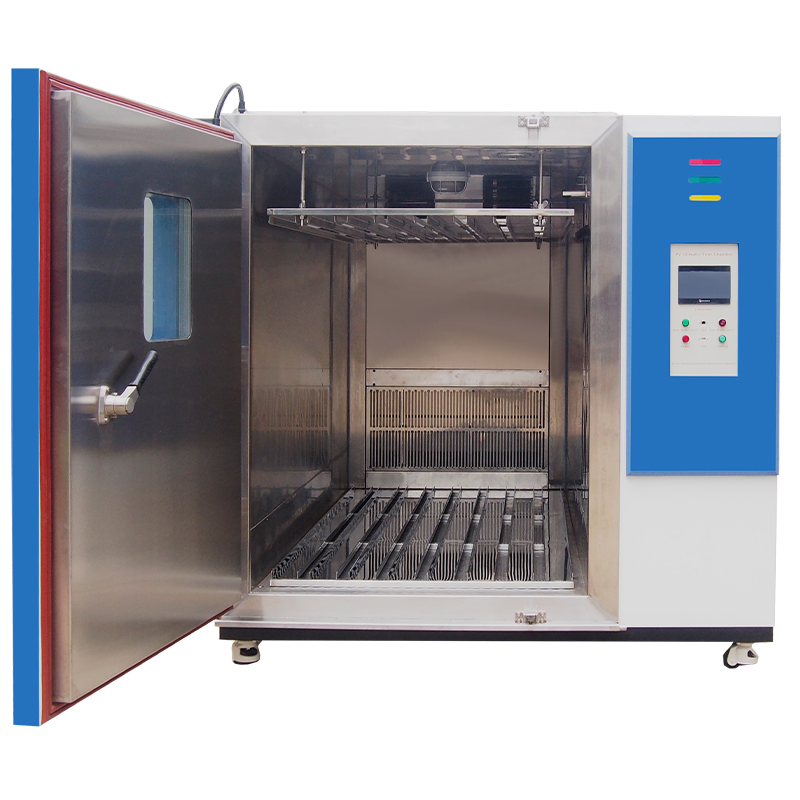 Solar simulation chambers mimic the spectral features of sunlight while keeping the testing environment controlled. This allows engineers to accelerate the natural aging process that materials inside a vehicle experience over time.
Core Testing Purpose for Interior Materials
Instead of only exposing materials to UV light, these chambers can simulate a broader portion of the solar spectrum through a Class A or Class AAA solar simulator. This helps plastics, fabrics, and trim materials experience light exposure that is closer to natural sunlight.
For automotive interior testing, this can help engineers evaluate color retention, surface degradation, cracking, and other changes before materials are approved for production.
Difference From Standard UV Weathering Chambers
Standard UV chambers primarily focus on ultraviolet wavelengths, while solar simulation chambers reproduce a wider range of solar radiation, including visible and infrared components. This allows engineers to consider both light exposure and the heat generated by solar radiation.
Role in Automotive Interior Development
Solar exposure testing can be used during material selection, supplier qualification, and vehicle development. It gives automotive engineers a controlled method to compare different materials before committing to production.
What Are the Key Testing Requirements for Automotive Interior Materials?
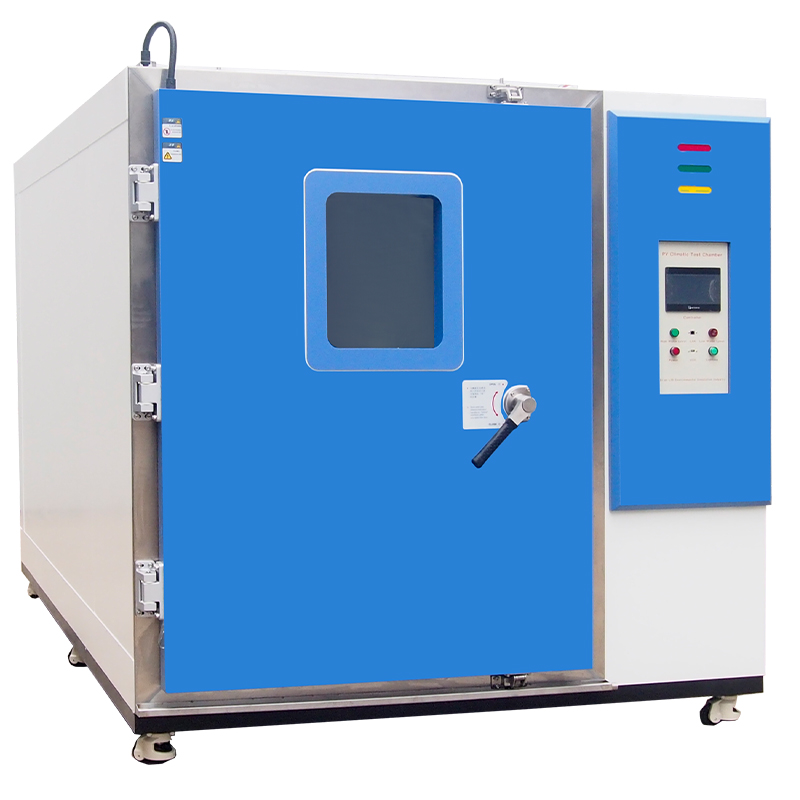 Long-term exposure to sunlight can affect automotive interior materials in several ways, so testing protocols need to consider more than UV resistance alone.
Color Fading and Visual Degradation
Dashboards, door panels, seat fabrics, and other visible interior components need to maintain their appearance during service. Prolonged solar exposure can cause noticeable color changes, making color retention an important part of interior material testing.
Testing with solar simulation chambers provides a controlled way to evaluate these changes under accelerated exposure conditions.
Material Cracking and Structural Breakdown
UV radiation and elevated temperatures can contribute to cracking, embrittlement, and surface degradation in dashboard plastics and other interior components. Testing under combined light and heat exposure can help identify these potential problems before production.
Interior Cabin Temperature Simulation
Solar radiation can cause temperatures inside a closed vehicle to rise significantly. For this reason, some testing programs combine solar exposure with elevated temperatures or thermal cycling to reproduce the conditions experienced by interior materials.
LIB Industry Solar Simulation Solution
LIB Industry provides solar simulation chambers with Class A or Class AAA solar simulator configurations, together with controlled temperature and humidity systems. Depending on the testing requirements, the chamber can be configured to reproduce AM1.5 spectral irradiance and combine light exposure with thermal conditions.
How Do Solar Simulation Chambers Evaluate Interior Material Performance?
Understanding how the test is performed helps engineers select a chamber that matches the required exposure conditions.
Spectral Accuracy and AM1.5 Reproduction
Reproducing AM1.5 spectral irradiance helps the test light more closely match the distribution of ultraviolet, visible, and infrared wavelengths found in natural sunlight. This is important when the test objective is to evaluate material degradation under solar exposure rather than UV exposure alone.
Combined Thermal and Light Exposure Cycles
Depending on the chamber configuration and test procedure, engineers can expose materials to controlled light and temperature conditions in the same test program. Thermal cycling can also be incorporated where required to evaluate the combined effects of heat and solar radiation.
Accelerated Aging Correlation to Real-World Exposure
By comparing chamber exposure data with known outdoor aging results, engineers can use accelerated testing to assess material durability over a shorter development period. This provides useful information for supplier qualification and material selection.
What Specifications Should You Consider When Choosing a Solar Simulation Chamber?
The appropriate chamber configuration depends on the test standard, sample size, and required exposure conditions.
| Specification | Typical Requirement | Relevance to Interior Testing |
|---|---|---|
| Solar Simulator Class | Class A or Class AAA | Determines spectral accuracy and uniformity |
| Temperature Range | -40°C to +85°C or wider | Helps reproduce cabin heat conditions |
| Interior Volume | Sized for dashboard/panel samples | Accommodates different interior components |
| Controller Programs | 100+ stored segments | Automates multi-stage exposure cycles |
Solar Simulator Classification for Accurate Aging
Class AAA solar simulation systems provide tighter requirements for spectral match, uniformity, and temporal stability than Class A systems. The appropriate classification should be selected according to the applicable testing procedure.
Chamber Volume for Full Interior Component Testing
Small material samples require less chamber space than dashboard assemblies, door panel sections, or larger interior components. Chamber dimensions should therefore be selected according to the size and quantity of specimens being tested.
Programmable Cycling for Multi-Stage Protocols
A programmable controller allows engineers to create multi-stage exposure programs involving light, temperature, and humidity. This is useful for long-duration tests where manual operation would be impractical.
Which Automotive Testing Standards Use Solar Exposure?
Several standards and test procedures are used to evaluate materials under artificial solar or xenon-arc exposure.
SAE J1885 for Xenon Arc Exposure
SAE J1885 provides an accelerated exposure procedure for automotive interior trim components using a controlled-irradiance xenon-arc apparatus. It can be used to evaluate color change and material degradation under controlled exposure conditions.
SAE J2412 for Interior Material Testing
SAE J2412 is another accelerated exposure procedure for automotive interior trim components using a controlled-irradiance water-cooled xenon-arc apparatus. The procedure incorporates light and temperature conditions relevant to automotive interior applications.
ISO 105-B06 for Color Fastness Evaluation
ISO 105-B06 provides a framework for evaluating colorfastness under artificial light exposure using a xenon arc. It may also be relevant to textile and fabric suppliers evaluating interior materials.
When requesting equipment, customers should provide the exact standard and applicable test procedure, since the required irradiance, temperature, exposure time, and chamber configuration may vary.
How Should You Select a Solar Simulation Chamber Supplier?
Choosing a chamber involves more than checking the temperature range or chamber volume. Automotive suppliers should also consider the solar simulator performance, calibration documentation, and long-term technical support.
Verify Solar Simulator Calibration
Calibration documentation should demonstrate the required solar simulator performance, including spectral characteristics, uniformity, and temporal stability where applicable. This helps ensure that test results remain reliable during material qualification.
Evaluate Combined Testing Capability
If the test requires both solar exposure and thermal conditions, confirm that the chamber can perform the required conditions within the same programmed test sequence.
Consider After-Sales Calibration Support
Solar simulation systems require ongoing verification and maintenance to maintain their performance. Supplier support for calibration, troubleshooting, and component replacement is therefore an important consideration for long-term testing.
How Does LIB Industry Support After-Sales Service?
After delivery, LIB Industry provides installation, commissioning, and operator training to help customers put the chamber into operation.
The equipment comes with a 3-year warranty and lifetime service support. LIB Industry also provides rapid technical response, typically within 1–3 hours, with 24/7 English-language after-sales support.
For customized systems, technical requirements can be discussed before production to ensure the chamber matches the customer's test procedure and laboratory conditions.
Related Automotive Testing Equipment
|
|
|
|
|
Xenon Arc Test Chamber Xenon arc chambers reproduce controlled solar radiation for accelerated weathering and light-aging tests. They are suitable for automotive interior materials where xenon-arc exposure is specified. |
Temperature & Humidity Chamber Temperature and humidity chambers provide controlled thermal and humidity environments for material conditioning and environmental durability testing. They can complement solar exposure testing when separate temperature and humidity conditioning is required. |
UV Weathering Test Chamber UV weathering chambers focus on ultraviolet exposure and are suitable when UV resistance is the primary testing requirement. They can be used alongside solar simulation to evaluate different degradation mechanisms. |


Need a Solar Simulation Chamber for Automotive Testing?
Selecting the right solar simulation chamber requires matching the equipment to the applicable standard, solar simulator classification, specimen dimensions, temperature conditions, and exposure program.
LIB Industry provides customizable solar simulation solutions for automotive interior materials and other accelerated aging applications. Send your test standard, specimen dimensions, exposure requirements, and temperature conditions to ellen@lib-industry.com for a suitable configuration and quotation.
Need a test chamber for SAE J1885 or SAE J2412? Request a quote from LIB Industry today.