How Do Solar Simulation Chambers Support Automotive Interior Material Testing?
Need a solar simulation chamber for automotive interior material testing? Request a quote in 24 hours.
Automotive interior materials are exposed to much more than ordinary indoor conditions. Sunlight entering through windshields and side windows can cause dashboards, seat fabrics, leather, door panels, headliners, adhesives, and decorative surfaces to fade, crack, deform, or release volatile substances over time.
Solar simulation chambers allow manufacturers to reproduce these combined stresses under controlled laboratory conditions. By controlling light spectrum, irradiance, temperature, humidity, and exposure cycles, engineers can accelerate material aging and identify potential failures before components enter vehicle production.
For automotive laboratories, the right equipment is not simply a light source. It needs to reproduce the relevant behind-glass solar exposure conditions, accommodate the required specimen configuration, and provide stable, repeatable environmental control.
What Are Solar Simulation Chambers Used for in Automotive Testing?
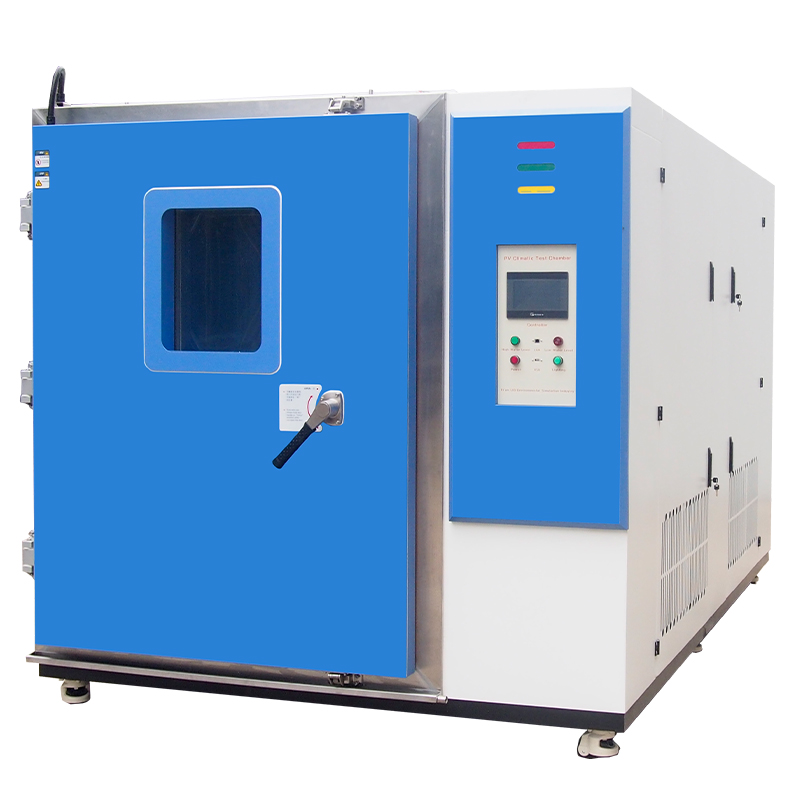 Solar simulation systems are designed to reproduce the environmental stresses that automotive interior materials experience during long-term sunlight exposure.
Simulating Behind-Glass Solar Exposure
Automotive interiors do not receive the same sunlight as exterior components. Vehicle glass changes the spectrum reaching the dashboard, seats, door panels, and other interior surfaces. Therefore, the test configuration should be selected according to the actual application and applicable test method.
Xenon arc light sources are commonly used when a broad solar spectrum is required. With appropriate optical filters and irradiance control, the system can reproduce relevant UV, visible, and infrared exposure while temperature and humidity are controlled simultaneously.
Accelerating Material Qualification
Instead of waiting years for natural exposure results, manufacturers can expose material samples to controlled accelerated conditions during product development.
This is particularly useful when comparing different:
- Plastics and polymer compounds
- Leather and synthetic leather
- Seat fabrics and textiles
- Dashboard skins
- Door and trim materials
- Adhesives and laminates
- Decorative coatings and surfaces
Early testing helps engineers eliminate unsuitable materials before expensive tooling, vehicle prototypes, and mass production begin.
Supporting Multiple Evaluation Methods
Solar exposure can be combined with thermal and humidity stresses to evaluate several degradation mechanisms within one test program. Depending on the material and standard, laboratories may monitor color change, gloss loss, cracking, deformation, surface deterioration, and other physical changes.
What Automotive Interior Material Failures Can Be Detected?
 The purpose of solar exposure testing is not simply to prove that a material survives light. The test helps engineers understand how and why the material changes.
Color Fading and Appearance Changes
Color stability is one of the most visible indicators of interior material durability. Fabrics, leather, plastics, and decorative surfaces may gradually lose their original appearance under prolonged radiation.
After exposure, laboratories can compare specimens using spectrophotometers and calculate color differences such as ΔE. This provides quantitative data for material qualification instead of relying only on visual inspection.
Thermal Aging and Dimensional Stability
Solar radiation can significantly increase the temperature of vehicle interiors. Dashboard surfaces and other components may experience elevated temperatures that accelerate polymer aging, adhesive degradation, deformation, and dimensional changes.
A suitable chamber therefore needs accurate temperature control in addition to light exposure. This allows engineers to evaluate whether a material maintains its shape, adhesion, and mechanical integrity after accelerated thermal exposure.
Cracking, Gloss Loss, and Surface Degradation
UV and thermal stress can cause surface cracking, embrittlement, roughening, and gloss changes.
These failures may be evaluated through visual inspection, microscopy, gloss measurement, and mechanical testing before and after exposure. Combining controlled exposure with these evaluation methods provides a more complete picture of material durability.
VOC Release and Fogging
Heating polymers and interior materials can increase the release of volatile substances. These substances may condense on cooler glass surfaces and contribute to windshield fogging.
Fogging is generally evaluated using dedicated methods such as DIN 75201 or SAE J1756. Solar exposure testing can be used during material development to create the thermal conditions that help identify materials with potential emission or fogging concerns.
| Degradation Mode | Main Stress | Typical Evaluation |
|---|---|---|
| Color fading | UV + visible light | Spectrophotometer / ΔE |
| Cracking | UV + thermal stress | Visual inspection / microscopy |
| Dimensional change | Heat + radiation | Dimensional measurement |
| Gloss loss | Radiation + temperature | Gloss meter |
| VOC / fogging | Thermal exposure | Dedicated fogging test |
What Chamber Specifications Matter for Automotive Interior Testing?
Selecting equipment should start with the required test method and specimen configuration rather than chamber size alone.
Light Source and Spectral Control
The light source determines how closely the equipment can reproduce the required solar exposure.
Xenon arc systems are widely used for accelerated weathering and lightfastness testing because they can reproduce a broad solar spectrum. Filter selection is particularly important for automotive applications because the radiation reaching interior components is affected by vehicle glazing.
LIB's xenon systems support adjustable irradiance and filter configurations for different exposure methods, including automotive-related protocols.
For broader material weathering applications, a Xenon Weathering Chamber can also provide controlled light, temperature, humidity, and water exposure.
Temperature and Humidity Control
Light exposure alone cannot reproduce the complete environment inside a vehicle.
Depending on the test method, the chamber may need to control:
- Air temperature
- Black panel or black standard temperature
- Relative humidity
- Irradiance
- Exposure duration
- Light/dark or wet/dry cycles
LIB environmental chambers can be configured with wide temperature and humidity ranges and programmable control profiles for different test requirements.
Specimen Capacity and Mounting
Automotive laboratories may test flat plaques, curved trim components, fabrics, molded parts, and assemblies. The specimen holder should therefore provide sufficient exposure area without creating unnecessary shading or uneven exposure.
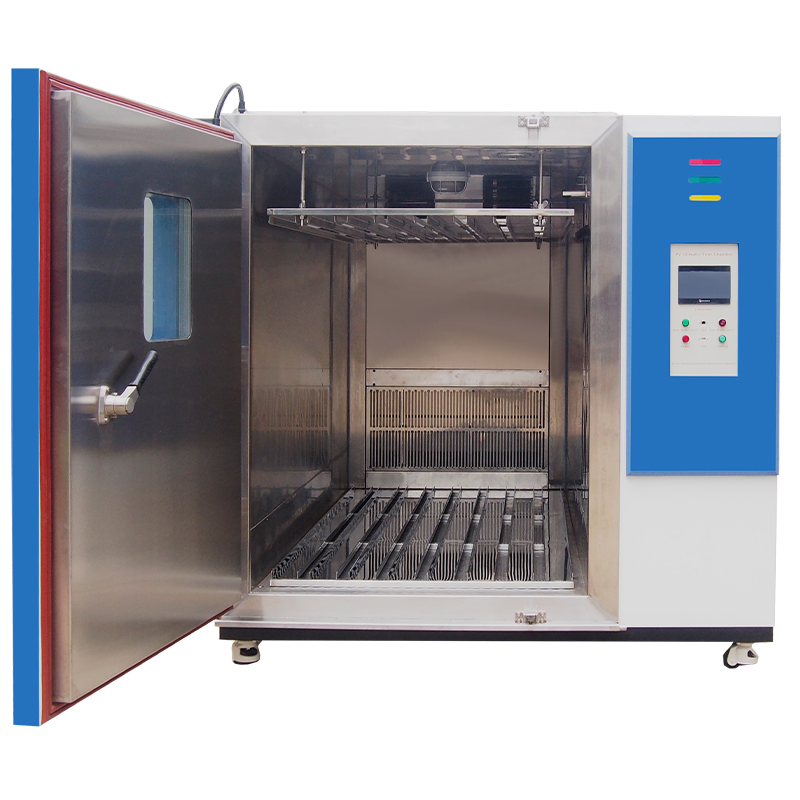
SUS304 stainless steel sample shelves, adjustable mounting positions, and customized fixtures can be used when standard holders are not suitable for the specimen geometry.
Controller and Data Management
Automotive qualification programs often involve long exposure cycles. A programmable controller helps operators create repeatable test sequences and record temperature, humidity, irradiance, and exposure time.
Network connectivity and data logging are also useful when test results need to be reviewed, archived, or integrated into laboratory quality systems.
Inline CTA: LIB Industry provides solar simulation chambers for controlled light, temperature, and humidity testing. Check specifications and configuration options → solar radiation test chambers
Which Standards Are Relevant to Automotive Solar Simulation Testing?
The required chamber configuration should always be determined by the exact test method. Common references may include:
ISO 105-B06 – xenon arc exposure for textile color fastness and related applications
SAE J2412 – accelerated exposure testing for automotive interior trim
ASTM G155 – xenon arc exposure of non-metallic materials
ISO 4892-2 – xenon-arc exposure for plastics
OEM-specific methods developed by individual automotive manufacturers
Automotive suppliers may also need to follow proprietary OEM procedures that define specific irradiance levels, filters, temperatures, exposure cycles, and acceptance criteria.
For this reason, manufacturers should provide the required standard and exposure profile to the chamber supplier before purchasing equipment.
LIB Industry Solar Simulation Solutions for Automotive Testing
The sun simulation rooms made by LIB Industry have Class A or Class AAA solar simulators and precise temperature and humidity control. They can reproduce AM1.5 spectral light along with temperature changing from -40°C to +85°C and damp heat conditions up to 85°C/85% RH. This combined method lets labs that work with car materials look at different types of breakdown, such as colour loss, polymer weakness, encapsulant delamination, and hot-spot formation, all in one test process.

Broad Environmental Range
LIB chambers can handle temperatures from -60°C to +100°C and humidity levels from 20% RH to 98% RH, so they can be used for all kinds of interior testing protocols in cars. The ramp rate of 1–3.4°C/min makes it possible for realistic thermal cycling sequences and quick changes between test conditions, which shortens the total length of the test cycle.
Flexible Specimen Handling
Vertical sample racks made of SUS304 stainless steel and adjustable height can hold flat plaques, curved mouldings, and trim panels that have been put together. Racks can be taken off easily so that specimens can be quickly switched between test programs. Cable holes that are 50 mm, 100 mm, or 200 mm wide and have soft rubber plugs on them let instrument leads go through the room wall without affecting the stability of the environment.
Scalable Platform
LIB Industry's chamber line can be scaled up or down to meet the needs of the lab, from 50L tabletop units for screening studies to walk-in setups with more than 1,500L for full-panel evaluations. The PV-04 model with a size of 1,220L is a working platform for automotive material labs that need to run multiple test programs at the same time and keep the environment tight on the whole specimen plane.
Related LIB Testing Solutions
Automotive material laboratories often need more than one environmental test. Depending on the project, related equipment may include:
|
|
|
|
| Xenon Weathering Chamber — for accelerated sunlight, temperature, humidity, and weathering evaluation. | Temperature and Humidity Chamber — for thermal aging, humidity resistance, and combined temperature/humidity testing. | Solar Radiation Test Chamber — for controlled solar radiation and environmental exposure programs requiring larger specimen capacity or customized configurations. |


Conclusion
Solar simulation chambers provide automotive manufacturers and material suppliers with a controlled way to evaluate how interior materials respond to prolonged solar exposure and elevated temperature.
The most important selection criteria are not simply chamber volume or maximum temperature. Light spectrum, irradiance control, temperature and humidity stability, specimen mounting, programmable exposure profiles, and compliance with the required test method all influence the quality of the resulting data.
For laboratories working with automotive interiors, the best approach is to define the material, specimen configuration, applicable standard, and required exposure profile first, then select the chamber configuration around those requirements.
LIB Industry can provide standard and customized solar simulation solutions for automotive material testing, from equipment selection and engineering design to production, installation, training, and long-term service.
FAQ
What automotive materials can be tested in a solar simulation chamber?
Common materials include dashboards, seat fabrics, leather, synthetic leather, door panels, headliners, plastics, decorative coatings, adhesives, and interior trim components. Testing can evaluate color change, cracking, deformation, gloss loss, and other aging effects.
Can one chamber support different automotive test methods?
Yes. A properly configured chamber can support multiple exposure programs when it provides suitable irradiance control, filter options, temperature and humidity control, programmable profiles, and appropriate specimen fixtures. The exact configuration should be confirmed against each applicable standard.
What information should I provide when requesting a solar simulation chamber?
Provide the test standard, specimen material and dimensions, number of specimens, required exposure conditions, irradiance level, temperature, humidity, exposure duration, and any special monitoring or fixture requirements. LIB engineers can use this information to recommend a suitable configuration.
What after-sales service does LIB Industry provide?
LIB Industry provides a 3-year warranty with lifetime service support, together with technical assistance, troubleshooting, maintenance guidance, spare parts support, installation, and operator training for international customers.
Need a solar simulation chamber for automotive interior material testing? Contact LIB Industry for a technical recommendation and quotation.