How Do Temperature Cycling Chambers Improve Battery Safety and Reliability?
Lithium-ion batteries experience significant temperature changes during transportation, charging, discharging, and long-term operation. A temperature cycling chamber reproduces these conditions by repeatedly exposing cells, modules, or battery packs to controlled high and low temperatures.
For demanding battery applications, the chamber may need to reach temperatures as low as -70°C, provide programmable ramp rates of 5°C to 15°C/min, and maintain temperature fluctuation within ±0.5°C. More importantly, battery testing can involve thermal runaway, gas release, electrolyte leakage, and pressure buildup. Therefore, a battery temperature cycling chamber must combine precise thermal control with appropriate safety protection.
What Is a Temperature Cycling Chamber for Battery Testing?
A battery temperature cycling chamber repeatedly moves specimens between defined temperature setpoints to accelerate thermal stress that may occur during years of real-world operation. This helps engineers identify problems such as separator degradation, electrolyte leakage, sealing failure, capacity loss, and mechanical stress caused by different thermal expansion rates.
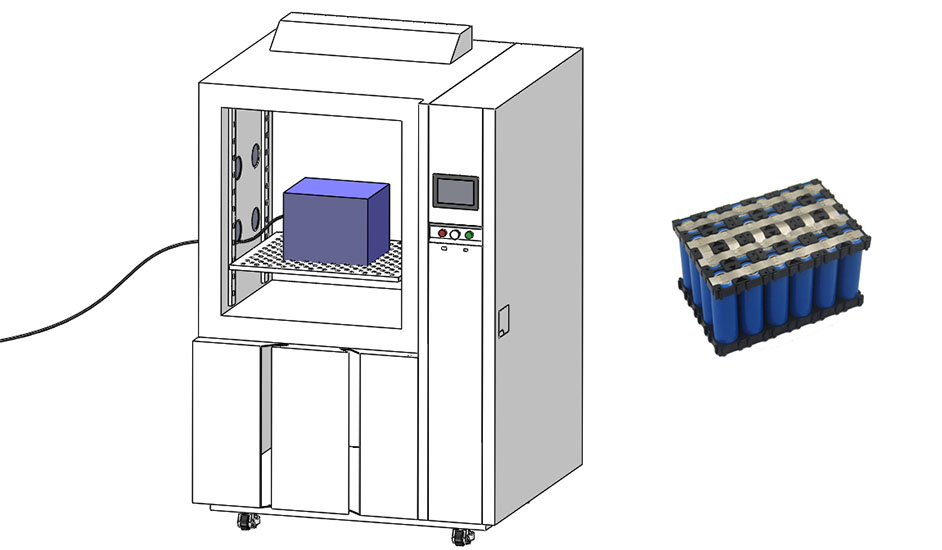
Compared with general-purpose environmental chambers, battery-specific systems may require additional safety configurations because lithium-ion cells can release heat and flammable gases during abnormal conditions.
Typical battery formats include:
- Cylindrical cells
- Pouch cells
- Prismatic cells
- Battery modules
- Battery packs
The internal layout, fixture design, shelf strength, ventilation, and safety configuration can be customized according to the specimen size and test method.
What Temperature Cycling Parameters Matter for Battery Testing?
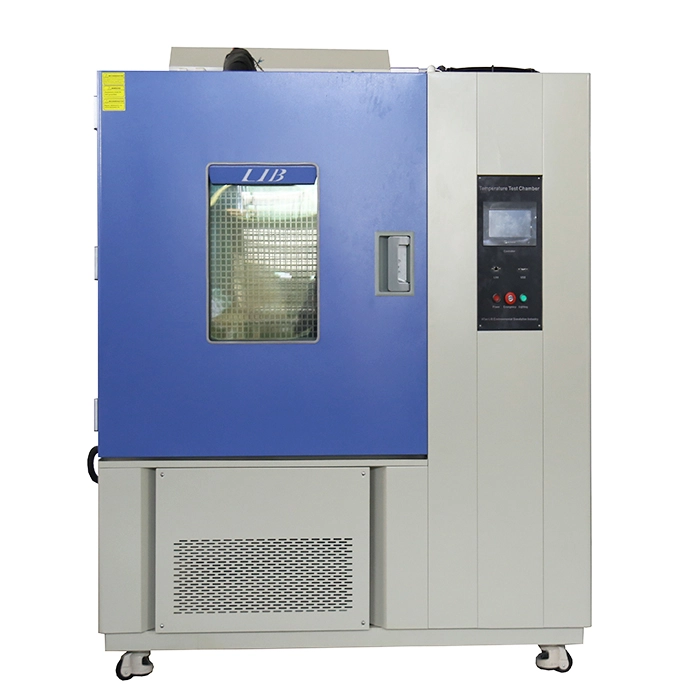 Battery temperature cycling tests are normally defined by the required temperature range, ramp rate, dwell time, cycle count, and temperature stability.
Temperature Range and Ramp Rate
Battery testing may involve temperature cycles such as -40°C to +85°C, while more demanding applications may require chambers capable of reaching -70°C.
The ramp rate must also match the test procedure. LIB Industry's TR5 series supports programmable temperature ramp rates from 5°C to 15°C/min, allowing engineers to configure different cycling profiles for cells, modules, and battery packs.
The controller can store multi-step programs so that high- and low-temperature exposure, transition rates, dwell times, and cycle counts can be automated without manual intervention.
Dwell Time and Cycle Count
Temperature cycling is not simply a matter of reaching two temperature setpoints. The battery must remain at each temperature long enough for its internal temperature to stabilize.
Programmable controllers allow engineers to define extended test sequences with multiple segments and repeated cycles. Accurate timing helps ensure that each specimen experiences the same thermal history, improving repeatability between test batches.
Temperature Accuracy and Uniformity
Temperature stability directly affects the reliability of cycling data. LIB Industry's battery temperature cycling chambers can achieve temperature fluctuation of approximately ±0.5°C, with PT100 Class A temperature sensors used for precise measurement and control.
Good temperature uniformity is particularly important when several cells or modules are tested simultaneously because differences between specimen positions can otherwise introduce variations into the results.
Why Do Battery Temperature Cycling Chambers Need Explosion Protection?
Battery temperature cycling involves a potential safety risk that does not exist to the same degree in ordinary material testing. Under abnormal conditions, lithium-ion cells may experience thermal runaway, electrolyte leakage, smoke, flammable gas release, or rapid pressure buildup.
For this reason, the chamber should be evaluated not only for temperature performance but also for its safety configuration.
Depending on the battery chemistry, energy level, specimen quantity, test method, and expected failure mode, safety features may include:
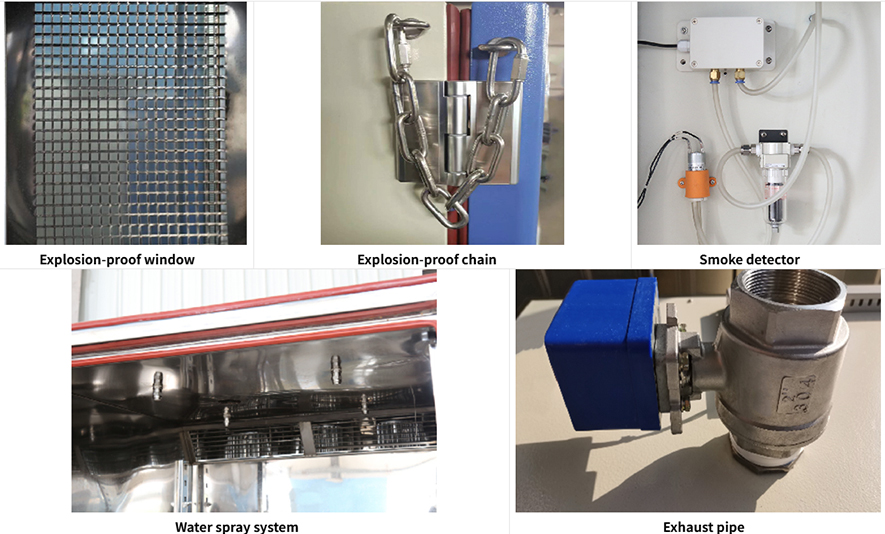
Explosion venting: Provides a controlled path for pressure and gases generated during an abnormal battery event.
Pressure protection: Monitors abnormal pressure conditions and can initiate protective actions or shutdown.
Over-temperature protection: Independent protection helps prevent continued heating when the chamber or specimen reaches an unsafe temperature.
Smoke or fire detection: Optional detection systems can identify abnormal battery conditions at an early stage.
Enhanced exhaust ventilation: Helps remove smoke and potentially flammable gases from the chamber and test area.
Emergency shutdown: Allows the test system to be stopped quickly when an abnormal condition occurs.
Electrical safety protection: Appropriately selected electrical components help reduce ignition risks where flammable gases may be present.
The exact safety configuration should be determined according to the battery type, maximum stored energy, test procedure, chamber volume, and customer's safety requirements. A standard environmental chamber should not automatically be considered suitable for thermal runaway or battery abuse testing.
How Does Temperature Cycling Reveal Battery Reliability Problems?
Repeated temperature exposure helps engineers identify failure mechanisms that may not appear during static environmental testing.
Capacity Fade and Performance Degradation
Repeated exposure to high and low temperatures can accelerate degradation mechanisms that affect battery capacity and cycle life. Comparing capacity and electrical performance before and after temperature cycling provides useful information for battery development and durability evaluation.
Seal and Electrolyte Leakage
Temperature changes cause repeated expansion and contraction of battery materials. Pouch and prismatic cells are particularly sensitive to mechanical stress around seals and interfaces.
Temperature cycling can reveal leakage points or sealing weaknesses that may remain undetected under constant-temperature conditions. Anti-condensation control can also help prevent surface moisture from interfering with visual inspection.
Accelerated Life Testing
Temperature cycling data can be combined with real-world field performance to develop accelerated life models. Stable and repeatable temperature conditions are essential for producing reliable datasets that can be compared across different test batches.
What Safety and Engineering Features Should You Check?
When selecting a chamber for battery testing, buyers should look beyond the basic temperature range.
| Evaluation Factor | What to Verify | Why It Matters |
|---|---|---|
| Temperature Range | Down to -40°C, -70°C, or required range | Covers the intended battery test profile |
| Ramp Rate | 5–15°C/min or required rate | Controls the speed of thermal transitions |
| Temperature Accuracy | ±0.5°C fluctuation or equivalent | Improves test repeatability |
| Safety Protection | Venting, pressure, over-temperature, exhaust | Helps manage abnormal battery events |
| Sensor System | PT100 Class A or equivalent | Provides accurate temperature measurement |
| Controller | Programmable multi-step cycles | Automates long-duration testing |
| Certification | ISO 9001, CE, third-party verification | Supports equipment quality and documentation |
| Customization | Fixtures, shelves, venting, chamber size | Adapts the system to different battery formats |
|
|
|
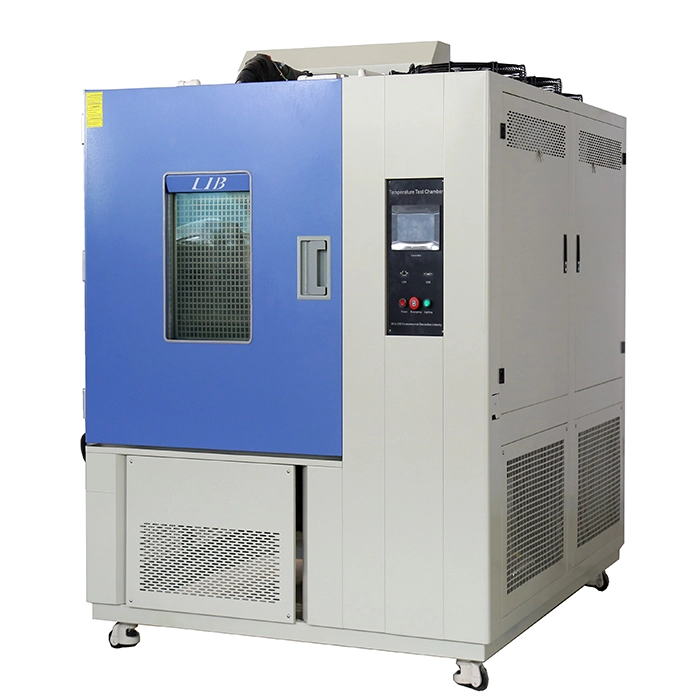
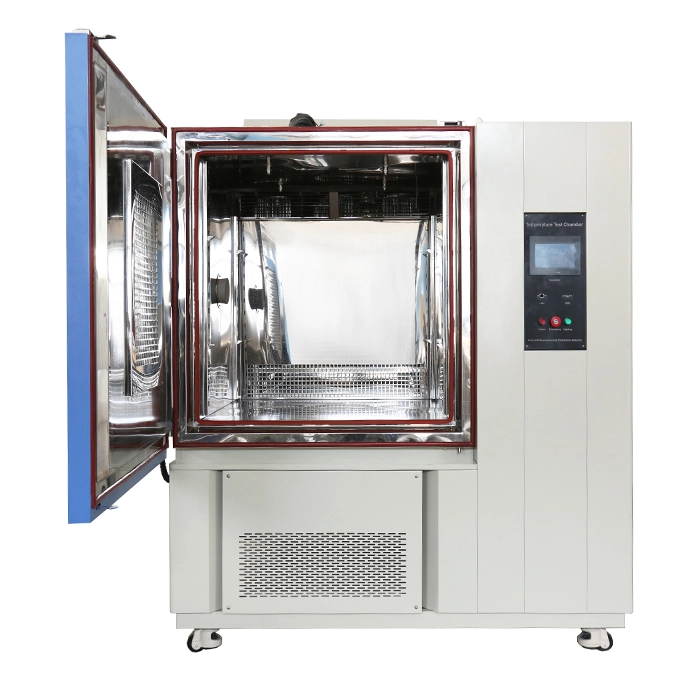
For battery applications, it is particularly important to discuss the expected failure conditions and required safety measures with the chamber manufacturer before ordering.
How Does LIB Industry Support Battery Temperature Cycling?
LIB Industry's TR5 series temperature cycling chambers use cascade refrigeration and electronic expansion valve technology to reach temperatures as low as -70°C. Programmable ramp rates from 5°C to 15°C/min allow the system to support different battery temperature cycling requirements.
For battery applications, LIB Industry can configure application-specific safety systems based on the test requirements. Depending on the project, configurations may include explosion venting, pressure protection, over-temperature protection, smoke or fire detection, emergency shutdown, and enhanced exhaust ventilation.
The chamber can also be customized for different cell and battery formats, including fixture layouts, shelf spacing, chamber dimensions, and safety arrangements.
LIB Industry follows ISO 9001 quality management practices and provides CE-certified equipment with third-party verification. Battery testing systems are supported by a 3-year warranty, lifetime technical support, and global service coverage.
Turn-Key Battery Testing Support
LIB Industry provides support from chamber design and production to installation, commissioning, and operator training. For projects requiring customized battery testing equipment, the engineering team can work with customers to determine the appropriate temperature performance, specimen configuration, and safety protection.
Temperature Cycling Applications Across Battery Industries
Electric Vehicle and Automotive Batteries
Automotive battery cells, modules, and packs undergo temperature changes throughout vehicle operation. Temperature cycling chambers can be used to evaluate thermal durability, sealing performance, capacity degradation, and environmental reliability.
Larger chambers can accommodate battery modules and full pack assemblies, while customized fixtures help maintain stable positioning during repeated temperature changes.
Consumer Electronics Batteries
Small cylindrical or pouch cells used in smartphones, laptops, and other portable electronics can be tested in compact chambers. Temperature cycling can support internal reliability programs and transportation-related battery evaluation.
Energy Storage Batteries
Residential and grid-scale energy storage systems require long-duration reliability testing. Larger or walk-in configurations can accommodate multiple battery modules and provide stable temperature conditions for extended cycling programs.
For these applications, chamber capacity, temperature uniformity, safety protection, and long-term operating reliability should all be considered during system design.
Related Products for Battery Testing
Temperature cycling is only one part of a battery reliability testing program. Depending on the development stage, the following equipment can complement the testing process:
|
|
|
|
High-Temperature Industry OvenUsed for battery electrode drying, solvent evaporation, thermal processing, and material treatment. Programmable temperature profiles support different electrode drying processes. |
Temperature & Humidity ChamberUsed for battery environmental conditioning, aging, and temperature-humidity reliability testing. Precise temperature and humidity control helps evaluate battery performance under prolonged environmental exposure. |
Thermal Shock ChamberDesigned for rapid transfer between high- and low-temperature zones, supporting rapid thermal transition and thermal shock testing of battery cells, components, and other products. |


FAQ
What temperature range do battery cycling chambers typically cover?
Battery testing commonly uses ranges such as -40°C to +85°C, while more demanding applications may require temperatures down to -70°C. The appropriate range depends on the battery chemistry, application, and test procedure.
Why do battery temperature cycling chambers need explosion protection?
Lithium-ion batteries can release heat, smoke, flammable gases, or pressure during abnormal conditions. Depending on the test method and battery energy level, the chamber may therefore require explosion venting, pressure protection, enhanced exhaust, smoke or fire detection, and emergency shutdown systems.
Can a standard environmental chamber be used for battery testing?
It depends on the test. A general environmental chamber may be suitable for certain low-risk environmental tests, but battery applications involving high energy levels or potential thermal runaway require an appropriate safety assessment and application-specific protection.
How does chamber accuracy affect battery testing?
Stable temperature control improves repeatability between test cycles and test batches. A fluctuation level of approximately ±0.5°C helps engineers maintain consistent thermal conditions when evaluating battery performance and degradation.
Can LIB Industry customize the chamber for battery packs?
Yes. LIB Industry can customize chamber dimensions, fixtures, shelf layouts, temperature performance, and safety configurations according to the battery size, quantity, test procedure, and application requirements.
Strengthen Your Battery Reliability Testing with LIB Industry
A suitable temperature cycling chamber must provide more than a wide temperature range. Precise thermal control, repeatable cycling, appropriate safety protection, and application-specific engineering are all important when testing lithium-ion batteries.
LIB Industry provides temperature cycling chambers for cells, modules, and battery packs, with customizable temperature performance and safety configurations.
Contact LIB Industry to discuss your battery testing requirements and request a customized solution.