How to Choose Vibration Test Chambers for Electronics Testing
There are four things you should think about when picking the best vibration test chambers for your gadgets: the weight, the range of temperature and humidity, the shaker's force and frequency, and the standards your buyers expect. Before you can get to the numbers, you need to look at the test specs. It doesn't matter how fast the shaker goes (up to 4000 Hz) if the anchor is too heavy to move at the speed you want. It doesn't matter how big the temperature range is if the table moves but the box doesn't. Check to see what standards each claim is based on, and ask sellers to show you test results that were done with your real load. Find out who hires and trains your staff as well. The choices are shown below with LIB Industry's public numbers.
What Electronics Require Vibration Testing During Product Validation?
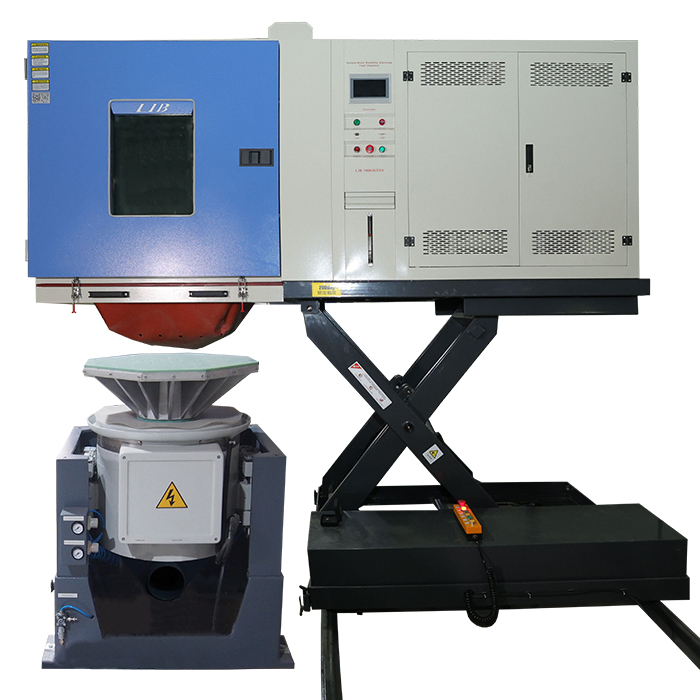
Products That Face Constant Motion
Every day, tech things are set up, shipped, and used, so they vibrate. Things like sensors, battery systems, lighting, and fun hardware are close to the engines and the roads. Gear for business and telecom is near cars, fans, and blowers. Everything that is shipped by truck or air is shaken up before it gets to its first customer.
How Vibration Damages Circuits?
When you bend them over and over, it breaks component leads, grinds down solder joints, and moves heavy parts around on boards. Failures can start out as problems that happen once in a while but go away when a technician checks them out. The IEC 60068-2-6 test for sinusoidal shaking can be used to find places where the hardware is weakening or falling apart [1]. This is a good way to find weak mounts and resonances early on in the creation process.
Where Validation Fits in the Product Cycle?
When a team is sure that a design works and is ready to roll it out, they test it for vibrations. People who work with cars, space flight, technology, and phone calls all use LIB. As the process goes on, you may need to be more or less serious. Pick tools that can handle more than what you need right now. When new programs come after old ones, they almost never ask for less.
Key Specifications for Vibration Test Chambers in Electronics Testing
Climate Range and Stability
LIB's technical table has temperatures ranging from -50 °C to +150 °C, with changes of ±0.5 °C and deviations of ±2.0 °C; humidity levels ranging from 30% to 98% RH, with deviations of 2.5% RH; and a heating and cooling rate of 5 °C/min. When the spread changes across the room, this is called deviation. When something changes over time, this is called fluctuation. You need to know how to test them to get both numbers.
Vibration System Capability
The shaker on the list is thought to have 1000 kgf of force, and its frame is 240 mm long. It can go from 2 Hz to 4000 Hz. A 600x600 mm head growth and a 600x600 mm horizontal moving table make the mounting area bigger. The LIB talks about tests that put a 500-kilogram load on both the top and bottom axes.
Specification Summary
| Parameter | LIB listed value | Question to ask |
|---|---|---|
| Temperature range | −50 to +150 °C | Which low-temperature option applies to your quote? |
| Humidity range | 30–98% RH | Over what temperature band is it held? |
| Rated force | 1000 kgf | Sine, random, or shock rating? |
| Frequency range | 2–4000 Hz | Usable at full payload? |
| Table size | 600×600 mm | Vertical, horizontal, or both? |
| Maximum load | 500 kg | Does it include fixture mass? |
|
|
|
|
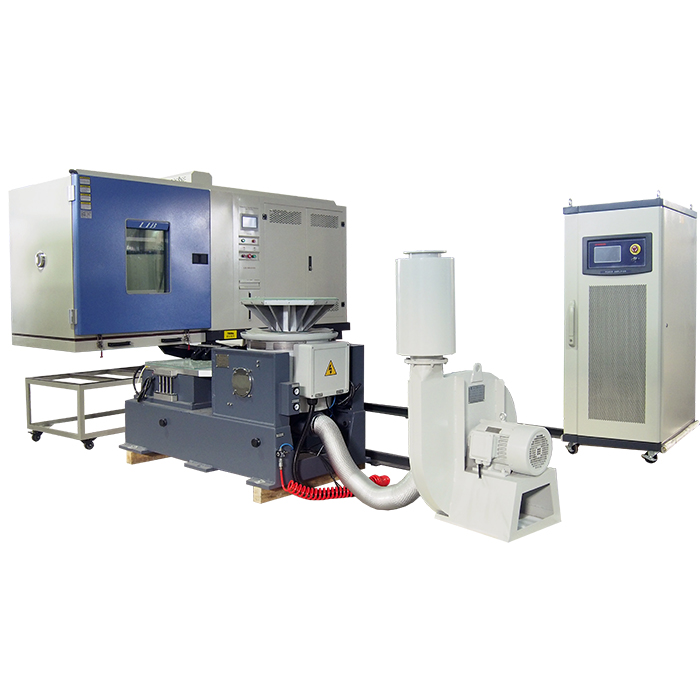

Matching Frequency, Acceleration, and Displacement to Test Requirements
Frequency Bands and Standards
Read your standard for vibration test chambers and write down the range of frequencies, the type of sound, and how long it lasts. Different types of tests work in different ways. Sinusoidal tests change frequencies or stay at the same ones. When things are moved or used and are hit by random loads, IEC 60068-2-64 talks about random movements that happen over a wide frequency range [2]. The 2026 version has been added to the old text.
| Standard | Focus | Typical use |
|---|---|---|
| IEC 60068-2-6 | Sinusoidal vibration | Resonance search, endurance sweeps |
| IEC 60068-2-64 | Broadband random vibration | Transport and operational profiles |
| MIL-STD-810, Method 514 | Vibration across the product life cycle | Military and ruggedized equipment |
| IEC 60749-12 | Variable-frequency vibration for semiconductors | Component-level qualification |
Force, Mass and Acceleration
Force equals mass times acceleration. A rated force of 1000 kgf is roughly 9,807 N. As a simplified illustration, if the moving mass (armature, fixture and specimen together) were 50 kg, the ceiling would sit near 196 m/s², about 20 g, before losses. Real limits are lower, so request force-versus-mass curves rather than a single headline number.
Displacement at Low Frequencies
As the frequency goes down, the displacement grows quickly while the speed stays the same. This means that tests with low frequencies can go as hard as the shaker can handle before it breaks. The speed limit and the displacement number are not on the LIB sheet, so you should ask for them. They are used to test circuits that start at about 2 Hz.
Payload and Fixture Considerations for Electronic Components
Counting Every Kilogram
As the frequency goes down, the displacement grows quickly while the speed stays the same. This means that tests with low frequencies can go as hard as the shaker can handle before it breaks. The speed limit and the displacement number are not on the LIB sheet, so you should ask for them. They are used to test circuits that start at about 2 Hz.
Fixture Design
A good one lets waves pass through it without adding its own resonances to the test band. The thing should be mounted the same way it is used and should be stiff, light, and even. You can test more than just the moving coil across the 600x600 mm head expander. Control accelerometers should be put on the machine near where the samples will be attached.
Cables, Power and Monitoring
Most of the time, electronics need to be plugged in and given power during the test. There is always a place in LIB for a wire with a plug in it. It is important to plan the direction of the lines so that they don't touch the item or cause the sensors to bounce. During the test, keep an eye on the function because a fault might only show up when the table moves.
Combining Vibration and Temperature Testing for Electronics Reliability
Why Combined Testing Finds More
When things are hot or cold, they act in different ways. Plastics get stiff when it's cold outside, and glue gets soft when it's hot outside. The temperatures need to be the same for the solder joints not to stretch. Some problems can be found by tests that are run at temperatures that are too high or too low. Some products are stressed in a way that is similar to how real goods are stressed in the real world [3]. This method is part of MIL-STD-810.
Chamber Features That Protect Results
Sometimes condensation in vibration test chambers can make a test not work right or even hurt the samples. In LIB, they talk about a way to seal the interface and a way to dry the air to stop condensation. Another thing it talks about is a centrifugal fan system that works well and makes the air flow evenly. Lastly, it talks about safety devices that protect you from dry burning, warming, overcurrent, high refrigerant pressure, not having enough water, and earth leaks. Check these out when it's as cold as you can stand.
Planning a Combined Profile
In a table, write down the temperature, humidity, level of vibration, and time for each step. Take some time to let both the sample and the air warm up. This is the case because heavy things slow down the chamber. 5 °C per minute is how fast the room heats up. To figure out how long to soak the object, you need to measure it.
How to Evaluate Vibration Test Chamber Manufacturers and Suppliers?
Evidence Over Claims
LIB says that its products are CE certified and meet standards like MIL-STD-810 and IEC 60068-2-64. The sheet shows GJB 150 and IEC 60068-2-6 along with ISO 9001 methods and tests by SGS and TÜV. For every claim, you should ask for test scores, awards, and exact copies.
Component Quality and Control
For closed-loop vibration control, LIB uses valves from Danfoss, compressors from Bitzer or Bock, and controllers from RKC or Siemens. How simple it is to find and fix a part depends on what brand it is. Find out what parts will fit your system and if there are other choices. Write down the parts that will be used for the important parts.
Supplier Scorecard
| Criterion | What to look for |
|---|---|
| Test evidence | Reports measured with a payload like yours |
| Standards coverage | Edition and method named explicitly |
| Components | Brand list and spare-part availability |
| Service | Response time, local presence, warranty terms |
| Customization | Willingness to adapt tables, fixtures, and chamber size |
Chamber Format, Delivery and Support to Confirm Before Ordering
Benchtop, Floor-Stand and Walk-In Formats
LIB has both common and unique rooms, as well as walk-in, tabletop, and floor-stand types. So, make sure the format fits the specimen's size, the load's weight, and the lab's layout where the 1000 kgf shaker is set up on the floor. Check out how heavy the floor is, how high the roof is for the vertical shakers, and how much space there is for the amp and fan.
Installation, Commissioning and Training
As part of LIB Industry's full solutions, they study, plan, make, test, deliver, install, train, and do other things. For an acceptance test, you should make your own fixture and specimen and keep track of how well the climate control and vibration control work. Before the real test, train the people who will be giving it.
Warranty and Service Network
LIB gives you help and support for life, 24 hours a day, seven days a week, and they back their promise for three years. They have 29 service sites and partners in Malaysia, Canada, the UK, and the US. In what ways does the warranty help? How does the new one work? Who in my area can help you? Ask these things after reading the contract.
Conclusion
Selecting vibration test chambers gets simpler once the specification drives the shopping list. Define frequency, severity, payload, fixture, and climate profile, then compare each supplier’s numbers at your real load. Confirm standard editions in writing, request documented performance, and agree on acceptance tests before payment. Do not overlook support: commissioning, training and spare parts decide whether a chamber stays productive after year one. A shortlist built on measured evidence will serve your electronics validation far better than one built on headline specifications.
FAQ
Do I need combined temperature and vibration testing?
It's the best choice for things that will be shaking, hot, and cold at the same time, like electronics outside or in a car. When tests are run together, they might find bugs that different tests missed. First pick out the shape, then make sure the box can keep its heat while it shakes.
What frequency range should I request?
First, go over the things you wrote down for the test. From 2 to 4000 Hz is on LIB. This range has many types of electronics, but not all of them follow the same rules. See how far the low end can move and make sure the whole range can handle your load.
Which standards should a supplier support?
People usually ask for MIL-STD-810 Method 514, IEC 60068-2-6, and IEC 60068-2-64. Laws change over time, but you can still find contracts from earlier times. That's why you should see proof of the edition and test to back it up.
Call to Action
Want to find a company that makes, sells, or builds vibration test chambers and knows how to test electronics? At Lib Industry, you can choose from both regular and one-of-a-kind rooms. All of them will be built, set up, and taught to you for free. Send your payload, frequency range, and climate profile to ellen@lib-industry.com for a tailored recommendation.