How to Choose Weatherometers for Paint and Coating Manufacturers
Paint and coating manufacturers need reliable weathering test results to evaluate color fading, gloss changes, cracking, chalking, and adhesion loss. Choosing the right weatherometer requires matching the light source, irradiance, temperature, humidity, and water spray cycles to the applicable test standards.
A suitable xenon arc weathering chamber helps laboratories compare coating formulations under controlled conditions. Before requesting a quotation, confirm your testing requirements, sample capacity, calibration needs, and long-term service support.
Need a weatherometer for paint and coating testing? Request a quote in 24 hours.
What Do Paint and Coating Manufacturers Need from a Weatherometer?
A weatherometer helps evaluate how coatings respond to simulated sunlight, heat, moisture, and water spray. These tests are useful for comparing formulations and identifying potential durability problems before products are used outdoors.

Key Testing Requirements
Depending on the application, coating laboratories may need to evaluate:
- Color fading and gloss changes
- Cracking, chalking, and surface deterioration
- Adhesion loss and other physical changes
- Differences between coating formulations
Accelerated weathering can reveal material changes faster than natural outdoor exposure. However, laboratory results do not automatically translate into a specific number of outdoor service years.
| Laboratory Requirement | Chamber Capability to Check |
|---|---|
| Compare formulations | Irradiance uniformity and repeatable exposure |
| Follow customer or OEM protocols | Programmable light, dark, and spray cycles |
| Test multiple panels | Specimen capacity and holder dimensions |
| Support quality audits | Calibration records and test data |
Which Weatherometer Specifications Matter Most?
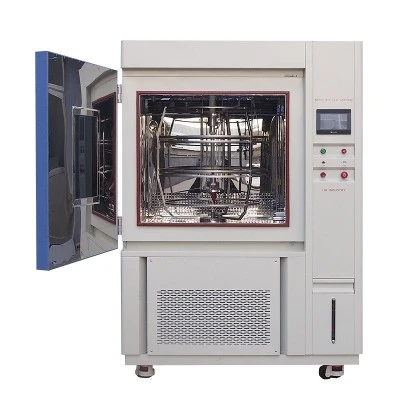 When comparing weatherometers, check the specifications against your test method rather than choosing the chamber with the widest operating range.
Xenon Lamp and Irradiance
LIB industry's XL-S-750 uses a 4500 W water-cooled xenon arc lamp to simulate sunlight exposure. Its listed irradiance range is 35–150 W/m².
The required irradiance control point and wavelength range depend on the applicable standard. Before ordering, confirm the available control wavelengths, optical filters, and irradiance monitoring options for your test protocol.
Temperature, Humidity, and Water Spray
Temperature and moisture influence coating degradation during weathering tests. The XL-S-750 specification lists humidity control from 50% to 98% RH and a temperature difference of ±2°C between the chamber and black panel temperature.
Confirm whether these ranges meet your required test conditions, including spray settings and programmed exposure cycles.
Specimen Capacity and Chamber Dimensions
The XL-S-750 has a rotating specimen holder for testing multiple samples in one run.
| Parameter | XL-S-750 |
|---|---|
| Internal size | 950 × 950 × 850 mm |
| Overall size | 1400 × 1400 × 1950 mm |
| Specimen size | 95 × 200 mm |
| Specimen capacity | 42 pieces |
| Chamber type | Rotating holder |
| Controller | Programmable color LCD touchscreen |
Check that the specimen holders accommodate your actual coating panels. If your panels require different dimensions or mounting arrangements, ask about customized holders.
How to Match Weathering Test Methods to Different Coatings?
Different coatings may require different filters, exposure cycles, temperatures, and moisture conditions. Architectural coatings, industrial coatings, and automotive finishes should therefore be evaluated against their applicable standards and customer requirements.
Confirm the Applicable Standard
Common xenon arc weathering standards include ASTM G155, ISO 4892-2, and ASTM D4459. For paints and varnishes, ISO 16474-2 may also be relevant.
Check the latest applicable edition and confirm the required exposure conditions before selecting a chamber configuration.
Select the Correct Filters and Exposure Cycle
The appropriate optical filters depend on the intended exposure environment and test method. For example, some indoor or behind-glass exposure procedures require specific window-glass filters.
LIB's published specifications do not identify all available filter configurations. Confirm the filter options, irradiance control point, black panel temperature, and light, dark, and spray cycle settings before ordering.
How Can You Ensure Weatherometer Test Accuracy and Repeatability?
Consistent testing requires more than selecting the right lamp. Irradiance, temperature, humidity, and specimen exposure must remain within the required limits.
Calibration and Irradiance Monitoring
LIB lists a UV radiometer with a measurement error of up to 5%. Confirm whether this performance meets your test method and ask for the applicable calibration documentation and recommended calibration interval.
Uniformity Across the Specimen Rack
A rotating holder helps expose specimens to changing positions during testing. However, you should also request irradiance uniformity data to verify that the chamber meets your laboratory's requirements.
Repeatability Between Runs
To improve repeatability, maintain consistent water quality, monitor lamp operating hours, and follow the recommended calibration and maintenance schedule. Reference samples can help identify changes in results over time.
LIB industry provides xenon arc weatherometers for accelerated coating weathering tests.
Which Features Improve Coating Laboratory Efficiency?
When selecting a weatherometer, consider how its operating features affect daily testing and maintenance.
Programmable cycles: Support automatic light, dark, and spray sequences.
Water management: Automatic water supply and cleaning features help maintain operation.
Safety protection: Confirm available over-temperature, over-current, water shortage, and other protection functions.
Maintenance access: Check lamp and filter replacement procedures, service intervals, and expected consumable costs.
For laboratories running frequent tests, specimen capacity and maintenance downtime can affect overall throughput.
How to Compare Weatherometer Manufacturers Before Purchasing?
Compare suppliers using the same technical requirements and request written confirmation of the specifications.
Certifications and Documentation
LIB industry states that it operates an ISO 9001 quality management system and offers CE-certified products, with SGS and TÜV verification. Request the relevant certificates, factory test reports, and technical documentation for the model you intend to purchase.
Warranty and Technical Support
LIB industry provides a 3-year warranty and lifetime service support, along with 24/7 technical assistance. Confirm the warranty terms, response arrangements, replacement-part availability, and service coverage for your location.
The company also provides equipment customization, installation, and training as part of its environmental testing solutions. Check which services are included in your quotation.
What Should You Confirm Before Ordering a Weatherometer?
Before placing an order, confirm:
- Applicable test standards and editions
- Xenon lamp, filters, and irradiance control points
- Black panel temperature and humidity ranges
- Water spray and exposure cycle settings
- Specimen dimensions and holder capacity
- Calibration documentation and data recording
- Installation requirements, operating costs, and warranty coverage
Also check the laboratory's electrical supply, water supply, drainage, ventilation, and access for equipment delivery.
Request a Weatherometer Solution from LIB Industry
Choosing the right weatherometer for paint and coating testing helps laboratories evaluate material durability under controlled and repeatable conditions.
LIB industry provides xenon arc weathering equipment and one-stop environmental testing solutions, including equipment selection, customization, installation, and training. With a 3-year warranty and lifetime service support, LIB industry helps laboratories plan for long-term testing requirements.
Contact inquiry@libtestchamber.com with your coating type, applicable standard, specimen dimensions, and required exposure conditions to request a suitable configuration and quotation.
Related Testing Equipment
|
 |
|
|
|
Xenon Weathering Test Chamber Designed for xenon arc exposure testing under controlled light, temperature, and moisture conditions. It is suitable for evaluating the weathering resistance of paints, coatings, plastics, and other materials. |
UV Test Chamber Uses fluorescent UV lamps and moisture cycles to evaluate coating and material degradation under ultraviolet exposure. It is an alternative when the required test method specifies fluorescent UV testing. |
Temperature and Humidity Test Chamber Provides controlled temperature and humidity conditions for evaluating coating samples, substrates, and related components under environmental stress. |


FAQ
Which weatherometer specifications matter most for coating tests?
Start with the required xenon lamp and filters, irradiance control point, black panel temperature, humidity, and spray cycle. Specimen capacity, calibration, and service support should also be considered.
Can one weatherometer support multiple coating test standards?
Potentially, yes, if its available filters, operating ranges, and programmable cycles meet each method's requirements. Confirm compatibility with the supplier before ordering.
How can I improve repeatability between weathering tests?
Use consistent test cycles and water quality, monitor lamp operating hours, maintain calibrated sensors, and compare results with reference samples.