How to Select a Climatic Test Chamber for Electronics Humidity Testing
Introduction: Why Humidity Testing Matters for Electronic Reliability
Humidity is one of the most common environmental stresses affecting electronic products. Unlike sudden mechanical damage or extreme temperature shock, moisture-related failures usually develop slowly and remain invisible until the product has already been deployed in the field.
Inside electronic devices, moisture can cause PCB insulation degradation, leakage current increase, connector corrosion, electrochemical migration, and even unexpected short circuits. These failures are especially critical for automotive electronics, battery systems, industrial controllers, aerospace equipment, and consumer electronics, where reliability directly affects safety and customer satisfaction.
However, waiting months or years to discover humidity-related failures is not practical for manufacturers. A Climatic Test Chamber provides a controlled environment that accelerates moisture exposure by precisely controlling temperature and humidity conditions. Engineers can reproduce real-world environments, identify weak points in product design, and improve reliability before mass production.
LIB Industry provides advanced temperature humidity chambers designed for electronics reliability testing according to international standards such as IEC 60068-2-78, JEDEC JESD22-A101, MIL-STD-810 Method 507, and ISO 16750-4. With accurate humidity control, flexible configurations, and long-term technical support, LIB helps manufacturers validate product durability under challenging climatic conditions.
How Humidity Damages Electronic Components
Moisture Absorption in PCB Materials
Printed circuit boards, connector housings, and insulating materials can absorb moisture from the surrounding environment over time. When water molecules penetrate these materials, their electrical and mechanical properties may gradually change.For PCB assemblies, moisture absorption can reduce insulation resistance between adjacent conductive traces. In high-density circuit designs where the distance between tracks is very small, even minor changes in insulation performance can affect signal transmission and cause unstable operation.
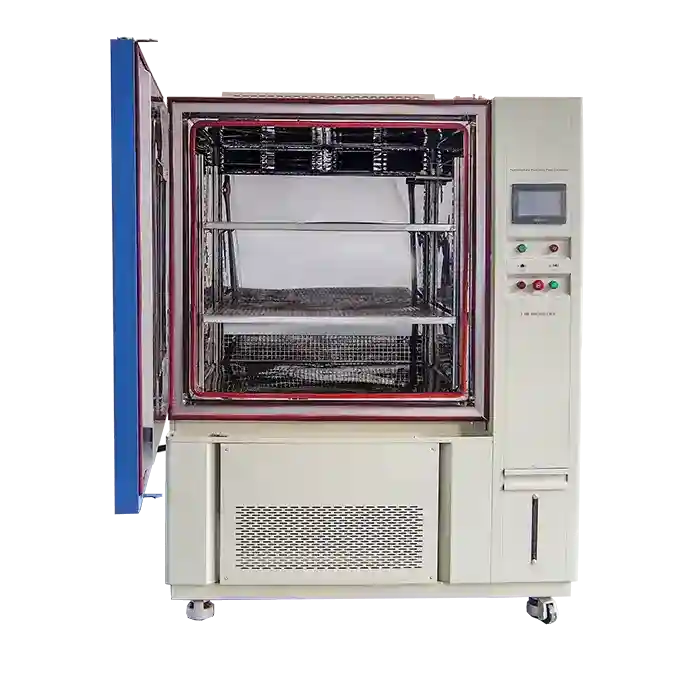
A Humidity Testing Chamber allows engineers to expose electronic assemblies to controlled moisture conditions and evaluate whether materials, coatings, and designs can maintain stable performance during long-term operation.
Leakage Current and Insulation Failure
High humidity creates a thin moisture film on exposed electronic surfaces. This conductive layer provides an easier path for current leakage between component leads or circuit traces.
Leakage current problems are particularly dangerous in:
High-precision sensors
Automotive control modules
Communication equipment
Semiconductor devices
Even when a product appears visually normal, increased leakage current may lead to false signals, unstable operation, or complete failure.Through temperature and humidity testing, manufacturers can determine whether their insulation materials and protective designs are sufficient for harsh environments.
Corrosion, Condensation and Electrochemical Migration
Humidity becomes more damaging when combined with temperature changes and contaminants.When a product experiences rapid temperature transitions, surfaces may fall below the dew point and create condensation. Liquid water on electronic surfaces is much more harmful than humid air because it directly accelerates corrosion and creates conductive pathways.
Another major failure mechanism is electrochemical migration. Under moisture exposure and electrical bias, metal ions can move between PCB traces and eventually form conductive dendrites. This may create unexpected short circuits after long periods of operation.
A Climatic Test Chamber helps reproduce these conditions in a controlled laboratory environment, allowing engineers to identify potential reliability risks before products reach customers.
Which Products Require Humidity Testing?
Humidity testing is widely used across industries where electronic reliability is critical.
| Industry | Typical Test Samples | Main Humidity Risks |
|---|---|---|
| Automotive Electronics | ECU, sensors, connectors, displays | corrosion, insulation failure, signal instability |
| Battery Systems | BMS, battery modules, control units | moisture ingress, leakage, protection failure |
| Consumer Electronics | smartphones, wearable devices, smart products | condensation damage, component aging |
| Aerospace Electronics | avionics systems, navigation equipment | extreme environmental exposure |
| Industrial Equipment | PLC, control panels, automation systems | long-term corrosion and electrical degradation |
|
|
||

For automotive and industrial applications, humidity testing is often performed before certification or mass production to reduce field failures and warranty costs.
Humidity Testing Methods Using a Climatic Test Chamber
Different products require different humidity test methods depending on their operating environment and reliability requirements.
Steady-State Damp Heat Testing
Steady-state damp heat testing maintains a constant temperature and humidity level for an extended period, commonly using conditions such as 40°C and 90% RH.
This method evaluates slow degradation processes including:
Moisture absorption
Insulation resistance reduction
Material aging
Corrosion development
IEC 60068-2-78 is commonly used for this type of environmental reliability evaluation.
Cyclic Temperature Humidity Testing
Real-world environments rarely remain constant. Electronic products may experience daily temperature changes, seasonal humidity variation, or movement between indoor and outdoor environments.
Cyclic humidity testing uses programmed temperature and humidity changes to reproduce these conditions. It is especially useful for evaluating:
Housing sealing performance
Connector durability
Condensation resistance
Protective coating effectiveness
Compared with steady-state testing, cyclic testing can reveal hidden design weaknesses more quickly.
Temperature Humidity Bias Testing
Some electronic components need to be tested while powered because electrical stress can accelerate moisture-related failures.
Temperature humidity bias testing applies electrical voltage to samples while they are exposed to high humidity environments. This helps detect:
Electrochemical migration
Leakage current increase
Semiconductor package failures
LIB climatic chambers can be equipped with cable ports, allowing samples to remain powered during testing and supporting more realistic reliability evaluation.
Key Standards for Electronics Humidity Testing
Manufacturers usually select humidity test methods according to product application and industry requirements.
| Standard | Application | Test Focus |
|---|---|---|
| IEC 60068-2-78 | General electronic products | Steady-state damp heat |
| JEDEC JESD22-A101 | Semiconductor devices | Temperature humidity bias life testing |
| MIL-STD-810 Method 507 | Military and aerospace equipment | Cyclic humidity exposure |
| ISO 16750-4 | Automotive electrical and electronic systems | Climatic environmental loads |
Using standardized testing methods allows manufacturers, suppliers, and customers to compare reliability performance using consistent criteria.
How to Select the Right Climatic Test Chamber for Electronics Testing
Choosing the correct Climatic Test Chamber requires consideration of product size, test conditions, and future testing requirements.
Chamber Volume
The chamber working space should match the size and quantity of test samples.
For example:
50L–225L chambers: suitable for PCB assemblies, sensors, connectors, and small electronic products.
500L–1000L chambers: suitable for ECU modules, battery components, and industrial equipment.
Walk-in chambers: designed for large assemblies, vehicle components, and production validation testing.
Selecting the correct volume ensures proper airflow circulation and accurate environmental conditions.
Temperature and Humidity Range
Different industries require different temperature capabilities.
Common configurations include:
| Application | Recommended Temperature Range |
|---|---|
| General electronics testing | -20°C to +150°C |
| Automotive reliability testing | -40°C to +150°C |
| Aerospace and extreme environment testing | -70°C to +150°C |
Humidity control is equally important. A high-quality chamber should provide stable humidity performance across long-duration tests.
Humidity Accuracy and Sample Testing Capability
For reliability testing, humidity stability is often more important than simply achieving a high humidity level.
LIB climatic chambers provide:
Humidity range: 20%–98% RH
Humidity accuracy: ±2.5% RH
Stable long-term humidity operation
Optional cable ports for powered testing
These features allow engineers to perform realistic environmental simulations instead of simple moisture exposure.
LIB Industry Climatic Test Chamber for Electronics Reliability Testing
 |
 |
|
|
|
|
|
|
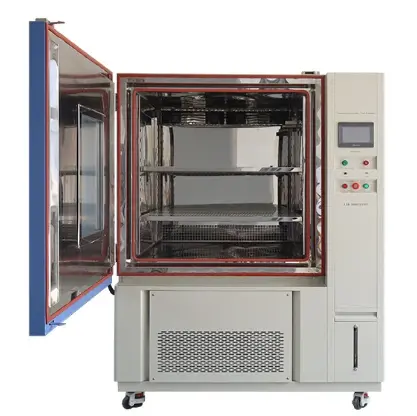
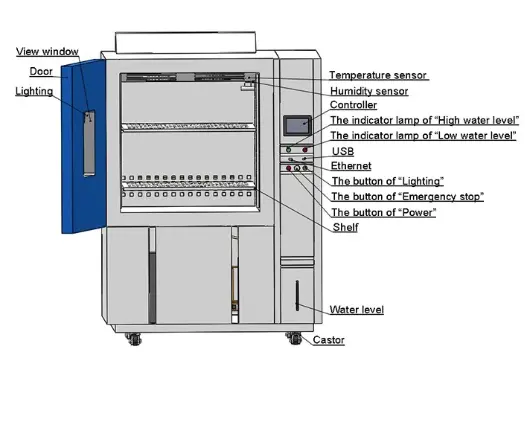
| Robust Workroom | Cable Hole | Temperature and Humidity Sensor | PID controller | |


LIB Industry specializes in environmental simulation equipment for global manufacturers, research laboratories, and testing organizations.
Precision Temperature and Humidity Control
LIB temperature humidity chambers use advanced humidity generation and control technology to maintain stable test conditions. The chambers support long-duration damp heat testing as well as complex cyclic humidity profiles.
With temperature capability down to -86°C depending on configuration, LIB provides solutions for applications ranging from consumer electronics to aerospace components.
Complete Product Range and Custom Solutions
LIB offers multiple Climatic Test Chamber configurations, including:
Benchtop humidity chambers
Standard temperature humidity chambers
Large-volume chambers
Walk-in environmental chambers
Customized testing systems
This allows customers to select equipment according to sample size, testing standards, and production requirements.
International Standards and Professional Support
LIB chambers are designed for global testing requirements and support standards including IEC, JEDEC, MIL-STD, and ISO testing procedures.
Beyond equipment supply, LIB provides:
Installation and commissioning
Operator training
Application guidance
Technical support
Every chamber includes a 3-year warranty and lifetime technical support, helping customers maintain reliable testing capability throughout the equipment lifecycle.
Related LIB Environmental Test Equipment
For complete reliability evaluation, humidity testing is often combined with other environmental tests.
| Equipment | Main Application | |
|---|---|---|
| Benchtop Temperature Humidity Test Chamber | Compact humidity and temperature testing for PCB assemblies, sensors, electronic components, and laboratory R&D validation |   |
| Temperature Humidity Chamber | General climatic reliability testing for electronic products, automotive components, and industrial equipment |  |
| Thermal Shock Chamber | Rapid temperature change testing to evaluate thermal stress resistance and component reliability |  |
| Salt Spray Chamber | Corrosion resistance testing for connectors, metal parts, and electronic assemblies |  |
| IP Waterproof Test Chamber | Water ingress protection testing according to IPX1–IPX9K standards |  |
| Walk-in Environmental Chamber | Large-scale environmental testing for vehicle components, battery systems, and production validation |  |
LIB provides complete environmental testing solutions covering temperature, humidity, corrosion, dust, rain, and weathering evaluation.
FAQ
How long does a humidity test for electronics usually take?
The test duration depends on the standard and product requirements. Steady-state damp heat tests may last from several days to several weeks, while accelerated reliability programs may use customized cycles to reproduce long-term exposure faster.
Can a Climatic Test Chamber test powered electronic devices?
Yes. LIB chambers can be equipped with access ports that allow electronic samples to remain powered during testing, supporting temperature humidity bias tests and real operating condition evaluations.
Does LIB provide customized humidity testing chambers?
Yes. LIB provides customized solutions based on sample size, temperature range, humidity requirements, test standards, and laboratory conditions.
What warranty and support does LIB provide?
LIB provides a 3-year warranty and lifetime technical support. Customers receive installation assistance, technical guidance, and long-term service support after equipment delivery.
Work With LIB Industry for Reliable Humidity Testing Solutions
LIB Industry is a professional Climatic Test Chamber manufacturer and supplier providing environmental simulation solutions for electronics, automotive, aerospace, battery, and industrial applications.
From product selection and customization to installation and lifetime support, LIB helps manufacturers identify humidity-related risks before they become costly field failures.
Contact LIB Industry to configure a temperature humidity chamber designed for your electronics reliability testing program.