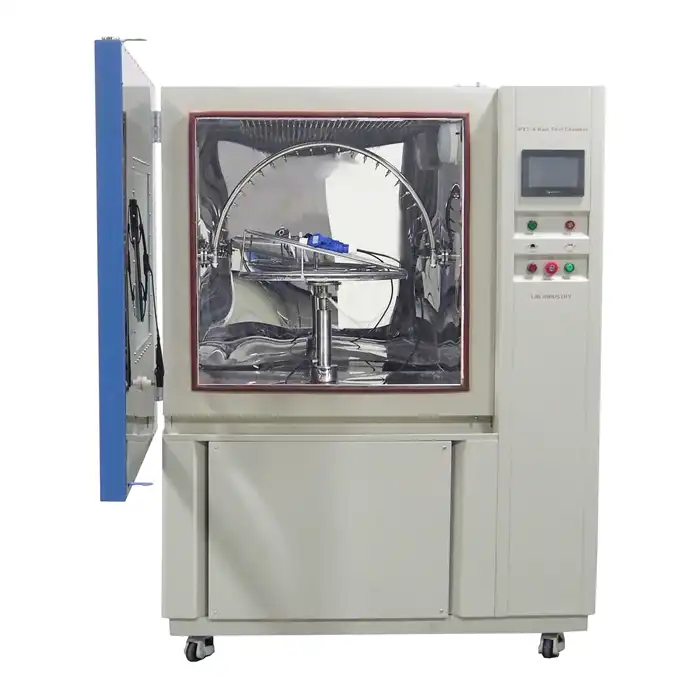
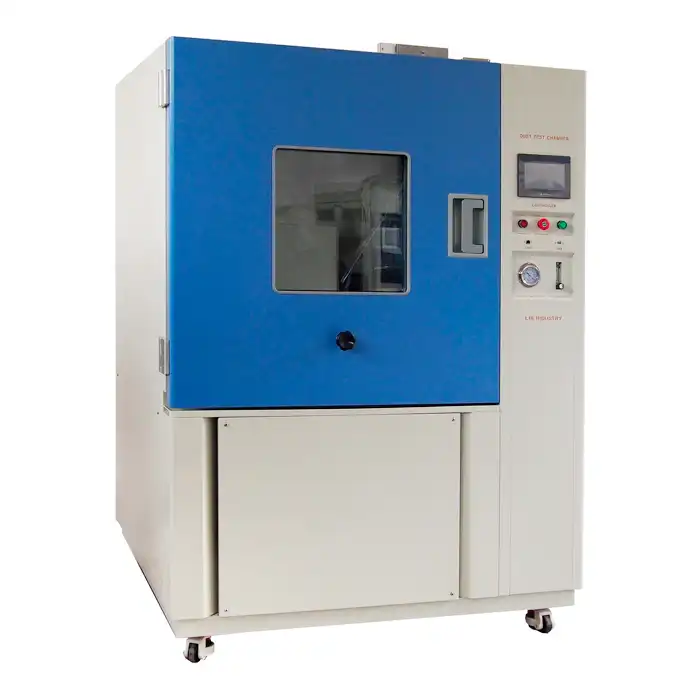
IP5X/IP6X Dust Testing for Outdoor LED Lighting: A Buyer's Guide
Quick answer: Outdoor LED luminaires need dust testing because fine particles slip past gaskets, cable glands and vents, then settle on optics, drivers and connectors. A dust test chamber circulates powder around the fixture under controlled conditions, then engineers inspect for ingress and check that the luminaire still works. IP5X means dust-protected: some dust may enter, but not enough to impair operation or safety. IP6X means dust-tight: no dust ingress during the test. Match the target code to the installation site, test production-representative samples, and choose a dust test chamber that fits your largest luminaire.
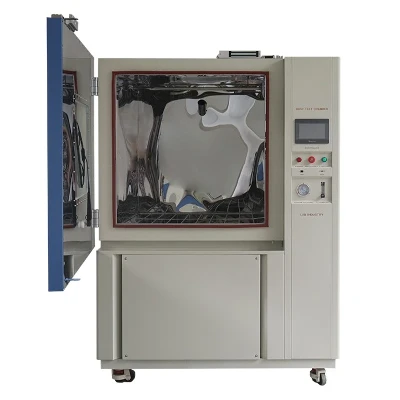
Why do outdoor luminaires need dust ingress verification?
Streetlights, floodlights and tunnel fixtures face continuous dust for years, and a design that passes a bench inspection can still leak at a seam. Wind-blown soil, construction debris, cement dust and agricultural particles reach fixtures year-round. Thermal cycling also pulls air in and out of sealed housings, drawing fine particles toward any weak seal.
Dust damage rarely shows on day one. Contaminated optics lose output gradually, and conductive deposits near drivers cause faults after months of service. Laboratory verification finds these weak points before shipment, when a design change costs far less than a field retrofit. A datasheet claim such as "dustproof" carries little weight, while a documented test under a recognized procedure gives importers, distributors and project owners something they can check.
Which parts of an LED luminaire are most at risk?
Dust follows the path of least resistance, so a dust test is an audit of every opening and joint.
| Area | Typical weak point | What to do |
|---|---|---|
| Housing and lens joint | Uneven gasket compression, adhesive gaps | Test several production units, not one hand-built sample |
| Cable entry | Gland tolerance, cable jacket fit | Test with the cable type and outer diameter you will supply |
| Breather or pressure vent | Membrane quality, mounting seal | Check the mounting seal as closely as the membrane |
| Driver compartment cover | Screw spacing, seal groove geometry | Torque screws as in production |
| Connectors and quick-fit plugs | Mating seal wear | Test mated and re-mated samples |
What do IP5X and IP6X mean, and which standards apply?
IEC 60529 defines the IP Code and the dust procedures behind the first digit, and luminaire standards such as the IEC 60598 series cite it.
IP5X (dust-protected): some dust may enter, but not enough to harm operation or safety.
IP6X (dust-tight): no dust ingress during the test. It demands stricter sealing, so fixtures for deserts, mines and cement plants often target it.
Procedure details depend on the standard category and edition. As a planning reference, IEC 60529 uses talcum powder circulated around the enclosure, with a vacuum applied for enclosures whose working cycle lowers internal pressure, for several hours. [Verify powder type, concentration, pressure condition and duration against the current edition before you quote or test.] Take the final values from the current document, not supplier brochures, and give them to the dust test chamber maker when you request a quote.
| Item | Where to confirm |
|---|---|
| Test category | IEC 60529 and the product standard (for example IEC 60598-1) |
| Powder and concentration | Current edition of the procedure |
| Duration | Procedure cited in the specification |
| Pass criteria | Product standard or customer document |
How do you prepare luminaires and run the test?
Use fully assembled, production-representative units, mount them as installed, and inspect carefully afterwards.
Prepare samples: fit the final gaskets, glands, vents and fasteners, torqued as in production. Attach the cable and close the gland properly, because cable entry is part of the enclosure.
Mount and orient: position the luminaire as installed, and test extra orientations if the design has several mounting options.
Run: expose for the duration the applicable procedure requires.
Inspect: clean the exterior carefully, open the enclosure, and look for dust on optics, circuit boards and terminals. Photograph findings, record where dust entered, then check that the luminaire powers up and operates normally.
How does dust ingress affect light output and lifetime?
Dust inside a luminaire is more than cosmetic: it cuts light output, raises temperature and creates electrical risk.
Optical loss: particles on lenses, reflectors and LED packages scatter and absorb light. In a sealed optic, the deposit cannot be wiped away in service.
Thermal effects: dust on heat sinks and inside the housing hinders heat transfer. LEDs run hotter, and higher junction temperature shortens lifetime.
Electrical risk: dust combined with humidity can form conductive paths across terminals and driver components, raising the risk of tracking and intermittent faults. This is why many buyers pair dust testing with water ingress testing such as IPX5 or IPX6.
How do you use test results in claims and tenders?
State an IP code only when your test record supports it, and keep the report available. A complete report lists the product model and revision, sample count, test procedure, dust test chamber identification and calibration status, exposure parameters, inspection photographs, and pass or fail verdicts.
Public lighting projects and distributors often request reports during qualification. Keep reports organized by model and revision, and repeat testing after design changes to seals, vents or housing geometry. Re-testing samples from later production lots adds further confidence.
How do you choose a dust test chamber for LED lighting?
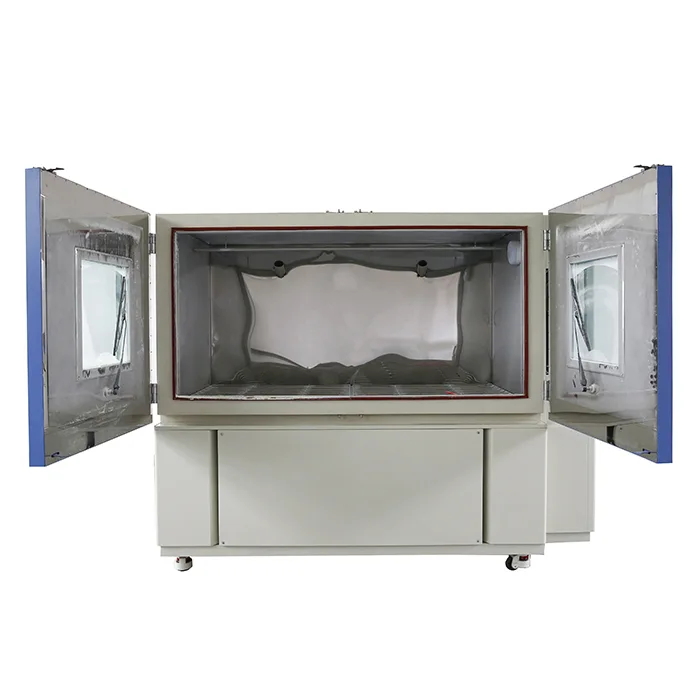
Pick one sized for your largest fixture, with even dust circulation, powder management and traceable calibration. A dust test chamber that is too small forces outsourcing and slows development.
| Factor | What to check |
|---|---|
| Working volume | Largest fixture plus mounting hardware and clearance for dust circulation |
| Dust circulation | Even exposure around the full luminaire |
| Specimen support | Fixtures for different mounting positions |
| Cable and port access | Entry points for powered or monitored samples |
| Powder management | Collection and filtration for fast turnaround |
| Control | Clear setting, monitoring and record of parameters |
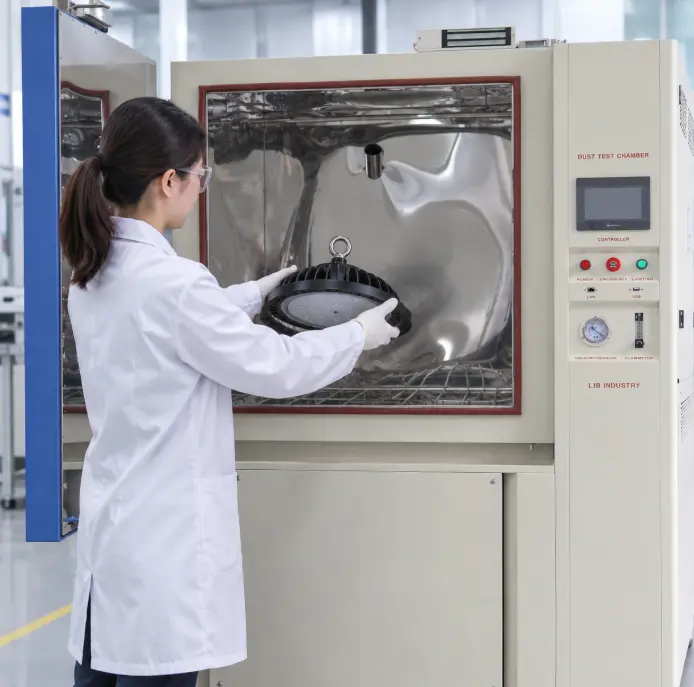 |
Measure the longest and widest luminaire you plan to test, then allow for future product lines. LIB Industry configures dust test chambers around specimen size and the applicable requirements.
Outdoor luminaires often need more than one environmental check. An IPX5 / IPX6 water spray test chamber covers water ingress, a temperature humidity chamber evaluates thermal and moisture stress, and a salt spray chamber tests corrosion resistance of housings and fasteners at coastal sites.
Case study: dust test chamber for TUV Thailand
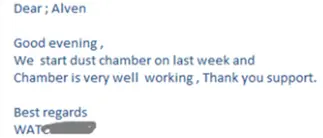 TUV Thailand chose the LIB DI-800 dust test chamber for IEC 60529 laboratory testing.
On March 11, 2015, we learned that TUV Thailand wanted to purchase a dust test chamber that complies with IEC 60529. After discussing the requirements with their team, we confirmed that the [LIB DI-800](link to DI-800 product page) met them. The unit is used for laboratory testing.
Shortly after receiving the product, the customer wrote to us by email, expressing his approval of the product and his hope for future cooperation.
Why buy from LIB Industry?
3-year (36-month) warranty: lifetime free technical support afterwards.
48-hour spare parts express: via DHL or FedEx.
Traceable factory calibration: CE and ISO 17025-related documentation.
24/7 remote video assistance: plus on-site service when necessary.
One-stop project service: solution design, customization, delivery, installation and training.
Not sure which size fits your luminaires? Send your luminaire size and target IP code, and our engineers will recommend a configuration.
FAQ
What is the difference between IP5X and IP6X for LED luminaires?
IP5X allows limited dust that does not harm operation or safety. IP6X allows no dust ingress during the specified test. Fixtures for very dusty sites often target IP6X.
Which luminaire parts should be inspected after a dust test?
Inspect lens joints, cable glands, vents, connectors and the driver compartment. Look for dust on optics, circuit boards and terminals, record where it entered, and confirm the fixture still operates normally.
Can one dust test chamber also support water ingress testing?
No. A dust test chamber covers solid-particle protection only. Water ingress needs separate equipment, such as an IPX5 / IPX6 spray test chamber. Many lighting labs use both to verify combined IP ratings.
How many luminaires should I test?
Test several units from production, not a single hand-built sample, and re-test after any change to seals, vents or housing geometry. Your certification scheme or customer may specify a sample count.
Contact LIB Industry
LIB Industry is a dust test chamber manufacturer providing turn-key environmental testing solutions, from design through installation and training. Send your luminaire size and target IP code to ellen@lib-industry.com for a tailored quote within 24 hours.