Vibration Test Chambers: Key Specs for Aerospace Qualification
The most important specs are the accuracy of the control, the range of frequencies, the payload, the size of the table, and the temperature and humidity window around the part. Vibration test chambers make sure that airplane gear is safe by shaking it at a controlled frequency, force, and temperature. Lots of things like launch loads, engine shaking, and the plane itself move around the test frames, electronics, ports, and sensors. The approval board will not accept data from a room that cannot reach the required acceleration or maintain the required temperature. This guide explains each important standard in easy-to-understand language. It also tells you how published LIB numbers fit into everyday situations and gives you a written list of things you should check before you place an order.
Why Vibration Testing Is Critical for Aerospace Qualification
It's official proof that aerospace parts work after they've been through things that cars on the ground never have to go through.
Loads From Launch, Flight and Operation
Hardware on planes and spaceships is influenced by engine movements, airflow buffeting, sound loads, and, for launch vehicles, strong random input over a wide frequency range. Dynamic loads with controlled frequencies and amplitudes are simulated in a vibration test chamber. Instead of just looking at how something works, this gives a fuller picture of how it works.
Failures Found Before Flight
Long-term vibration can cause cracks from normal wear and tear, fasteners to loosen or break, connectors to fret, and solder joints to break. It costs a lot less to find them in a lab than in a service. Qualification programs keep track of each test run, including the result and the point where the test stopped.
Qualification Versus Acceptance
Qualification tests show that a design has a safety margin, which is usually more than the level of service that is expected. At lower levels, acceptance tests look over every unit that is sent out. Your provider needs to know what program you want because each one needs a different amount of chamber time and profiles.
| Test stage | Purpose | Typical chamber demand |
|---|---|---|
| Development | Find weaknesses early | Flexible, frequent reconfiguration |
| Qualification | Prove the design with margin | Highest force and longest duration |
| Acceptance | Screen each production unit | Repeatable, shorter runs |
Key Vibration Parameters for Aerospace Component Testing
 It's easier to read specs when you know which one tells you what.
Force, Frequency and Axes
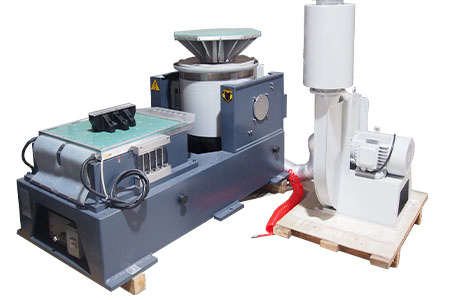
LIB says that its vibration test chambers can reach a shaking force of 1000 kgf, with a frequency range from 2 to 4000 Hz, and tests can be done in both vertical and horizontal axes with an armature that is 240 mm wide. LIB says that its shakers could be hydraulic or electrodynamic. Most aerospace standards call for testing in three straight lines, so make sure you know how to deal with changes in direction.
Profile Types
Energy is spread out over a band by random vibration, resonances are found by sine sweeps, and short impulses are sent out by shock. For many space programs, all three are needed. Always check that the controller works with all of the modes and ways of controlling you mentioned
Control and Measurement
One type of closed-loop control that LIB talks about is a shaking table. Other types are a digital power amplifier, a cooling fan, a digital motor, and sensors. If you compare the recorded acceleration to the demand, closed-loop control will set the drive signal. Multiple points of control work best for fixtures that are big or stiff. Learn about the accelerometers and channels that come with it.
How Frequency Range and Acceleration Affect Test Requirements?
How fast the part moves and how high the frequency goes make up most designs.
Frequency Range
Between 2 and 4000 Hz is where most of the mechanical patterns used in electronics and parts are found. The useful range of a shaker relies on its armature vibration and the way it is attached. Some specs go lower or higher. Compare the range given to the two ends of your profile, and then ask for the real performance chart.
Acceleration and Force
When you multiply the mass of everything moving by the speed, you get force. The part, the fixture, the head expander, and the armature are all parts of the mass that is moving. You can't get very fast with a 1000 kgf shaker if you have a heavy load. Ask the seller to find the fastest speed that can be reached with your worst-case mass plus some extra space.
Displacement and Velocity Limits
Low frequencies limit the test by how far it can move, and some bands limit it by how fast it can move. Not in the LIB data that was sent, so make sure you have written proof of the shaker's sine force, displacement, and velocity rates before you agree.
Payload and Fixture Design for Aerospace Vibration Qualification
 If you don't place it right, even the best shaker won't help.
Payload and Table Size
LIB says its vibration test chambers have a 600 x 600 mm overhead expander and a 600 x 600 mm sliding table that goes across the table. It can hold 500 kg. The head expander gives you more room than just the moving coil to put things in place and test them vertically. You can use these numbers to find the part's footprint and center of gravity.
Fixture Stiffness and Mass
For the fixtures to stay outside the test band, they need to be stiff, light, and fixed firmly with bolts. Most of the time, people pick aluminum or magnesium, but the material used relies on the temperature range and the needs. A fixture survey with a low-level sweep checks that the input goes to the part the right way.
Mounting Fidelity
A lot of the time, aircraft standards say that the part must be attached with the same nuts, force, and torque as it is on the car. In the test plan, write these things down. Discover if the supplier can help you plan, make, and test fixtures, then add that time to the schedule.
|
|
|
 |
|
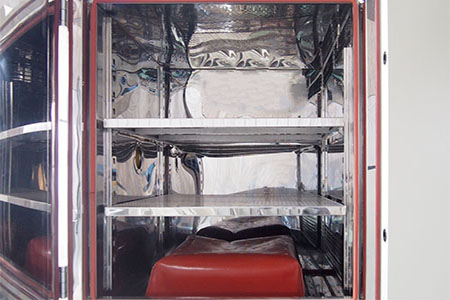
SUS 304 Climatic Workroom |
Versatile Vibration Testing |
Smart Control & Monitoring System |
Environmental Conditions to Consider in Aerospace Vibration Tests
The space around the shaker is important because temperature, humidity, and pressure can change when the plane is in the air.
Temperature and Humidity
Levels from 30% to 98%. The temperature can go up or down by 5 °C per minute, and the humidity can go up or down by 2.5% RH. The summary says -70 °C and 20% RH, so get one number that you can be sure of. Make sure that your profile's sides fit, but leave some room around them.
Altitude, Pressure and Corrosion
LIB says that its chambers can check for climate, vibration, corrosion, altitude, and pressure all at the same time. As an aerospace engineer, you should know right away what your altitude and rate-of-change needs are when it comes to low-pressure exposure. It takes more time for engineers to make mixed configurations because they are made to order most of the time.
Condensation Control
When wet air hits cold surfaces, it turns into condensation. This might change the results or hurt the samples. Two patented systems, one that dries the air and one that seals the interface, LIB says, keep the area around the shaker interface from getting too wet. Talk to any supplier about how the seal works in all the temperatures you need.
How to Evaluate Vibration Test Chambers for Aerospace Applications?
Putting your comparisons in order will help you make a good choice.
Specification Comparison
Use the table below to line up your quotes. Each row needs an answer written on it.
| Item | What to ask |
|---|---|
| Rated force | Sine, random and shock ratings in kgf or kN |
| Frequency range | Usable range with your load |
| Payload and table | Maximum mass and table dimensions |
| Temperature and humidity | Achieved range and ramp with load |
| Control | Controller type, channels, accelerometers |
| Standards | Which editions the system is verified against |
Standards and Verification
Lib says its vibration test chambers are up to par with GJB 150, IEC 60068-2-6, and MIL-STD-810. They can also be used for testing that follows BJB 150 and IEC 60068-2-6. You should ask for calibration certificates that can be tied to national standards. This is because measurement records are needed for qualification reports and can be watched.
Supplier Credentials and Support
LIB, the company, says it has an ISO 9001 quality management system, CE approval, testing by SGS and TUV, a guarantee that lasts for 3 years, forever service, 24/7 global support, 29 agents and service centers in Malaysia, Canada, the UK, and the US, and a warranty. There are also protections against humidifiers that don't burn water, too much heat, too much current, high refrigerant pressure, not enough water, and earth leaks.
What to Confirm Before Ordering a Vibration Test Chamber?
If you write down your list, there won't be any arguments after the delivery.
Technical Confirmation
You should get written proof of the fastest speed that can be reached with your load, the full shaker rate curves, the part's temperature and humidity ranges of operation, and how the controller works. It is important to make sure that there is only one correct number for each range shown in the overview and the table.
Facility Readiness
To fix a shaker system, you need a strong floor, enough electricity, a fan with a muffler (LIB says 4 kW), and room to get to the system. Check the noise limits, the space around the doors and lifts, and the drains for humidity systems before you get there.
Acceptance and Training
Make sure you keep track of the acceptance run that you set up with a standard load. Setting up programs, warnings, and features, as well as doing regular upkeep, should all be part of operator training. LIB is a "turn-key" service, which means they do everything from planning to making, getting approval, delivering, installing, and training. Make sure that the quote has all of these things in it.
Conclusion
Vibration test chambers can help get an airplane approved if they meet the program's needs for frequency range, force, payload, table size, temperature window, and control accuracy. First, get the specs and part weight. Then, ask the suppliers to find the fastest speed that can be reached. Make sure that all of the important numbers are written down. If you want to buy something from a provider, make sure you know about their safety features, clear testing, and service reach. The judges can trust the information that comes from this type of chamber choice, and it makes the whole process of designing and delivering flying gear go more smoothly.
Are you all set to take the test? There are full environmental testing solutions from LIB Industry, which makes, sells, and builds vibration test chambers. They'll look over your standards and parts and send you a clear price. Write to ellen@lib-industry.com today.
FAQ
What is the most important spec for aerospace vibration testing?
When you compare the rated force to the total moving mass, you can find out how fast the object is moving. Time range, table size, and climate window are the next parts. Find out from the supplier how well your biggest and heaviest part and fixture will work.
Can one chamber test vibration with temperature and humidity?
Yes. In LIB, tests for temperature, humidity, and shaking at frequencies between 2 and 4000 Hz are discussed. You can pick the altitude and pressure that you want, but they are generally made just for you, so ask early on for more information.
Why does fixture design matter for qualification?
The information your part gets is changed and resonant when you move an attachment. Because of stiff light fixtures that were checked by a low-level sweep, the results of the qualification report are still valid.