What Is an Altitude Chamber Test? Aerospace Low Pressure Testing Guide
Aerospace components face brutal conditions at 30,000 feet — atmospheric pressure drops to one-third sea level values, temperatures plummet to -60°C, and oxygen scarcity challenges every electronic and mechanical system. How do aerospace engineers ensure avionics, actuators, and life support equipment will function flawlessly under these extremes? Altitude chamber testing provides the answer, creating controlled low-pressure environments that compress years of flight exposure into concentrated validation cycles. These sophisticated systems replicate precise atmospheric conditions from ground level to 100,000 feet, enabling manufacturers to identify vulnerabilities, validate designs, and certify components before they ever leave the ground.
What Is Altitude Chamber Testing in Aerospace Applications?
Defining Hypobaric Environmental Simulation
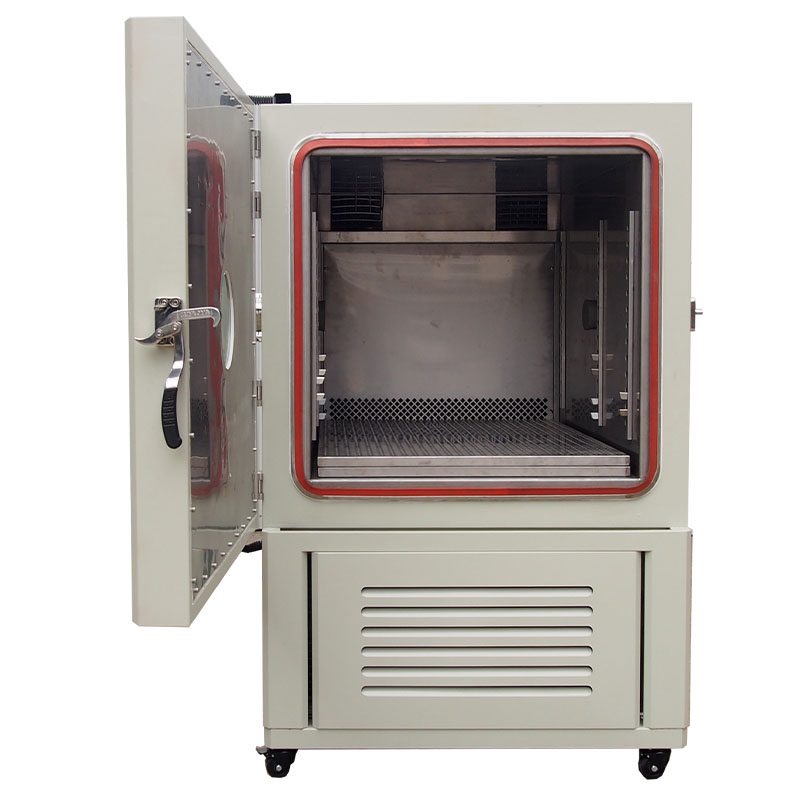
Altitude chamber testing involves placing aerospace components within sealed enclosures where atmospheric pressure can be precisely reduced to simulate high-altitude conditions. These hypobaric chambers simultaneously control temperature, humidity, and barometric pressure, creating authentic flight environments. Unlike standard environmental chambers, altitude systems incorporate vacuum pumps, pressure regulation valves, and reinforced containment structures capable of maintaining stable low-pressure conditions for extended durations.
Primary Objectives of Aerospace Altitude Testing
Validation testing serves multiple critical functions: verifying that electronic cooling systems function adequately when air density decreases by 70%, confirming mechanical actuators operate smoothly despite reduced lubrication effectiveness, and ensuring cabin pressurization systems maintain integrity. Performance characterization reveals how component efficiency degrades with altitude, providing data essential for system redundancy planning and operational limitation documentation.
Correlation Between Chamber Tests and Flight Reality
Well-calibrated altitude chambers replicate flight conditions with remarkable fidelity. Chamber testing at 0.5 kPa pressure accurately simulates 80,000-foot cruising altitudes encountered by reconnaissance aircraft and high-altitude surveillance platforms. Temperature control from -120°C to +150°C encompasses the thermal extremes from stratospheric cold to engine compartment heat, ensuring comprehensive environmental coverage.
Effects of Low Pressure and Hypoxia on Aerospace Components
Reduced Air Density Impact on Cooling Efficiency
Electronic components generate heat requiring dissipation through convective airflow. At 40,000 feet, air density drops to 25% of sea-level values, dramatically reducing cooling effectiveness. Heat sinks and cooling fans designed for ground-level operation may experience thermal runaway at altitude. LIB altitude chambers enable engineers to measure actual component temperatures under reduced pressure conditions, guiding thermal management system optimization.
Corona Discharge and Electrical Arcing Phenomena
Lower atmospheric pressure reduces the dielectric strength of air, making electrical arcing and corona discharge significantly more likely. High-voltage systems operating safely at sea level may experience insulation breakdown at altitude. Paschen's Law governs this relationship — electrical breakdown voltage reaches a minimum at specific pressure-distance combinations. Testing reveals vulnerable voltage levels and insulation spacing requirements.
Material Outgassing in Low-Pressure Environments
Polymers, adhesives, and composite materials contain volatile compounds that vaporize under reduced pressure. This outgassing phenomenon can contaminate optical surfaces, deposit conductive residues on electronics, and degrade material mechanical properties. Altitude testing quantifies outgassing rates, enabling material selection that minimizes contamination risks during actual flight operations.
| Altitude (feet) | Pressure (kPa) | Air Density (% sea level) | Temperature (°C) | Primary Testing Focus |
|---|---|---|---|---|
| Sea level | 101.3 | 100% | +15 | Baseline performance |
| 20,000 | 46.6 | 46% | -24 | Commercial aircraft cruise |
| 40,000 | 18.8 | 25% | -57 | High-altitude jet operations |
| 60,000 | 7.1 | 9% | -57 | Military reconnaissance aircraft |
| 80,000 | 1.5 | 2% | -76 | Near-space vehicle testing |
Electrical and Mechanical Failure Modes at High Altitude
Avionics System Malfunctions Under Pressure Differentials
Sealed electronic enclosures experience internal pressure buildup relative to external low pressure, stressing seals and creating mechanical loads on housings. Pressure differentials can distort circuit boards, crack solder joints, and compromise connector integrity. Altitude chambers reveal these vulnerabilities through pressure cycling that simulates ascent and descent profiles, identifying design weaknesses before flight testing begins.
Lubrication Breakdown in Reduced Pressure Atmospheres
Mechanical actuators, bearings, and gearing systems rely on lubricants maintaining viscosity and film strength. Low pressure accelerates lubricant evaporation, reducing protective film thickness and increasing friction coefficients. This degradation leads to premature wear, increased power consumption, and potential seizure. Testing under simulated altitude conditions validates lubricant selection and determines maintenance interval requirements.
Pneumatic and Hydraulic System Performance Changes
Fluid systems behave differently when external pressure drops dramatically. Hydraulic fluid dissolved gas content affects compressibility and response characteristics. Pneumatic systems designed for sea-level operation may exhibit sluggish response or inadequate force generation at altitude. Chamber testing quantifies these performance shifts, enabling compensation through system redesign or operational procedure modifications.
Structural Material Behavior Under Cyclic Pressure Loading
Pressurized fuselages and component housings endure thousands of pressure cycles throughout service life. Each ascent and descent creates stress cycles that accumulate fatigue damage. Altitude chambers accelerate this exposure through rapid pressure cycling, revealing crack initiation sites and structural degradation patterns. This data validates design life predictions and identifies inspection-critical locations.
Simulating Flight Conditions in Altitude Test Chambers
Pressure Control System Architecture
Achieving stable low-pressure environments demands sophisticated vacuum systems combining multiple pump stages. LIB altitude chambers incorporate vacuum pumps paired with precision air-pumping regulation valves controlling depressurization rates. Inflation regulation valves manage controlled repressurization, preventing rapid pressure changes that could damage test specimens. Pressure deviation maintained within ±2 kPa ensures repeatable test conditions matching standard protocol requirements.
Temperature Integration with Altitude Profiles
Atmospheric temperature decreases approximately 2°C per 1,000 feet in the troposphere before stabilizing in the stratosphere. Authentic flight simulation requires coordinated temperature reduction during chamber depressurization. LIB chambers provide temperature ranges from -120°C to +150°C with heating rates of 3°C/min and cooling speeds of 2°C/min, enabling realistic thermal-pressure coupling throughout altitude profiles.
Humidity Management at Low Pressure
Water vapor behaves uniquely under reduced pressure — saturation levels drop dramatically, and condensation patterns shift. Testing components under realistic humidity-pressure combinations reveals vulnerability to frost formation, moisture intrusion through seals, and desiccation effects on organic materials. LIB systems control humidity from 20% to 95% RH at pressures above 50 kPa, addressing commercial aviation testing requirements.
Rapid Decompression Event Simulation
Emergency cabin depressurization represents one of aviation's most severe scenarios. Components must survive sudden pressure drops from cabin altitude (typically 8,000 feet equivalent) to actual flight altitude within seconds. Altitude chambers equipped with rapid dump valves simulate these explosive decompression events, validating structural integrity and emergency system activation under worst-case conditions.
| Chamber Component | Function | LIB A-1000 Specification |
|---|---|---|
| Vacuum pump system | Pressure reduction | Atmospheric to 0.5 kPa |
| Air-pumping valve | Depressurization control | ≤30 min to 0.5 kPa |
| Inflation valve | Repressurization management | Controlled rate adjustment |
| Temperature system | Thermal environment control | -120°C to +150°C |
| Humidity system | Moisture control | 20% to 95% RH (>50 kPa) |
| Pressure containment | Structural integrity | Manganese steel construction |
Aerospace Standards for Altitude and Pressure Testing
Aerospace components must be qualified against multiple overlapping standards depending on the platform and market. The table below summarizes the key requirements and how LIB chamber specifications map to each:
| Standard | Governs | Key Requirement | LIB Chamber Fit |
|---|---|---|---|
| RTCA DO-160 (Section 4) | Airborne equipment environmental qualification | 55,000 ft for Category A1 (commercial); 70,000 ft for Category B3 (military) | Reaches 0.5 kPa, exceeding both categories |
| MIL-STD-810 Method 500.6 | Military low-pressure testing | Storage altitude to 40,000 ft; programmable mission profiles with rapid decompression | Programmable pressure-temperature-time sequencing |
| SAE AS5857 | Commercial aviation test protocols | Harmonizes with DO-160; strict instrumentation accuracy | ±0.5°C temperature fluctuation, ±2.0°C deviation |
| EASA CS-ETSO | European certification | Equivalent to FAA/DO-160 requirements | Satisfies both FAA and EASA pathways simultaneously |
Improving Component Reliability Through Altitude Simulation Data
Seal and Gasket Material Selection
Pressure differential testing identifies which elastomers and gasket materials maintain sealing effectiveness throughout altitude excursions. Materials performing adequately at sea level may harden, crack, or lose compression set at low pressure and temperature. Comparative testing of candidate materials accelerates development of robust sealing solutions preventing moisture intrusion and contamination.
Power Supply Derating and Redundancy Planning
Electronic power supplies exhibit efficiency changes and failure mode shifts at altitude. Testing quantifies performance degradation, enabling engineers to derate components appropriately or implement redundant supplies. Understanding altitude-related limitations prevents in-service failures and optimizes system reliability while minimizing weight penalties from oversized components.
Predictive Maintenance Schedule Development
Accelerated altitude cycling reveals wear patterns and degradation rates that inform maintenance interval determination. Components experiencing accelerated wear at altitude require more frequent inspection or replacement. Testing-derived data replaces guesswork with empirical evidence, optimizing maintenance programs that balance safety and operational availability.
LIB Industry Altitude Chambers for High-Precision Aerospace Validation
Comprehensive Performance Range
The A-1000 model features 1500mm depth, 1000mm width, and 970mm height internal dimensions, providing 1000L testing volume suitable for individual sensors up through substantial aerospace assemblies.
Extreme Environmental Capability
LIB chambers achieve temperature extremes from -120°C to +150°C, covering the complete spectrum from stratospheric cold to engine compartment environments. Pressure capability extends from atmospheric pressure to 0.5 kPa, simulating altitudes beyond commercial and military aircraft operational ceilings. This exceptional range supports both standard certification testing and advanced research applications.
Precision Control and Monitoring
Temperature uniformity of ≤2.0°C under normal pressure ensures consistent test conditions across the chamber volume, critical when testing multiple components simultaneously. Rapid depressurization capability — reaching 0.5 kPa within 30 minutes from atmospheric pressure — enables efficient testing schedules. Real-time monitoring systems track all environmental parameters, documenting compliance with test protocols.
Safety-Critical Design Features
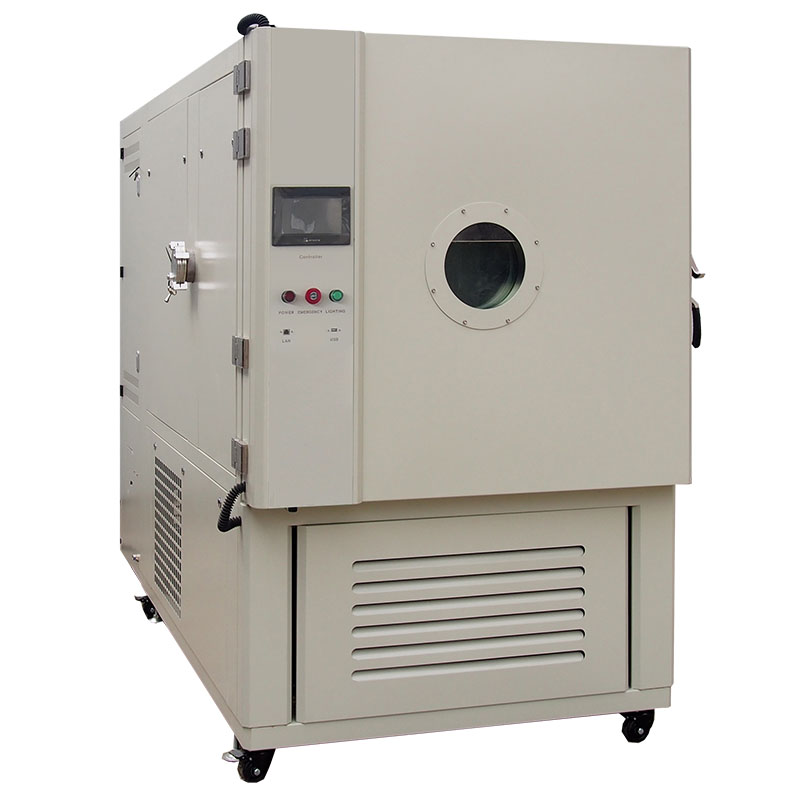
Pressure vessels demand rigorous safety engineering. LIB chambers employ manganese steel pressure enclosures with surface spray treatment resisting corrosion while maintaining structural integrity under repeated pressure cycling. Explosion-proof viewing windows utilize small round designs withstanding greater pressure differentials than flat panes. Multiple safety interlocks prevent door opening under vacuum conditions.
Customization for Specialized Requirements
Aerospace testing often demands unique chamber configurations addressing specific component geometries or test protocols. LIB's engineering team designs custom altitude chambers matching exact customer requirements — from specialized sample mounting fixtures to integrated data acquisition systems. Cable hole options (50mm, 100mm, or 200mm diameter) accommodate diverse instrumentation and power connections while maintaining chamber pressure integrity.
Have a non-standard configuration in mind? Talk to our engineering team about a custom build →
ISO 9001 Quality Assurance and Compliance
LIB's manufacturing facility operates under ISO 9001 certification ensuring consistent quality throughout production. Chambers comply with CE safety directives, CSA standards, and meet ISO 17025 requirements for testing laboratory equipment. EMC regulations govern electromagnetic compatibility, preventing chamber operation from interfering with sensitive test instrumentation.
| Testing Application | Required Chamber Capability | LIB Solution Advantage |
|---|---|---|
| Avionics qualification | DO-160 altitude profiles | 0.5 kPa minimum pressure |
| Thermal management validation | Coordinated temperature-pressure | -120°C to +150°C range |
| Rapid decompression testing | Fast pressure dump capability | Programmable depressurization rates |
| Material outgassing quantification | Extended low-pressure duration | Stable vacuum maintenance |
| Life support system validation | Humidity control at altitude | 20-95% RH at >50 kPa |
Related Products
If altitude chamber testing is one part of your qualification program, these LIB systems are commonly specified alongside it:
|
— Validate rapid temperature transitions (e.g., -70°C to +220°C) for components that must survive extreme thermal cycling during ascent/descent, independent of pressure changes. |
— Characterize moisture-related degradation and condensation effects at ground-level and low-altitude conditions before escalating to full hypobaric testing. |
— Pair with altitude testing to replicate combined environmental stress (pressure + vibration) specified in DO-160 Section 8 and MIL-STD-810 Method 514. |
— Assess long-term material degradation for components exposed to coastal or maritime aerospace operating environments. |


Explore LIB's full environmental test chamber lineup →https://www.lib-chamber.com/products
Conclusion
Altitude chamber testing has evolved from simple vacuum vessels into sophisticated multi-variable environmental systems replicating the complex conditions aerospace components encounter during flight. As aircraft push toward higher altitudes and longer endurance missions, the role of precision altitude simulation will only intensify.
Ready to validate your components against DO-160, MIL-STD-810, or AS5857? LIB backs every chamber with a 3-year warranty, lifetime technical service, and turn-key installation support. Get a tailored chamber quote from LIB Industry →ellen@lib-industry.com
FAQ
How often do altitude chambers need to be calibrated, and does LIB support on-site installation? LIB recommends calibration at least annually to maintain compliance with ISO 17025 and DO-160 accuracy requirements, or more frequently for chambers running continuous certification cycles. LIB's team handles installation commissioning on-site and can schedule recurring calibration visits as part of the lifetime service agreement, so customers don't need to manage a separate third-party calibration vendor.
How quickly can altitude chambers simulate rapid decompression events? Professional altitude chambers achieve depressurization rates from atmospheric pressure to flight altitude equivalents within seconds to minutes depending on chamber volume and valve sizing. LIB's standard configuration reaches 0.5 kPa within 30 minutes for controlled testing, while rapid dump valves can simulate explosive decompression events occurring in under 10 seconds for emergency scenario validation.
Can altitude chambers simultaneously test multiple different components with varying power requirements? Advanced altitude chambers include multiple power feedthroughs supporting simultaneous testing of diverse components. LIB chambers feature standard cable holes with 50mm, 100mm, or 200mm diameters accommodating various electrical connections while maintaining pressure integrity. Adjustable SUS304 stainless steel sample shelves position components at different heights, and monitoring systems track individual specimen performance throughout testing cycles.
What warranty and after-sales support does LIB provide on its altitude chambers? Every LIB altitude chamber is backed by a standard 3-year warranty covering the pressure vessel, vacuum system, and control electronics against manufacturing defects. Beyond the warranty period, customers receive lifetime technical service — including remote diagnostics, spare parts supply, calibration support, and software updates — so chambers stay certification-ready throughout their operational life, not just during the warranty window.
Does LIB only make altitude chambers, or does it offer other environmental test equipment as well? LIB Industry manufactures a full range of environmental testing equipment beyond altitude chambers, including thermal shock chambers, temperature and humidity chambers, vibration test systems, and salt spray corrosion chambers. This means aerospace manufacturers can consolidate environmental qualification programs — altitude, thermal, vibration, and corrosion testing — with a single vendor, simplifying calibration schedules, spare parts logistics, and operator training.