Why Do Aerospace Manufacturers Need Advanced Dust Test Chambers?
Need a dust test chamber for MIL-STD-810 Method 510? Request a quote in 24 hours.
Aerospace equipment can be exposed to fine dust during desert operations, takeoff and landing on unpaved runways, ground handling, and other harsh environments. For avionics housings, sensors, connectors, and control units, particulate ingress can affect sealing, electrical connections, and moving components.
The challenge for aerospace manufacturers is not simply exposing a component to dust. They need a controlled and repeatable dust test chamber that can reproduce the required particle circulation, pressure conditions, temperature, and test duration while generating traceable test data.
LIB Industry provides dust test chambers for applications involving MIL-STD-810 Method 510 and RTCA DO-160 Section 12, with configurable powder circulation, vacuum-assisted testing, temperature control, and data logging.
What Dust-Related Problems Can Affect Aerospace Equipment?
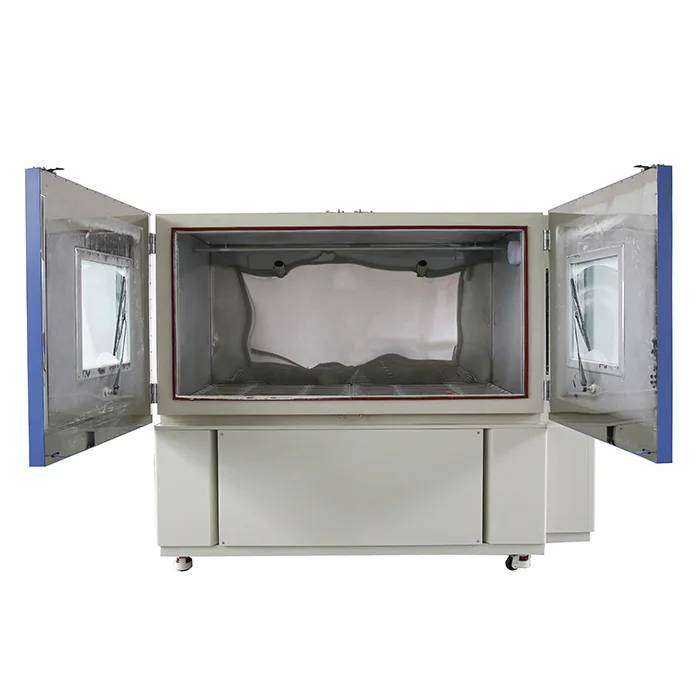 Aerospace components can encounter dust in environments that are considerably different from standard laboratory conditions.
Ground Operations and Desert Deployment Risks
Aircraft operating from desert sites, dusty regional airports, or unpaved airstrips can expose landing gear sensors, external electronics, lighting systems, and avionics components to airborne particles.
Military and humanitarian aviation equipment can face particularly demanding environmental conditions, making controlled dust testing an important part of product validation.
Consequences of Dust Ingress in Flight-Critical Systems
When dust enters a connector housing or sensor assembly, it can contribute to electrical contact degradation, intermittent faults, abrasion, or interference with moving components.
For aerospace suppliers, identifying sealing weaknesses before installation is significantly more practical than discovering particulate-ingress problems after the component has entered service.
Long-Term Reliability Across Extended Service Life
Aerospace components are often designed for long service periods. Dust resistance therefore needs to be considered during development and qualification rather than treated as a one-time inspection.
A controlled chamber allows manufacturers to repeat exposure conditions and document the performance of seals, housings, connectors, and other protective structures.
Which Aerospace Components Need Dust Testing?
 Different aircraft components face different dust exposure risks, so the required test setup depends on the component's location and construction.
Avionics Bay Electronics and Control Units
Flight control computers, navigation modules, communication equipment, and other avionics may need protection against dust entering through ventilation openings, cable interfaces, or maintenance access points.
LIB Industry dust test chambers can provide controlled dust circulation to evaluate the sealing performance of these enclosures.
External Sensors and Landing Gear Components
Pitot-related equipment, landing gear sensors, exterior lighting, and other externally exposed components can encounter fine particles during taxiing, takeoff, and landing.
Testing helps engineers evaluate whether the enclosure and interfaces can maintain the required protection under specified dust exposure conditions.
Connector Assemblies and Wiring Harnesses
Connector housings and wiring interfaces are particularly sensitive to particulate ingress because contamination can contribute to intermittent electrical faults.
Dust testing can identify sealing problems before the component reaches aircraft-level integration.
How Does a Dust Test Chamber Reproduce Aerospace Conditions?
For aerospace applications, the chamber needs to do more than circulate powder around a specimen. The test environment must be controlled closely enough to reproduce the required exposure conditions.
Controlled Particle Circulation and Concentration
A dust test chamber continuously circulates test powder through the working space to maintain a controlled exposure environment.
LIB Industry chambers use controlled circulation and powder recovery to help maintain consistent dust distribution during repeated testing.
Vacuum-Assisted Pressure Differential Testing
Some aerospace components require pressure-assisted dust ingress testing. A vacuum interface can create a pressure differential across the specimen, helping reveal sealing weaknesses that may not appear during passive dust exposure.
This is particularly useful when the test procedure requires the enclosure to be evaluated under pressure changes.
Elevated Temperature Integration During Testing
Aerospace equipment may also be exposed to elevated temperatures during ground operation or in enclosed equipment areas.
LIB Industry dust test chambers can be configured with temperature control up to 80°C, allowing dust exposure to be combined with elevated-temperature conditions where required by the test program.
Which Aerospace Dust Testing Standards Apply?
| Standard | Focus Area | Typical Application |
|---|---|---|
| MIL-STD-810 Method 510 | Sand and dust environmental testing | Military and defense aerospace equipment |
| RTCA DO-160 Section 12 | Sand and dust testing | Civil and commercial airborne equipment |
| SAE AS9100 | Aerospace quality management | Supplier manufacturing quality assurance |
Military Standard Requirements Under MIL-STD-810
MIL-STD-810 Method 510 defines environmental test procedures for sand and dust exposure in military applications. Aerospace suppliers should configure the test according to the applicable procedure, particle conditions, exposure time, and equipment requirements.
Civil Aviation Requirements Under RTCA DO-160
RTCA DO-160 Section 12 addresses sand and dust testing for airborne equipment. For suppliers working with civil aviation programs, the applicable test conditions should be confirmed from the specific qualification program.
Supplier Quality Management Expectations
Aerospace manufacturers and suppliers also need reliable test documentation and traceability. Quality management systems such as AS9100 support the broader documentation and quality requirements surrounding aerospace production and qualification.
What Should You Look for in an Aerospace Dust Test Chamber?
Choosing a chamber should focus on the actual test requirements rather than chamber size alone.
Stable Powder Management
Moisture can cause test powder to clump and affect circulation. A funnel-shaped chamber bottom and heated powder recovery system help reduce powder accumulation and maintain more consistent circulation during testing.
Data Logging and Test Traceability
A programmable color touchscreen controller, Ethernet connectivity, and PC Link can support test parameter recording and data management.
For aerospace qualification, this helps maintain records of test conditions, duration, temperature, and other relevant parameters needed for technical documentation.
Custom Fixtures and Configuration
Aerospace components can have unusual shapes, mounting requirements, or connection interfaces. Custom fixtures and chamber configurations can therefore be important when a standard sample rack does not provide the required test setup.
LIB Industry can customize the chamber configuration according to the specimen dimensions and test requirements.
Inline CTA:
LIB Industry provides dust test chambers configured for MIL-STD-810 and RTCA DO-160 testing.
How Does LIB Industry Support Aerospace Dust Testing?
LIB Industry designs dust test chambers around the actual requirements of the test program, including dust circulation, powder recovery, vacuum-assisted testing, temperature control, data logging, and customized fixtures.
For aerospace manufacturers, this means the chamber can be configured around the component and applicable standard rather than relying on a one-size-fits-all setup.
Consistent Dust Distribution and Powder Recovery
The chamber uses a funnel-shaped bottom and electric heating to help prevent powder from sticking and support stable circulation throughout the test space.
Safety and Documentation Features
Programmable controls, monitoring functions, and data connectivity help operators manage test parameters and retain testing records for quality and qualification documentation.
Warranty and Global Technical Support
LIB Industry provides a 3-Year Manufacturer Warranty / 36 months with lifetime free technical support. Equipment can be supplied with traceable factory calibration and an ISO 17025-related calibration report, where applicable.
For installation, operation, and maintenance support, LIB Industry also provides 24/7 remote video assistance and a 48-hour spare-parts express service through DHL/FedEx.
What Are the Benefits of Testing Dust Resistance Early?
Dust testing is most useful when it is integrated into the product development process rather than performed only at the final certification stage.
Early Design Validation
Testing prototype housings, seals, connectors, and other interfaces can reveal dust-ingress weaknesses before expensive production tooling or aircraft integration.
Supporting Certification Documentation
Test data generated under the applicable MIL-STD-810 or RTCA DO-160 procedure can provide objective evidence for qualification and technical documentation.
Reducing Particulate-Ingress Risks in Service
Identifying sealing problems before deployment helps manufacturers address potential particulate-ingress issues during product development and validation.
3 Related Dust & Environmental Test Products
|
|
|
|
|
Blowing Sand and Dust Test Chamber Designed for MIL-STD-810 Method 510 sand and dust environmental testing, this chamber provides controlled dust circulation and exposure conditions for aerospace, defense, and military equipment qualification. |
IP5X/IP6X Dust Test Chamber Suitable for enclosure dust-protection testing where both IP5X and IP6X requirements need to be evaluated. It provides controlled powder circulation and vacuum conditions for repeatable ingress protection testing. |
IP6K9K Test Chamber Designed for demanding automotive and industrial enclosure protection programs involving high-pressure water and dust-related protection requirements, supporting applications where multiple IP protection levels need to be evaluated. |


FAQ
Which standards are most directly used for dust testing in aerospace?
MIL-STD-810 Method 510 is widely used for military and defense environmental testing, while RTCA DO-160 Section 12 covers sand and dust testing for airborne equipment in civil aviation applications.
Why is vacuum-assisted testing important for aerospace components?
A pressure differential can help simulate conditions in which air movement through an enclosure contributes to particle ingress. It can reveal sealing weaknesses that may not be identified through passive dust exposure alone.
How does temperature control affect aerospace dust testing?
Temperature can be controlled together with dust exposure when the applicable test program requires elevated-temperature conditions. LIB Industry configurations can provide temperature control up to 80°C for applicable applications.
Need a Dust Test Chamber for Your Aerospace Application?
The right chamber depends on the applicable standard, specimen dimensions, dust conditions, pressure requirements, temperature range, and test duration.
LIB Industry can provide standard and customized dust test chambers for aerospace, defense, automotive, and other demanding environmental testing applications.
Need a dust test chamber for MIL-STD-810 Method 510, RTCA DO-160 Section 12, or another requirement?
Send your test standard, specimen dimensions, and required test conditions to ellen@lib-industry.com for a suitable configuration and quotation.