How Vibration Test Chambers Validate EV Battery Durability
Shaking a module or pack in vibration test chambers in a way that feels like years of being on the road makes EV batteries last a long time. Afterward, the temperature and humidity of the room are checked to see if any damage has been done to the machinery or power. A long time before the customer gets the car, the test finds loose bolts, broken welds, worn-out busbars, failed connectors, and weak enclosure mounts. It's not just the shaker that matters; the shape, the stand, and the instruments are also very important. The next parts use public numbers from LIB Industry to talk about the loads that batteries have to handle, how a chamber works like them, what engineers check afterward, and what you should check before the first run.
Why Vibration Testing Matters for EV Battery Pack Reliability?
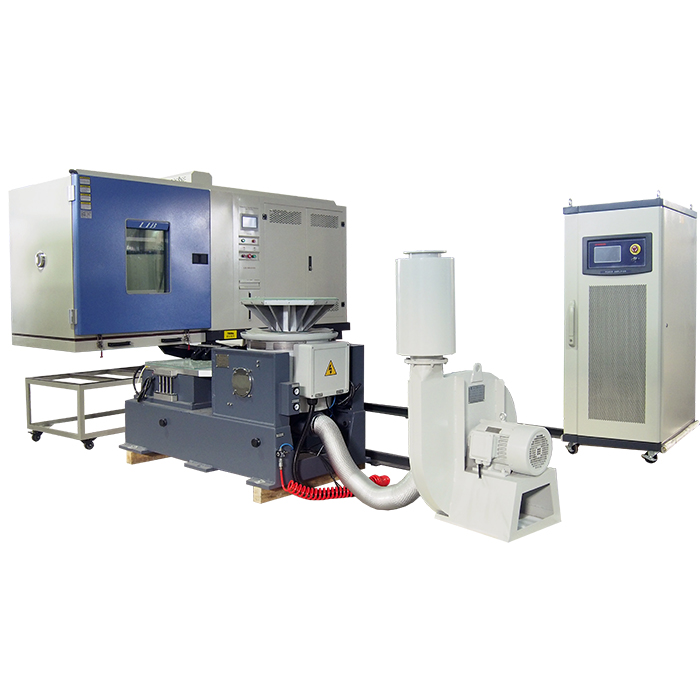
Fatigue Builds Quietly
Being stressed out over and over again is like having a battery pack on your car for a very long time. Even after a million low-level cycles, a weld that can handle one drop can still break. A shaking test speeds up that exposure. This lets engineers find parts that are likely to break before the product moves, instead of after it has been sold.
Regulation Already Expects It
A vibration test is one of the steps in UN Regulation No. 100 for systems that store and use energy that can be recharged. Some of the other steps are to protect against thermal shock and cycling, mechanical shock, mechanical stability, and fire [2]. The UN Global Technical Regulation No. 20 says that the pack level must be able to move for electric cars to be safe [3]. Find out what rules the people you want to reach follow.
Durability Versus Safety Testing
Safety tests check to see if a pack is still safe after being put through some rough stuff. Tests are done on it to see how long it will last and work. SAE J2380 tells us how to check how long an electric vehicle battery module or pack will last when it is shaken. It also says that some units could be put through life cycle testing to see how movements affect the battery life [1]. Get ready with a response for every question.
Key Vibration Loads EV Battery Packs Face on the Road
Road Surface Input
When the road is rough, the car shakes all at once over a wide frequency range. This kind of vibration is called "broadband random vibration." There is a rule in IEC 60068-2-64 about specimens that move around randomly while they are being used or shipped [4]. Because of this, most tools for making packs last longer are based on random traits.
Structure-Borne Sources
As the speed changes, so do the sounds that motors, transformers, cooling pumps, and fans make. When these little bands get close to a pack vibration, they can do a lot of damage. If you know ahead of time what makes the car exciting, you can move resonances away from those points before the road tests and see where they meet.
What Vibration Tests Leave Out?
SAE J2380 [1] for vibration test chambers doesn't cover contact events like crashes and pothole loads; those have their own set of rules. UN Regulation No. 100 [2] uses mechanical shock as its own test. You should put vibration and shock on different parts of your plan.
| Load type | Typical test | Reference |
|---|---|---|
| Road roughness | Random vibration | IEC 60068-2-64 [4] |
| Durability exposure | Module or pack vibration | SAE J2380 [1] |
| Regulatory in-use | REESS vibration test | UN R100, GTR 20 [2][3] |
| Impact events | Mechanical shock | UN R100 [2] |
How Test Chambers Simulate Real-World Road Vibration Conditions?
Closed-Loop Control
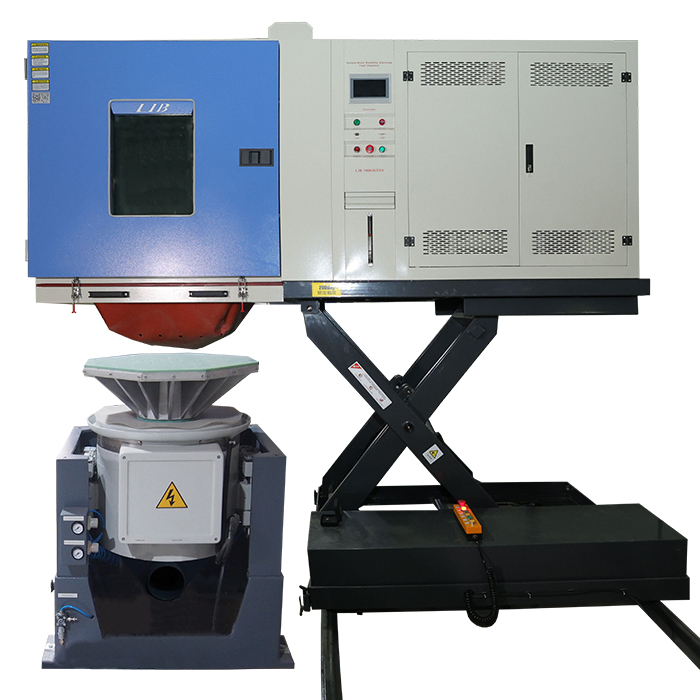
The table is moved by a shaker, and accelerometers send a digital controller what they find. The controller sets the drive signal so that the table moves at the right speed. In LIB, something that changes things is discussed. It has sensors, a computer driver, a power booster, and a fan to cool it down. Closed-loop control is also used. Check how well the controller works with heavy loads and fixtures that vibrate.
Profiles Built From Measurements
The table is moved by a shaker, and accelerometers send a digital controller what they find. The controller sets the drive signal so that the table moves at the right speed. In LIB, something that changes things is discussed. It has sensors, a computer driver, a power booster, and a fan to cool it down. Closed-loop control is also used. Check how well the controller works with heavy loads and fixtures that vibrate.
Axes, Frequency and Force
One use for SAE J2380 says that readings from a real car should be used to make a profile of how long vibrations last [1]. When you measure a profile, it shows your base, attachment points, and normal roads. To start the sorting process, generic bands work well. A test spectrum should be made from data from a test car prototype.
Battery Pack Components Evaluated During Vibration Testing
Cells, Tabs and Busbars
The LIB can hold up to 500 kg of weight and has a rated force of 1000 kgf. It also has a vertical and a horizontal slide table. This ranges from 2 Hz to 4000 Hz. The fastest speed slows down as the object's mass increases. Ask for force-versus-mass curves and make sure that all the axes that your character needs are included.
Enclosure, Mounts and Cooling Parts
Busbars, cell tabs, and welds all work together to move energy and weight. The resistance and heat in the area go up because of this. Thin tabs may wear down, or bolted joints may come loose. While the run is going on, an engineer checks the voltage and, if possible, the resistance across the joints. This is because a touch that comes and goes might not show up until the pack changes.
Electronics and Connectors
Battery management boards, harness connectors, contactors, and sensors all have an effect on different parts of the structure. It's also easy for small groups to work along long lines. Write down any problems you have with the link or with not being able to feel during the test. To make sure a connection doesn't fail badly, you should check the contact resistance both before and after it frets.
How Vibration Data Reveals Structural Weaknesses in EV Batteries?
Resonance and Transmissibility
These frequencies can be seen if you do a low-level sweep before and after the toughness run. If the frequency of the vibrations drops after that, it means that something is broken or loose. Take a look at the difference between the clamp and the pack. The plate or panel that is weak will shake more.
Electrical and Inspection Evidence
These frequencies in vibration test chambers can be seen if you do a low-level sweep before and after the toughness run. If the frequency of the vibrations drops after that, it means that something is broken or loose. Take a look at the difference between the clamp and the pack. The plate or panel that is weak will shake more.
| Data collected | What it can reveal | Typical follow-up |
|---|---|---|
| Resonance shift | Loosened or cracked structure | Inspect brackets and welds |
| Voltage dropouts | Intermittent contact | Check busbars and connectors |
| Resistance change | Joint degradation | Rework joint design |
| Visual inspection | Chafing, fretting, seal movement | Add clamps or protection |
|
|
|

Closing the Design Loop
Tell the design teams right away what you've found. Often, what the test showed can be fixed with a stronger bracket, a damper pad, or a different path for the line. Run the same program on the new unit to make sure it still works and that the issue hasn't changed after the fix.
What Manufacturers Should Check Before EV Battery Vibration Tests?
Sample, Mounting and Profile
Figure out what the test unit is, how it will be connected to the car, and the profile's length and direction. When the car fixing isn't stiff enough, the pack will be put under loads it has never been asked to handle. Before the first test run, your quality team should agree to a written test plan.
Match Chamber Capability to the Pack
Check the shaker's top and bottom edges against the pack's weight, size, and test range.
| Item | LIB listed value | Check for your pack |
|---|---|---|
| Rated force | 1000 kgf | Enough for pack plus fixture mass? |
| Frequency range | 2–4000 Hz | Covers your profile? |
| Maximum load | 500 kg | Includes fixture and cables? |
| Table size | 600×600 mm | Large enough for the pack or module? |
| Temperature range | −50 to +150 °C | Covers your combined profile? |
| Humidity range | 30–98% RH | Needed for your test? |
SAE J2380 talks about packs that are physically merged and weigh more than 200 kg [1]. These packs are built into the car. You might need to test them at the module level or with special tools because most full packs are bigger than a 600x600 mm table.
Plan for Battery Hazards
Charged cells can fail in very bad ways. Together with your safety officer, make an emergency plan that includes how to get gas, keep the area cool, put out fires, keep an eye on things from afar, and make sure that certain areas are off limits. LIB says that its rooms are safe from too much heat, too much electricity, high-pressure gas, not having enough water and earth leaks. But the lab should be sure that these are the safety steps it needs to take for charged batteries.
Popular LIB Industry Environmental Test Chambers For EV Battery
|
|
|
|
| temperature and humidity cabinet | thermal cycling test chamber | battery test chamber |
|
|
|
|
| salt spray test chamber | thermal shock test chamber | dust test chamber |


Choosing a Vibration Test Chamber Supplier for Battery Programs
Capacity and Customization
Small packs and units can fit in most places. You need walk-in layouts, tables that are bigger, or loading rates that can hold more big packs. LIB lists different types, such as tabletop, floor-stand, and walk-in, and also offers custom R&D for special needs. During the quote stage, talk about the size, weight, and mounting options of the pack.
Combined Climate and Vibration
It helps to know how batteries work when they are hot or cold if you want to try shaking at both high and low temperatures. It is important for LIB to talk about temperature, humidity, shaking, and rates of 5 °C/min for cooling and heating. Ask for reports that were written with a load like yours and find out how stable the climate is when the table moves.
Commissioning and Support
Research, design, production, delivery, installation, training, and commissioning are all part of LIB Industry's full solutions. We're here to help you 24 hours a day, seven days a week, and we stand behind our work for three years. You need to write down those terms, test them with your own template, and train the operators before the first battery program starts.
Conclusion
For vibration testing with vibration test chambers to show how long a battery lasts, four things are needed: a profile based on real vehicle data, a device that looks like a vehicle fitting, tools that record mechanical and electrical behaviour, and a room big enough for the pack. UN R100 and GTR 20 set the rules, and SAE J2380 tells us how to measure how long something lasts. Before you set a test time, compare the shaker's weight and size limits to those of the pack. Make plans for energy risks as well, and agree on what the acceptable levels are. If you follow those steps, a shaker will show you that what it says is true.
FAQ
Is vibration testing required for EV batteries?
Vibration tests are part of rules like UN GTR No. 20 and UN Regulation No. 100 for devices that store and restore energy. What is needed can change depending on the market and how the text was accepted, so make sure the current text matches what the group that passed it said it should be.
Can one chamber test a complete EV battery pack?
The table can only be used if it fits the pack and clasp in terms of size, weight, and force. LIB lists a 600x600 mm table that can hold up to 500 kg. This means that you might need special tools for large packs. Modules, on the other hand, usually fit into well-known gaps.
Why combine temperature with vibration?
Weather changes can affect a number of parts and materials in different ways. Rubber and glue don't bend as much when it's hot, and plastics get stiffer when it's cold. Since those things are likely to be true, running at vibration levels may show problems that running at room temperature does not.
Planning battery vibration validation and seeking vibration test chambers from a manufacturer, supplier, or factory? lib industry offers standard and custom chambers with turn-key design, installation and training. Send your pack dimensions, mass, and test profile to ellen@lib-industry.com for a tailored recommendation.