Thermal Cycling Test Chamber Price: What Drives the Cost?
There are five main factors that affect the thermal cycling test chamber price: the temperature range, the ramp rate, the working volume, the hardware for heating and cooling, and the data and control features that are built in. It's a lot cheaper to build a small 100-liter box that can handle -40°C than a 1000-liter box with a high ramp that can handle -70°C. Besides the standard ramp steps starting at 5 °C per minute, faster-ramp chambers can also be customized to your required rate. This guide explains each driver in simple terms so that you can properly brief a provider and compare offers on the same terms, instead of just looking for the lowest number on the page.
What Factors Determine Thermal Cycling Test Chamber Price?
Not an Oven, and Why Quotes Differ
A thermal cycling chamber repeatedly cycles specimens between hot and cold to reveal defects caused by thermal expansion, such as small cracks, broken solder joints, and failed seals. That demands better control, cooling, and construction than a simple oven. Two quotes at the same price can also describe very different units, such as a cascade system versus a single-stage design, so sensor class, insulation build, and safety interlocks matter. Ask for a full bill of specs before you compare prices.
The Main Cost Levers
The number on a quote can be moved by five levers.
| Cost driver | What changes | Effect on price |
|---|---|---|
| Temperature range | Lowest temperature from -20 °C to -70 °C | Colder targets need heavier refrigeration |
| Ramp rate | 5 to 15 °C per minute standard; higher rates available on request | Faster ramps need more heating and cooling capacity and a purpose-built system |
| Volume | 100 L to 1000 L standard models | More steel, insulation, and airflow |
| Controls and options | Touch screen, data logging, optional humidity | More features raise the total |
| Service and customization | Warranty terms, non-standard design | Adds engineering and support cost |
|
|
|

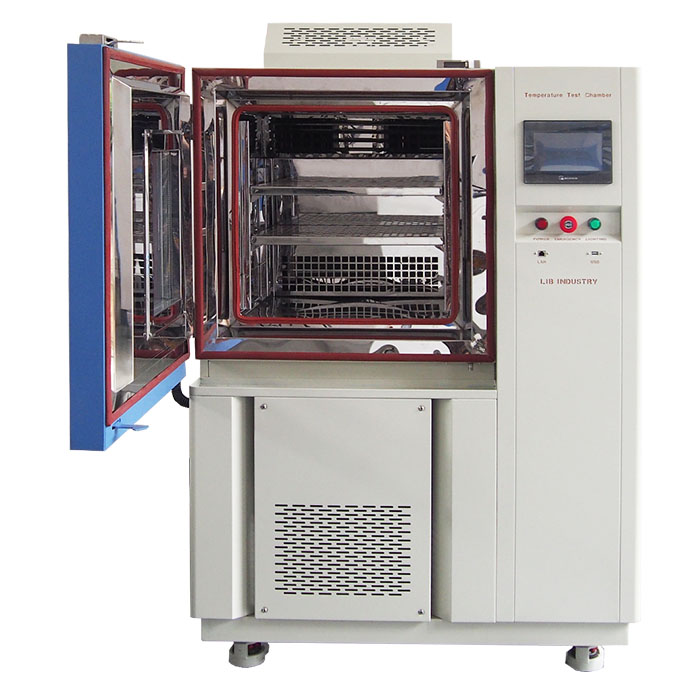
How Temperature Range and Cycling Performance Affect Cost?
Lower Minimum Temperatures
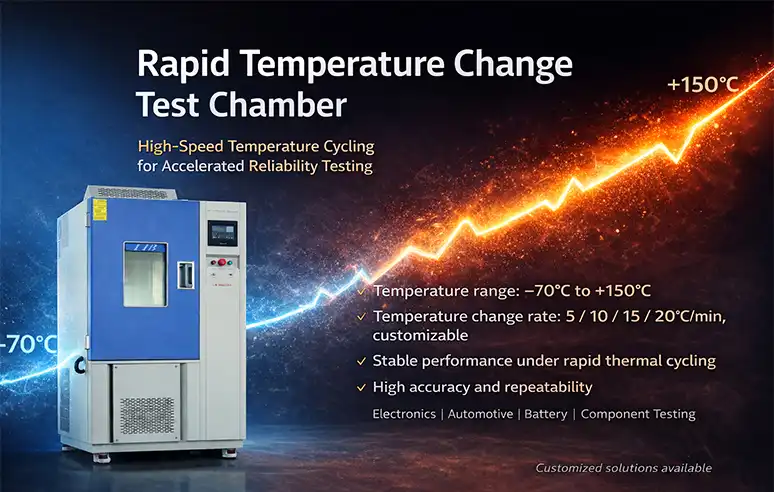
LIB chambers cover -20 °C to -70 °C at the cold end and up to +150 °C at the hot end, and the lower the minimum, the higher the price. Reaching -70 °C usually requires a cascade setup, with two refrigerant circuits working together, which means more compressors, coolers, and heat exchangers. A unit that only needs -40 °C can use simpler hardware and cost a lot less.
Ramp Rate and Test Standards
You can set LIB's steps to 5, 10, or 15 °C per minute. For rapid-change applications such as environmental stress screening (ESS), LIB can also customize chambers with ramp rates above the standard range, based on your specimen load and temperature span. For faster changes, power must be sent to both the heater and the cooler at the same time, and the airflow, refrigeration, and control design must be matched to the target rate, so price rises with the rate. The common reference standards are:
IEC 60068-2-14 (Test N, change of temperature) and its equivalent GB/T 2423.22
JEDEC JESD22-A104 (temperature cycling)
MIL-STD-883 Method 1010 and MIL-STD-810 Method 503 for military and aerospace work
GJB 1032 / GJB 150.5A for ESS and temperature shock in electronic equipment
The ramp rates specified in these standards differ widely, and ESS programs often require faster rates than a standard cycling test. Make sure you know what your protocol needs before you pay for rate headroom that you might not use.
Stability and Accuracy
The ±0.5 °C fluctuation and ±2.0 °C deviation of LIB chambers depend on sensor quality, airflow, and controller setup, and LIB uses PT100 Class A sensors. Tighter limits cost more, but they protect your data during qualification reviews or customer audits.
How Chamber Size and Test Volume Influence Pricing?
Materials and Construction
A larger chamber needs more SUS304 stainless steel inside, more coated steel outside, and thicker insulation, and its cooling circuit must grow to move heat out of a bigger volume of air at the same speed.
Standard Model Sizes
The table below shows the standard TR5 range from LIB.
| Model | Internal size (mm) | External size (mm) | Volume |
|---|---|---|---|
| TR5-100 | 400×500×500 | 900×1050×1620 | 100 L |
| TR5-225 | 500×600×750 | 1000×1140×1870 | 225 L |
| TR5-500 | 700×800×900 | 1200×1340×2020 | 500 L |
| TR5-800 | 800×1000×1000 | 1300×1540×2120 | 800 L |
| TR5-1000 | 1000×1000×1000 | 1500×1540×2140 | 1000 L |
Size by Load, Not Only by Footprint
Thermal mass matters as much as size: a heavy payload soaks up heat and slows the ramp, so leave space around the specimens for airflow. A chamber one size too big costs more to buy and run, and one size too small slows cycles and stretches test schedules.
LIB Industry Popular Thermal Chambers
|
|
|
|
| thermal shock test chamber |
Thermal Test Chamber |
battery test chamber |
|
|
|
|
| Benchtop Thermal Chambers | Temperature Humidity Vibration Chambers | Walk in Temperature Chamber |


Why Refrigeration and Heating Systems Impact Chamber Cost?
A big chunk of the final cost comes from the cooling hardware hidden behind the steel walls.
Compressors and Cascade Design
The refrigeration circuit makes every cold transition possible. LIB uses high-end compressors from brands like Bitzer and Tecumseh. They cost more to buy, but spare parts and service are easier to find across markets.
Electronic Expansion Valves
LIB's electronic expansion valve controls flow accurately, uses more than 20% less energy than regular thermostatic valves, and reduces wear after many cycles. The initial price goes up a little, but the running cost may go down.
Heaters, Airflow and Anti-Condensation
A rotating fan and open ceramic-core nichrome heaters move air evenly and heat the chamber. A built-in anti-condensation control keeps specimen surfaces dry, protecting delicate samples from electrochemical migration and short-circuiting during rapid changes. These details are easy to miss on a datasheet, but they have a big impact on the reliability of results.
How Control Systems and Testing Features Change the Price?
Controller and Connectivity
LIB chambers use an LCD touch-screen controller with Ethernet and PC link. A USB port lets you download data, and the PC link allows operation from a computer and connection to local lab software. A simple stand-alone controller costs less, but when several chambers run at the same time, a networked controller saves hours of work.
Data Logging, Remote Monitoring and Humidity
Data logging lets engineers review and report on tests later, and remote monitoring lets them watch a long run from afar. A humidity function is optional. Each extra module adds cost and setup time.
Safety Systems
Door alarms and emergency shutdown protect against over-temperature, over-current, high-pressure, and leakage events. They keep the operator and the specimens, often worth far more than the chamber itself, safe, so treat them as essentials rather than optional extras.
How to Compare Total Cost Beyond the Initial Chamber Price?
A low price tag can hide costs that show up months later.
Running and Maintenance Costs
Electricity use adds up over years of daily use, so energy-efficient refrigeration can narrow the gap between a high-end and a low-end unit. Cascade systems also need periodic servicing.
Installation, Commissioning and Training
LIB is a complete service provider, handling everything from research and development to production, shipping, installation, and training. Bundled services lower the risk of mistakes on day one. If the quote doesn't include them, set aside budget for engineer visits and user training.
A Practical Comparison Checklist
Use the table below when placing quotations side by side.
| Cost item | Question to ask the supplier |
|---|---|
| Energy use | What is the typical power draw during cycling? |
| Spare parts | Which parts wear first, and how fast can they ship? |
| Installation and training | Are they included, and where do they take place? |
| Warranty | How long, and what does it cover? |
| Delivery terms | Who handles freight, customs, and unloading? |
Why Customization and After-Sales Support Shape the Final Quote?
Custom Chamber Design
Standard models meet many needs, but the final price often changes when custom requirements come in. LIB's engineering team works on non-standard designs and custom R&D, such as changing the size of the chamber, adding unique control features, or raising the ramp rate beyond the standard range for rapid-change testing. Custom work takes more time to draw and test, and sometimes needs new tooling. In exchange, the chamber matches your protocol instead of making you change your protocol to fit the chamber.
Warranty, Service and Credentials
LIB offers a 3-year warranty, lifetime service, and 24/7 global support, and says a brand-new unit will be sent free if repairs can't be completed during the warranty period. Read the contract wording carefully. LIB also runs an ISO 9001 quality management system, its products are CE-certified, and SGS and TUV test them. With service centers in the US, Canada, Malaysia, and the UK and 29 partners worldwide, local support cuts downtime when a part needs repair.
Conclusion
Temperature range, ramp rate, volume, cooling design, controls, and service terms all affect the thermal cycling test chamber price. Set your test standard and sample load before requesting quotes, then compare the purchase price with running, installation, and warranty costs. Matching the configuration to your real protocol helps you avoid both overspending on features you won't use and buying a unit that can't handle your cycles.
Ready to compare configurations? LIB Industry offers complete environmental testing solutions. Write to ellen@lib-industry.com and the team will review your samples and standards and send a clear quote.
FAQ
Does a lower minimum temperature always raise the price?
In general, yes. Reaching -70 °C usually needs a cascade refrigeration circuit with more compressors and heat exchangers, while -20 °C or -40 °C units use simpler hardware. Pick the lowest temperature your test really needs.
Is a larger chamber always better value?
No. Excess volume adds steel, insulation, and energy use. Size the chamber by specimen size, airflow space, and thermal mass to keep both purchase and running costs low.
What should I include when requesting a quote?
Send the temperature range, ramp rate, specimen size and weight, target standard, controller needs, and, if relevant, the destination country and humidity requirement.
Can I get a chamber with a faster ramp rate than the standard models?
Yes. Besides the standard ramp steps of 5, 10, and 15 °C per minute, LIB can customize rapid-change chambers to your required rate. Please send your temperature range, specimen weight, and target standard so the engineering team can confirm the achievable rate and quote accordingly.